
Your new kitchen cabinets should be the heart of your home, not a source of invisible health concerns. Most homeowners feel a mix of excitement and anxiety when picking out materials, especially when they start hearing about “off-gassing” from new furniture. It’s perfectly normal to feel overwhelmed by the technical jargon of regulations like CARB, TSCA Title VI, and Prop 65. You simply want to ensure your family breathes clean air without having to become an expert to understand the labels. Knowing if a product is california 93120 compliant for formaldehyde is the first step toward that peace of mind.
We believe that professional-grade results should be safe and accessible for everyone. This guide will help you understand the safety standards behind the California 93120 label and how they align with national EPA regulations updated as recently as February 2026. You’ll learn exactly what those emission numbers mean for your indoor air quality and how to distinguish high-quality materials from cheap alternatives. We’ve even included a practical checklist to help you verify product safety before you buy. By the end, you’ll have the clarity you need to choose cabinets that look beautiful and keep your home healthy.
Key Takeaways
- Understand how California 93120 standards protect your home’s air quality by setting strict limits on formaldehyde emissions from composite wood materials.
- Discover how to verify if your new shaker cabinets are california 93120 compliant for formaldehyde by checking for specific labels and third-party certifications upon delivery.
- Clarify the relationship between California’s CARB Phase 2 and the national TSCA Title VI standards so you can shop with confidence regardless of where you live.
- Use our simple checklist to inspect cabinet boxes and ask your supplier the right questions about their material sourcing and safety testing.
- Learn why choosing warehouse-direct shaker cabinets that meet these rigorous safety benchmarks ensures you don’t have to sacrifice your family’s health for affordability.
What is California 93120 Compliance for Formaldehyde?
California 93120 is more than just a string of numbers on a shipping box. It represents the legal standard set by the California Air Resources Board (CARB) to limit formaldehyde emissions from composite wood products. Originally approved in April 2007, this regulation ensures that the materials used in your home meet strict safety benchmarks. When you see a product labeled as california 93120 compliant for formaldehyde, it means the manufacturer has met the rigorous requirements of what is now known as CARB Phase 2. As of February 6, 2026, the EPA has even proposed updates to these standards to incorporate the most current testing methods, ensuring your cabinets stay at the cutting edge of safety. This standard is designed to protect you from volatile organic compounds (VOCs) that can linger in your indoor air for years. It’s a proactive way to reduce exposure to known carcinogens, making your renovation safer from day one.
Common Products Covered by the Regulation
Most modern cabinets aren’t made from solid wood slabs because solid wood can warp or crack over time. Instead, they rely on composite wood for stability and cost-effectiveness. The 93120 regulation specifically targets three main materials used in cabinet construction:
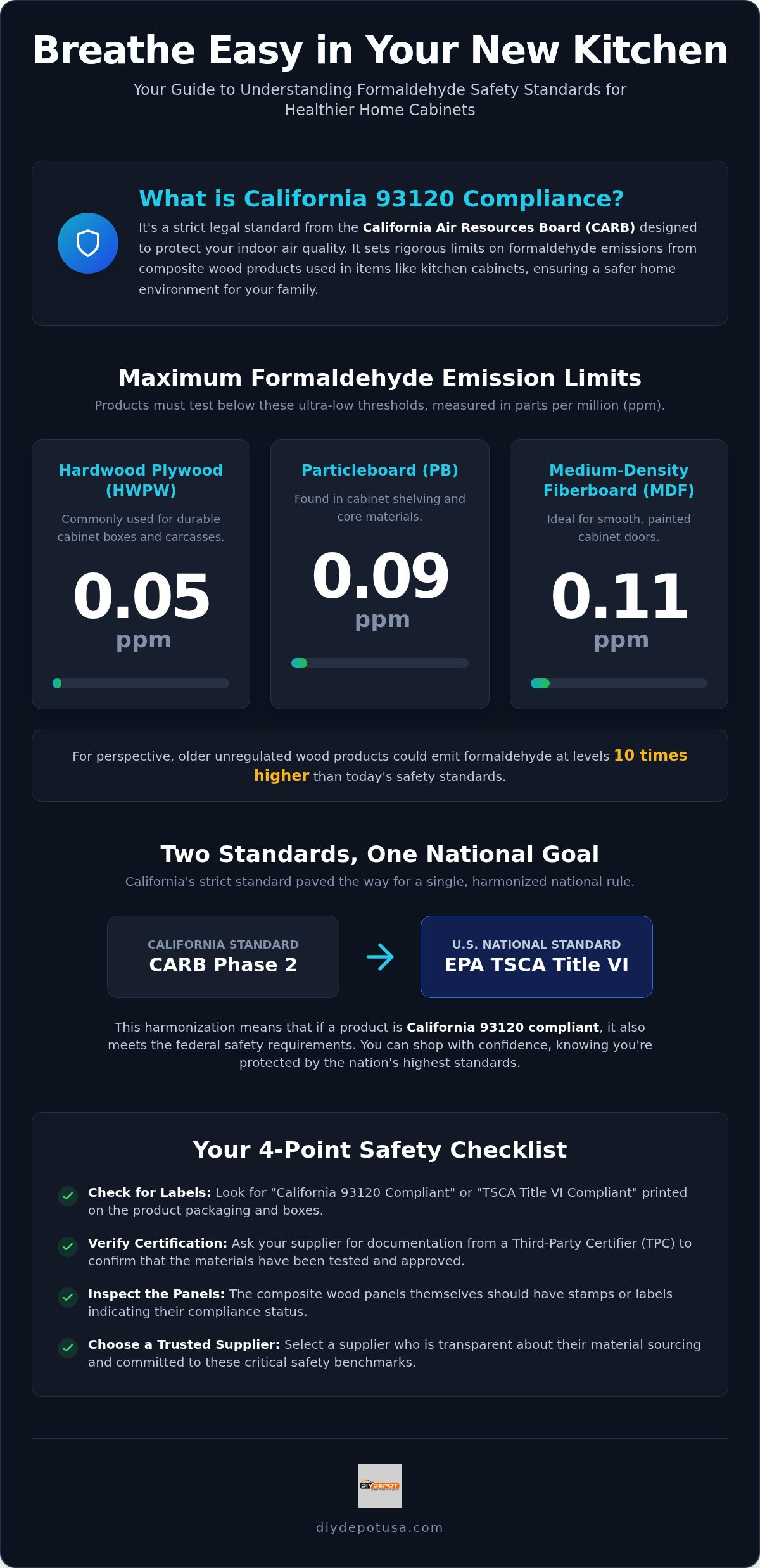
- Hardwood Plywood (HWPW): This is the preferred material for cabinet carcasses and boxes. Under current rules, it must emit no more than 0.05 parts per million (ppm) of formaldehyde.
- Particleboard (PB): Frequently found in cabinet shelving or core materials, this material has a limit of 0.09 ppm.
- Medium-Density Fiberboard (MDF): Because it provides a perfectly smooth surface for paint, MDF is often used for shaker cabinet doors. Standard MDF is capped at 0.11 ppm, while thin MDF allows for 0.13 ppm.
These limits are monitored through third-party certification to ensure that every panel used in your kitchen meets the safety criteria before it ever leaves the factory.
Why Formaldehyde is Used in Cabinetry
Formaldehyde isn’t added to cabinets just for the sake of it. It serves as a key ingredient in the resins and glues that bond wood fibers together. These adhesives provide the structural integrity and moisture resistance needed to hold heavy granite countertops or withstand the humidity of a busy kitchen. However, older “high-fuming” glues were notorious for off-gassing into the home. Today, manufacturers have shifted toward ultra-low emitting formaldehyde (ULEF) or no-added formaldehyde (NAF) resins. This evolution allows us to offer durable, professional-grade cabinets without compromising the air quality in your kitchen. Choosing products that are california 93120 compliant for formaldehyde ensures that your home improvement project remains a healthy investment. It’s about finding that perfect balance between a cabinet that won’t fall apart and a home that stays safe for your children and pets.
Understanding Emission Levels and Your Safety
The term “off-gassing” often brings up images of toxic clouds, but it’s actually a natural process where vapors escape from a material into the surrounding air. In a kitchen setting, the goal isn’t necessarily to reach zero emissions, since even natural, raw wood can release trace amounts of organic compounds. Instead, the focus is on keeping those levels so low they don’t impact your health. When a product is california 93120 compliant for formaldehyde, it means the materials have been tested and proven to stay below very strict safety thresholds. These limits ensure that your indoor air remains clean enough for everyday living without the risks associated with older, unregulated construction materials.
The specific limits for compliance are measured in parts per million (ppm), which is a tiny fraction of the air volume. These benchmarks are now harmonized with the EPA’s Formaldehyde Emission Standards. For example, the hardwood plywood used in many cabinet boxes is capped at just 0.05 ppm. Particleboard is limited to 0.09 ppm, and medium-density fiberboard (MDF) must stay under 0.11 ppm. Before these regulations existed, some composite wood products emitted formaldehyde at levels ten times higher than what’s allowed today. By sticking to these modern standards, you’re choosing a home environment that’s significantly safer than those built just a few decades ago.
Health Benefits of Choosing Compliant Materials
Opting for compliant materials provides immediate benefits for your family’s comfort. Low-emission cabinets significantly reduce the risk of respiratory irritation, which is a major win for anyone dealing with asthma or seasonal allergies. Children and pets are particularly sensitive to air quality because they breathe more rapidly and spend more time near the floor where heavier vapors might settle. Prioritizing safety during your purchase means you’re creating a healthy space for the long haul. If you’re ready to start your project, you can find shaker cabinets that meet these standards without breaking your budget.
The ‘New Cabinet’ Smell: What’s Normal?
It’s perfectly normal to notice a scent after your cabinets are installed, but don’t panic. A “new cabinet” smell isn’t always a sign of dangerous chemicals. Often, you’re simply smelling fresh wood dust or the protective finish on the doors. Even though products that are california 93120 compliant for formaldehyde have very low emissions, any new furniture can benefit from a bit of air. We suggest opening your windows or using a HEPA air purifier for 48 to 72 hours after installation. This simple step helps clear out assembly dust and ensures that any initial off-gassing dissipates quickly. Most emissions from compliant materials reach background levels within a few weeks, leaving you with nothing but a beautiful, fresh kitchen.
CARB Phase 2 vs. TSCA Title VI: What’s the Difference?
You might notice two different labels on your cabinet boxes: one for CARB Phase 2 and another for TSCA Title VI. This often leads to a common question: is one of these standards safer than the other? The short answer is that they’re effectively the same. California took the lead in 2007 by creating the 93120 regulation, and the U.S. Environmental Protection Agency (EPA) eventually adopted these exact same emission limits for the entire country. Today, being california 93120 compliant for formaldehyde means a product meets the highest safety benchmarks recognized in North America. Whether you live in Los Angeles or New York, these labels provide the same level of protection for your home’s air quality.
The California’s Composite Wood Products Program was the blueprint for the national standard known as TSCA Title VI, which went into full effect on June 1, 2018. Because the federal government modeled its rules after California’s, the two programs are harmonized. California officially accepts products labeled as TSCA Title VI compliant as meeting their state requirements. This national shift has simplified things for manufacturers and gives you consistent safety across all fifty states. You don’t have to worry about “California-only” versions of cabinets; the high standard is now the national standard.
Federal vs. State Requirements
While TSCA Title VI is the national “gold standard,” the California 93120 label remains the most recognized name in the industry. This is because California’s rules were the only ones in place for nearly a decade before the EPA stepped in. For you as a buyer, this means any shaker cabinet you purchase today should carry the TSCA Title VI mark at a minimum. This federal oversight ensures that every step of the supply chain, from the mill that makes the plywood to the warehouse that ships your base cabinets, follows the same strict testing protocols. It removes the guesswork and ensures that “budget-friendly” doesn’t mean “unregulated.”
Labeling Requirements for Finished Goods
When your new vanity or wall cabinets arrive, take a quick look at the packaging or the back of the unit. A compliant product must have a permanent label or a stamp. This label isn’t just for show; it includes vital information like the manufacturer’s name, the production date, and a lot number for tracking. You might also see specific designations like “NAF” or “ULEF.” These aren’t just more alphabet soup. “NAF” stands for No Added Formaldehyde, while “ULEF” means Ultra-Low Emitting Formaldehyde. These designations indicate that the manufacturer went above and beyond the standard requirements. Seeing these marks along with a statement that the product is california 93120 compliant for formaldehyde tells you that your supplier is transparent about the materials they use.
How to Verify Compliance When Buying Cabinets
Ensuring your home remains a safe haven starts with being a proactive shopper. While most reputable retailers follow the law, you should always double-check the physical evidence when your order arrives. Verifying that your purchase is california 93120 compliant for formaldehyde isn’t a complex task, but it does require a bit of attention to detail. This process relies on third-party certifiers who independently test factory samples to ensure they meet the parts-per-million limits we discussed earlier. These certifiers provide the bridge between a manufacturer’s claim and the actual safety of your kitchen. You aren’t just buying wood; you’re buying a documented standard of health for your family.
Checking the Packaging
When your shipment arrives, your first stop should be the shipping cartons. Look for a permanent stamp or a printed label on the outside of the box. This label must state compliance with either CARB Phase 2 or TSCA Title VI. It’s vital to check every component to ensure consistency across your entire order:
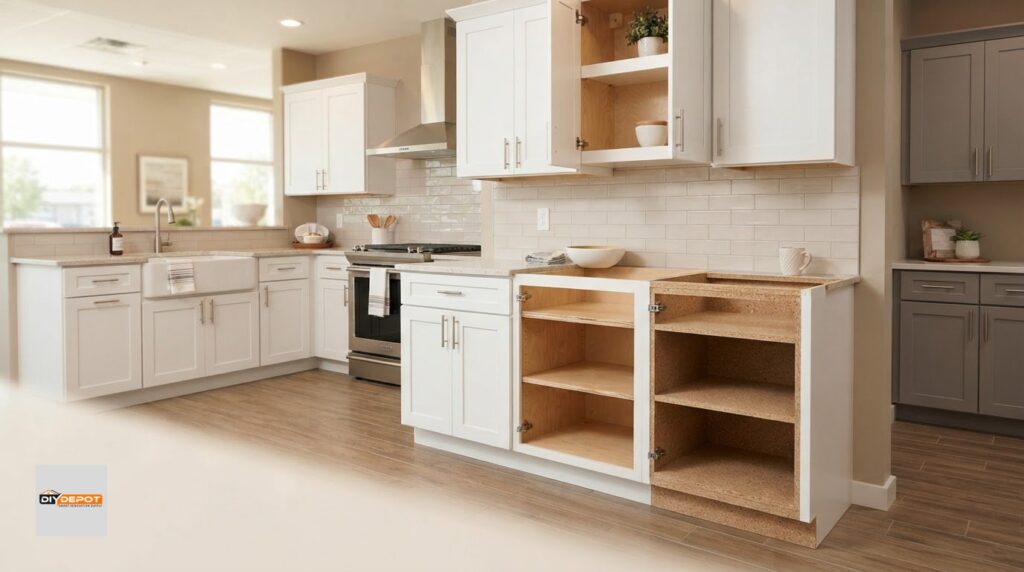
- Base cabinet boxes and carcasses
- Wall cabinet frames and interior shelving
- Vanity units and drawer boxes
If you find a box without a label, don’t ignore it. This is a common red flag, especially with some “discount” imports or unbranded wholesale lots. A missing label could mean the product was manufactured before current standards or sourced from a mill that doesn’t follow strict testing protocols. Contact your supplier immediately if any part of your order seems unverified. Real safety comes from documented compliance, not verbal promises.
Asking the Right Questions to Suppliers
Don’t be afraid to dig deeper before you finalize your order. A transparent supplier will be happy to answer your questions and provide documentation. If you’re placing a large order, you can ask for a Certificate of Compliance (CoC). This document proves the materials have been tested by a certified third party. You should also inquire about the core materials used in their ready to assemble kitchen cabinets. High-quality RTA options use plywood or MDF that is strictly monitored for emissions.
When sourcing wholesale kitchen cabinets, always confirm they meet current national safety laws rather than just “industry averages.” If a supplier gives you vague answers or says the labels aren’t necessary because the product is “natural,” consider it a warning sign. Every piece of composite wood must be tested. If you want to skip the guesswork, you can browse our certified shaker cabinets to see what compliant, high-quality materials look like in person.
Quality and Safety: The DIY Depot USA Commitment
At DIY Depot USA, we believe that a beautiful kitchen should never come at the expense of your family’s health. We’ve built our business on the idea that professional-grade materials should be accessible to everyone, regardless of their renovation budget. That’s why every product in our inventory is california 93120 compliant for formaldehyde. By prioritizing these standards, we ensure that our warehouse-direct shaker cabinets meet the same rigorous safety requirements as the most expensive custom options on the market. It’s our way of being a reliable partner in your home improvement journey, offering products that are as safe as they are stylish.
Choosing shaker cabinets from our collection means you’re getting a timeless look backed by modern science. We don’t believe in cutting corners when it involves the air you breathe. By sourcing materials that meet both CARB Phase 2 and TSCA Title VI standards, we provide a foundation for your home that lasts for decades without the worry of harmful off-gassing. Our goal is to take the stress out of the selection process, giving you the confidence that your new kitchen or bathroom is a healthy environment from the moment of installation.
Premium Construction in Every Cabinet
Our commitment to quality starts with the core of our cabinets. We use compliant plywood for our cabinet boxes and solid wood for our door frames, providing a level of durability that cheap alternatives simply can’t match. This intersection of health safety and professional-grade materials is what sets our products apart. For instance, our bathroom vanities Bakersfield are built to withstand the unique humidity and daily wear of a busy bathroom while maintaining strict emission standards. You get the peace of mind that comes with a safe product without sacrificing the structural integrity needed for a long-lasting renovation.
Your Partner in a Safer Home Renovation
We know that choosing the right materials can feel like a high-stakes decision. Our team is here to simplify the process, offering professional kitchen design support and transparent sourcing information. Whether you’re a homeowner tackling your first DIY project or a contractor looking for reliable stock, we provide the expertise you need to move forward with confidence. We handle the technical details of ensuring everything is california 93120 compliant for formaldehyde so you can focus on the creative parts of your design. With direct free delivery and available assembly services, we make it easy to achieve professional results that look great and keep your indoor air clean. Once your compliant cabinets arrive, you can follow our diy shaker vanity installation guide to ensure a secure, level finish with perfectly aligned doors. We’re here to ensure your project is a success from start to finish.
Build a Healthier Home with Confidence
Choosing new cabinets shouldn’t feel like a gamble with your indoor air quality. By understanding that California 93120 and TSCA Title VI are now the national benchmarks for safety, you can filter out low-quality options and focus on materials that protect your family. Remember to check for physical labels on your delivery and don’t hesitate to ask your supplier for documentation. When you prioritize products that are california 93120 compliant for formaldehyde, you’re investing in both the beauty and the long-term health of your living space. It’s about creating a kitchen where you can cook and gather with total peace of mind.
We’re here to help you navigate these choices without the stress. Every one of our cabinets meets the most stringent TSCA Title VI and CARB Phase 2 standards, ensuring professional-grade durability alongside premium safety. Plus, our professional design support and direct delivery make your renovation easier than ever. Browse our collection of high-quality, compliant shaker cabinets today. Your dream kitchen is within reach; let’s make it a safe one together.
Frequently Asked Questions
Is California 93120 compliant wood safe for my home?
Yes, it is considered safe because it meets the strictest emission standards in North America. These regulations limit formaldehyde to trace levels that don’t impact indoor air quality for most people. By choosing materials that are california 93120 compliant for formaldehyde, you ensure your family isn’t exposed to the high chemical levels found in older or unregulated products. It’s a reliable benchmark for a healthy home environment.
What happens if my cabinets are not CARB Phase 2 compliant?
Non-compliant cabinets may release higher levels of formaldehyde gas into your home over several years. This off-gassing can cause eye, nose, and throat irritation, especially in poorly ventilated spaces. While you don’t need to panic, it’s a significant risk for those with respiratory issues. If you’re planning a new project, sticking to certified materials is the best way to avoid these long-term air quality problems from the start.
How can I tell if my existing cabinets have formaldehyde?
You can check for a compliance stamp on the back of the cabinet box or inside the drawer panels. If the cabinets were installed before 2009, they likely don’t meet current standards. Formaldehyde is a colorless gas, so you can’t see it, but a strong, lingering chemical smell in a new kitchen is a common sign. For older cabinets, the emissions usually decrease over time as the wood cures.
Does the 93120 label mean the cabinets are made in California?
No, the label refers to the safety standard, not the manufacturing location. Products made anywhere in the world must meet these specific California Air Resources Board requirements to be sold in the United States. Whether your shaker cabinets are made in a domestic factory or imported, the 93120 mark ensures they follow the same strict rules for chemical safety and indoor air quality.
What is the difference between CARB 2 and TSCA Title VI?
There is no functional difference in the emission limits between the two standards. CARB Phase 2 was the original California state regulation, while TSCA Title VI is the national EPA standard that adopted those same rules. Today, a product that is california 93120 compliant for formaldehyde automatically meets the federal TSCA Title VI requirements. You might see both labels on your cabinet boxes, and both indicate the same high level of safety.
Can I seal cabinets to stop formaldehyde off-gassing?
Applying a specialized sealer or a high-quality paint can help reduce emissions, but it’s not a perfect fix. Most formaldehyde escapes through unsealed edges, like where the shelving meets the cabinet wall. While laminates and veneers act as natural barriers, they don’t block 100% of the vapors. It’s much more effective to purchase cabinets that are certified low-emission from the beginning rather than trying to fix them later.
Are all RTA cabinets California 93120 compliant?
Not all ready-to-assemble cabinets meet these standards, so you must verify the labels before buying. Some budget-focused retailers source materials from mills that don’t follow third-party testing protocols. At DIY Depot USA, we ensure all our RTA shaker cabinets are fully compliant with national safety laws. Always look for the TSCA Title VI or CARB Phase 2 stamp on the shipping carton to be absolutely certain of what you’re bringing home.
Is formaldehyde in cabinets a long-term health risk?
High levels of formaldehyde are recognized as a human carcinogen, making long-term exposure a serious concern. Chronic exposure to elevated levels can lead to persistent respiratory problems and other health issues over many years. This is why modern regulations like California 93120 are so vital. They keep emissions at trace levels that are not known to pose a significant risk to healthy individuals, providing a safer environment for your family.