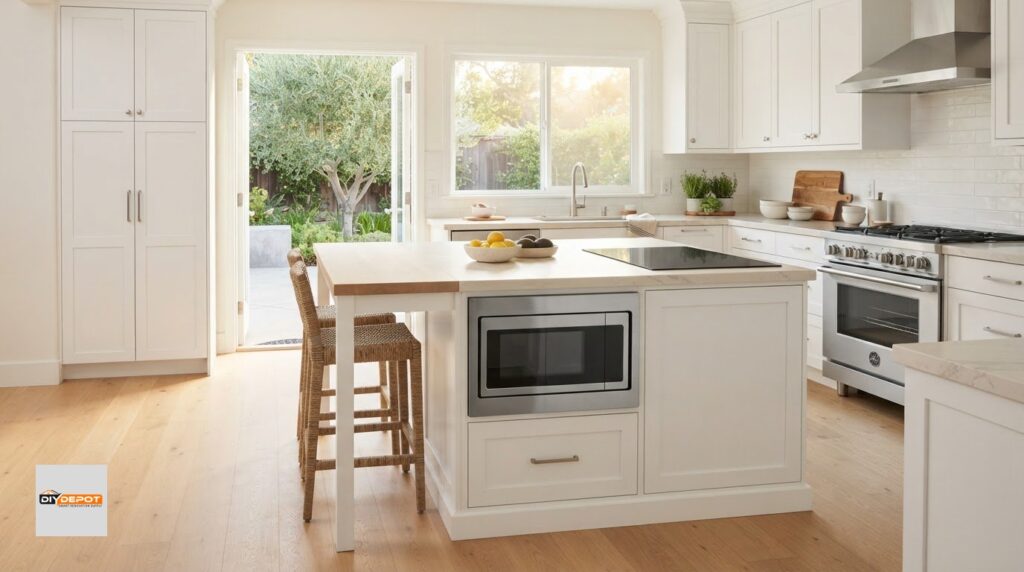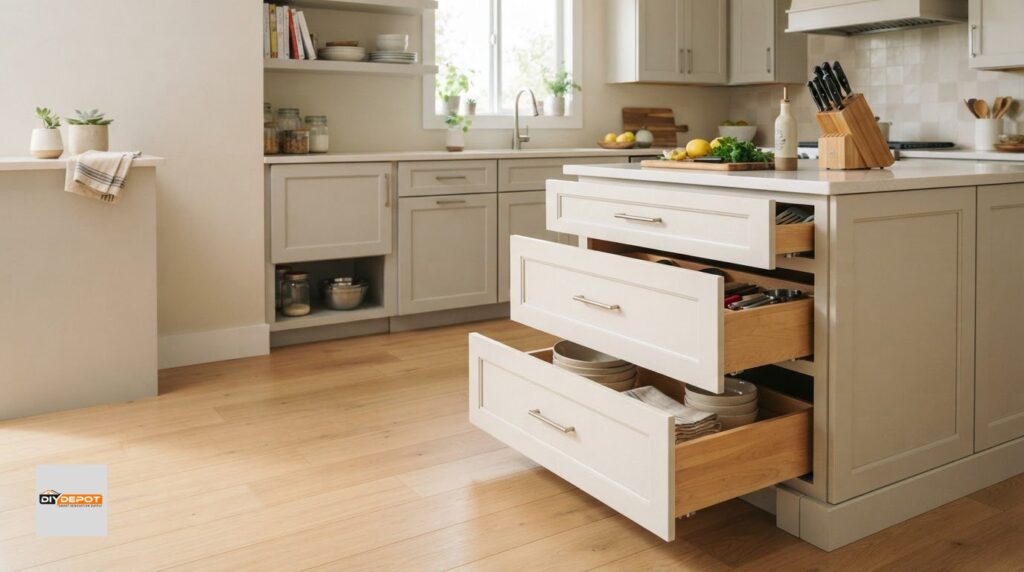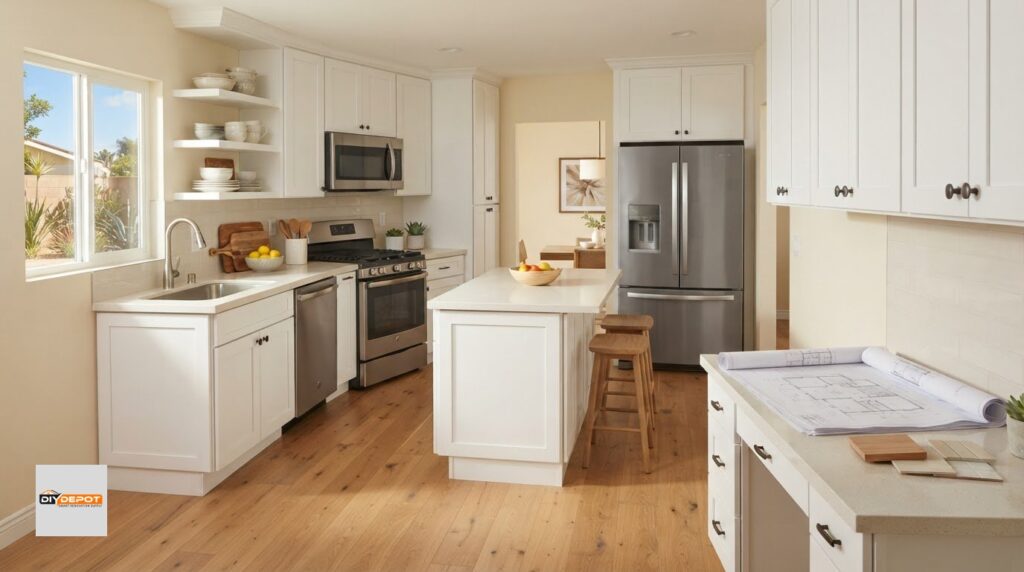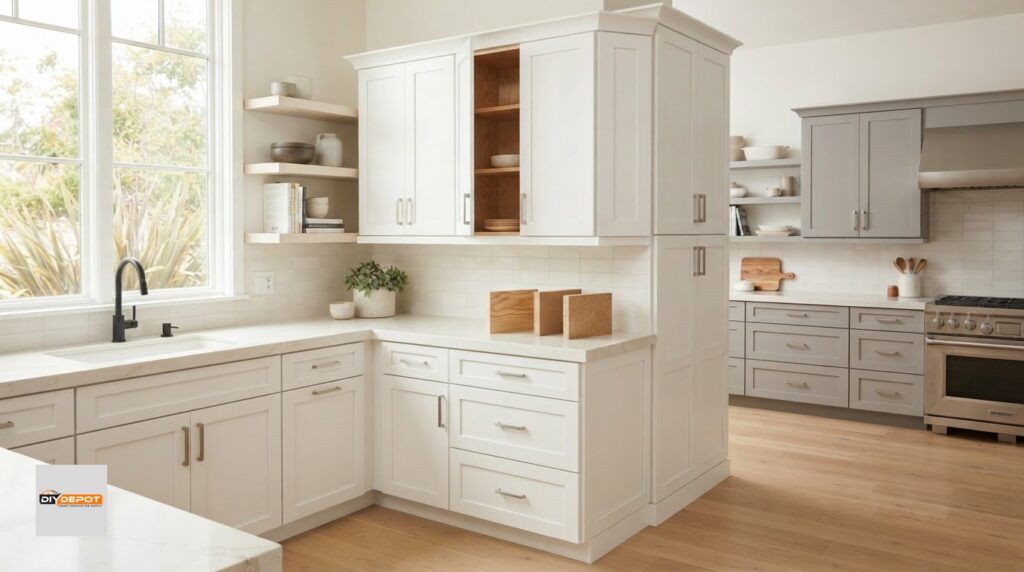

When comparing full overlay vs. partial overlay cabinets, the key difference is how much of the cabinet face frame remains visible: full overlay doors cover nearly all of it, while partial overlay doors leave more frame exposed. Partial overlay typically leaves 1/2-1 inch of frame visible around each door and drawer. It also uses fewer materials and is generally the more budget-friendly option.
That visible frame affects more than appearance. It shapes the kitchen’s overall style and can help guide your choice of cabinet construction.
If you’re weighing a clean, close-set look against a more traditional reveal or a tighter budget, the choice may feel less straightforward than it seems. The right fit depends on the look you want and how you plan to use your kitchen.
This guide explains overlay and reveal, compares full and partial overlay construction, and shows how each can affect appearance and cost. Use the practical criteria below to weigh your kitchen’s needs and your preferences before choosing.
Key Takeaways
- Compare how much cabinet frame shows around each door and in the spaces between doors to picture the overall effect.
- Consider construction as well as appearance: partial overlay doors are less demanding to size precisely during manufacturing and installation.
- Weigh material use alongside your budget, since partial overlay typically uses fewer materials than full overlay.
- Think about hardware preferences: the spacing in partial overlay cabinetry can suit a look without knobs or pulls.
- Match the cabinet style to your kitchen’s priorities, including the desired look, available budget, and how you want to use the space.
What is Cabinet Overlay?
Cabinet overlay describes how much of the face frame a door or drawer front covers. Full and partial overlay leave different reveals, changing the kitchen’s appearance and the visible spacing between cabinet fronts.
Partial Overlay Door Coverage
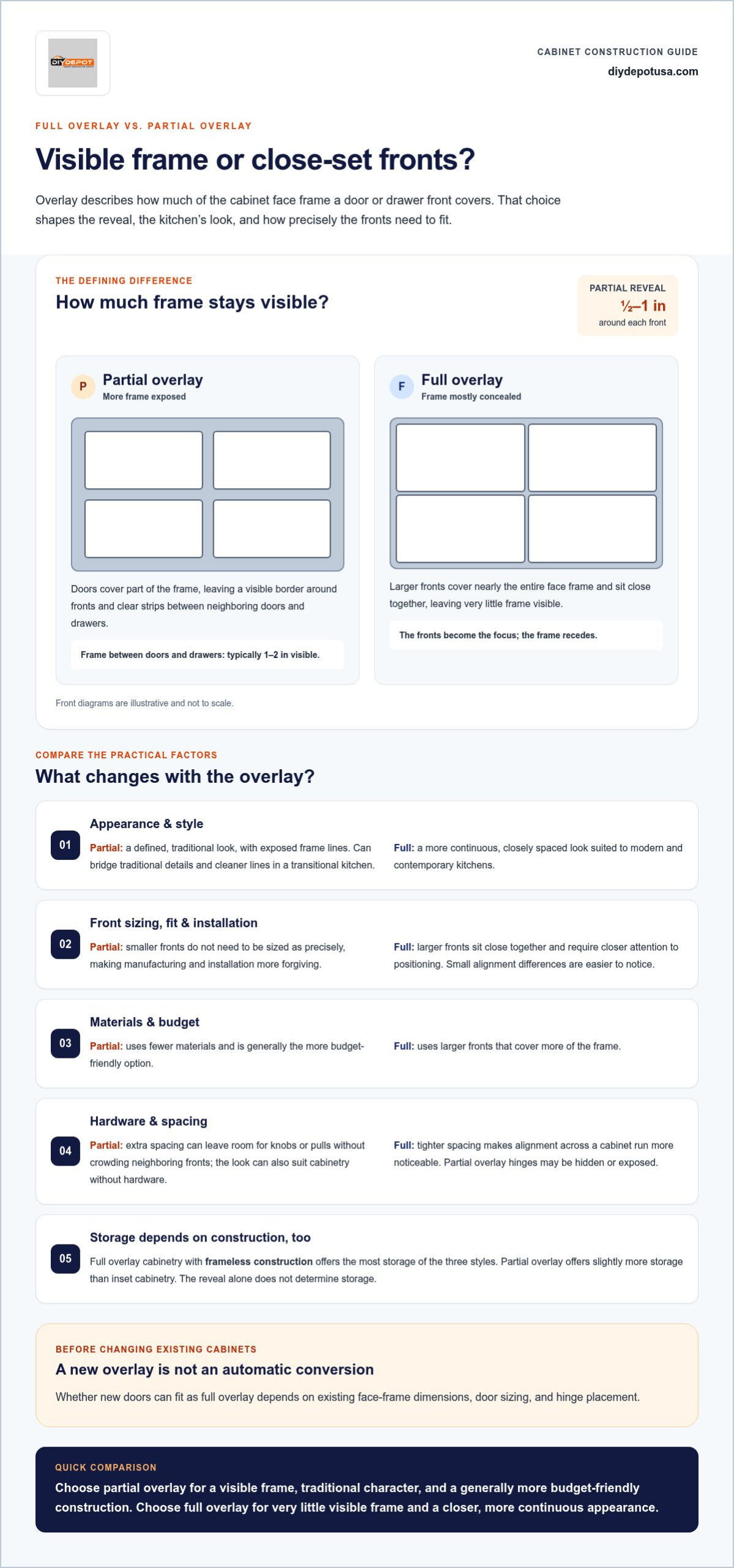
Partial overlay doors cover part of the cabinet frame, leaving a visible border around each door and drawer. The reveal is typically 1/2-1 inch around each front, with 1-2 inches of frame visible between doors and drawers. That grid of exposed frame gives partial overlay cabinetry a more defined, traditional appearance than full overlay.
Full Overlay Door Coverage
Full overlay doors cover nearly the entire face frame, leaving very little visible. The doors and drawer fronts also cover more of the cabinet box, creating tighter spacing than partial overlay. The result is a more continuous appearance, with the fronts in focus and the frame receding.
Full overlay can require more precise positioning than partial overlay because the fronts sit close together and leave little frame showing. Partial overlay is generally more forgiving to manufacture and install. With full overlay, small differences in alignment between neighboring fronts are easier to notice.
Visible Face Frames
A visible face frame creates a border around each opening and clear strips between neighboring doors. With partial overlay, those exposed lines make the frame part of the cabinet’s appearance. Full overlay hides most of the frame, creating a closer-set look.
Storage depends partly on cabinet construction, not just the reveal. Full overlay cabinetry with frameless construction offers the most storage of the three styles, while partial overlay offers slightly more storage than inset cabinetry.
Classic and Modern Cabinet Appearance
Partial overlay suits a classic look when you want the face frame to remain visible. Its distinct borders can complement simple Shaker doors, and the reveal can help bridge traditional details and cleaner lines in a transitional kitchen. Full overlay suits modern and contemporary kitchens, where tighter door spacing creates a smoother, more unified appearance.
Choose based on the visual effect you want: an exposed frame for traditional character, or closely spaced fronts for a cleaner, more modern look.
| Overlay option | Frame visibility | Door spacing | Appearance |
|---|---|---|---|
| Partial overlay | Visible around fronts and between doors | More space between fronts | Defined, traditional |
| Full overlay | Very little face frame visible | Tighter spacing | Continuous, contemporary |
Choose the overlay that best matches your preferred reveal, kitchen style, and storage priorities.
Converting partial overlay cabinets with new doors and hinges isn’t automatic. Existing face-frame dimensions, door sizing, and hinge placement determine whether new fronts can fit as full overlay.
Partial overlay cabinet door and drawer construction
Overlay affects how doors and drawer fronts are sized and positioned against a cabinet frame. Comparing the construction makes it clear why partial overlay leaves more frame exposed, while full overlay uses larger fronts that sit closer together.
Partial Overlay Door and Drawer Placement
Partial overlay doors and drawer fronts cover part of the face frame, leaving the cabinet structure visible around each opening. On a row of drawers, for example, frame strips remain between the fronts instead of forming one nearly continuous surface. This placement clearly separates doors and drawers and makes the face frame part of the cabinet’s visual pattern.
Partial overlay uses smaller doors and drawer fronts than full overlay. Each front covers less of the frame, so its edges sit farther from neighboring fronts. This spacing can leave room for knobs or pulls without crowding adjacent doors. Partial overlay hinges may be hidden or exposed, so hinge style can also affect the finished look.
Full overlay doors and drawer fronts cover nearly the entire face frame and the cabinet box. Their larger fronts sit over the frame instead of leaving broad frame sections visible. For example, a full overlay drawer front can align closely with the doors beside it, creating a more connected arrangement than partial overlay. European hinges helped cabinet makers build doors that sit on top of the frame rather than within it.
Placement matters across a cabinet run, not just on one door. With partial overlay, the exposed frame forms repeated lines around doors and drawers. With full overlay, the fronts sit closer together, making alignment from one cabinet to the next more noticeable. A mismatched drawer front or uneven gap can interrupt the continuous look.
Partial Overlay Door and Drawer-Header Sizing
Partial overlay doors and drawer fronts leave more of the frame uncovered than full overlay fronts. They are smaller and don’t need to be as precisely sized during manufacturing. This makes partial overlay more forgiving to manufacture and install, while full overlay requires closer attention to fit and alignment.
Consider a cabinet with a top drawer above two doors. With partial overlay, the drawer front and doors are sized to preserve visible frame around each front. With full overlay, larger fronts cover more of the frame. Door style still matters: simple Shaker or flat fronts keep the visible lines of partial overlay from competing with elaborate details.
For your project, compare frame exposure, front sizing, and hinge placement across the complete cabinet run. Explore cabinet options to see how different fronts might suit your layout.
Choosing an overlay based on preferences, budget, and kitchen needs
Choose an overlay by weighing the look you want, your budget priorities, and how the kitchen will function. Full overlay creates a close-set, contemporary appearance, while partial overlay makes the cabinet frame part of the design. Comparing full overlay vs partial overlay cabinets is most useful when you consider these factors together, rather than treating appearance as the only deciding point.
Partial overlay cabinets have practical advantages. They use fewer materials than full overlay cabinets, making them more budget-friendly. According to market sources, partial overlay cabinets leave space between cabinets, so knobs and pulls are not necessary for people who prefer a hardware-free look. The tradeoff is a more visible frame, an appearance often associated with builder-grade cabinetry and production homes.
Full overlay can create a more unified appearance in a modern kitchen by hiding most of the frame. Its price varies with the quality and craftsmanship selected, so overlay alone doesn’t determine total cost. Full overlay is generally more affordable than inset cabinetry, which requires more craftsmanship.
Consider how the cabinet fronts will look across the room. Partial overlay’s visible borders, for example, can make a simple Shaker door feel more traditional. Full overlay can make the same door style look cleaner and more contemporary. Transitional kitchens can use either effect, depending on whether you want the frame or the fronts to stand out.
Partial overlay works well when the budget matters and visible frame lines suit the design. Its simple door styles, including flat fronts and Shaker doors, tend to look pleasing with this construction. Full overlay may fit better when a close-set look is the priority, while selected materials and workmanship shape its cost. This practical comparison helps clarify which features matter most in your room.
Use this decision guide to narrow the choice:
- Prioritize lower material use: consider partial overlay, which uses fewer materials.
- Prefer a hardware-free appearance: partial overlay leaves space between cabinets, so pulls aren’t necessary.
- Want a contemporary visual effect: consider full overlay’s tighter arrangement of cabinet fronts.
- Want a traditional feel: decide whether visible frame lines complement your door style and kitchen.
- Need to manage project cost: compare construction and material choices, not appearance alone.
Partial overlay’s advantages include fewer materials, a more budget-friendly construction, and spacing that can work without hardware. Its tradeoffs include a more visible cabinet frame and an appearance commonly linked with production homes. Full overlay hides more of the frame, but material and craftsmanship choices influence its price.
Before choosing, picture the actual kitchen layout: a run of Shaker doors, drawer fronts, and cabinet openings. Decide whether visible frame lines should define the room or whether the fronts should read as a closer, more continuous surface. That’s the central choice when comparing full overlay vs partial overlay cabinets.
Cabinet overlay and reveal terminology
Cabinet overlay describes how a door or drawer front relates to the cabinet’s face frame. The reveal is the portion of that frame left visible when the front is closed. The terms describe the same visual relationship from different angles: overlay measures coverage, while reveal describes what remains exposed.
There are three cabinet overlay styles: full overlay, partial overlay, and inset. Full overlay doors and drawers cover the cabinet box and nearly all the face frame. Partial overlay fronts cover less, exposing more of the frame. Inset fronts sit inside the frame, with their surfaces aligned to it when closed. These styles influence the visible lines around each opening.
For example, consider a cabinet with two doors and a drawer above them. With partial overlay, the frame remains visible around and between the fronts. With full overlay, the fronts cover more of the frame and sit closer together. With inset construction, each front fits inside its opening rather than sitting over the frame. The reveal changes even when the cabinet layout stays the same.
The word “reveal” can be confusing because it doesn’t name a separate door style. It describes the exposed frame around a closed door or drawer. A wider reveal makes the cabinet frame more noticeable; a narrower reveal gives the fronts a closer-set appearance. For partial overlay cabinets, the typical reveal is 1/2-1 inch around each door and drawer, with 1-2 inches visible between fronts.
Overlay doesn’t specify the door style. A Shaker door can be used with different overlay styles; its center panel and rails are design features separate from frame coverage. Two Shaker cabinet runs can look distinct if one uses partial overlay and the other full overlay. The door profile may match, while the reveal changes the overall appearance.
Hinges are another detail to distinguish from overlay. Partial overlay hinges may be hidden or exposed, but hinge visibility alone doesn’t define the overlay. Check the closed door’s position against the frame: a front covering most of the frame indicates full overlay, while a visible frame around it indicates partial overlay. An inset front sits within the opening.
Use these definitions when comparing cabinet descriptions: first identify whether the front sits over or inside the frame, then note how much frame remains visible. This two-step check separates overlay type from door style and makes product descriptions easier to compare. It also helps explain why the same kitchen layout can look different without changing its cabinet openings.
What are the pros and cons of full overlay cabinets?
Full overlay cabinets cover nearly all of the face frame, leaving very little visible. This creates tighter spacing between doors and drawers, giving the kitchen a more continuous appearance. Concealed hinges can contribute to a polished, contemporary look, while simple fronts can also suit transitional kitchens.
One advantage is visual consistency across a cabinet run. Full overlay doors above a row of drawers, for example, can appear as closely aligned fronts, with less frame interrupting the surface. The cabinet frame recedes, so the door style and finish become stronger visual features. This can suit homeowners who want a modern effect without changing the kitchen’s basic layout.
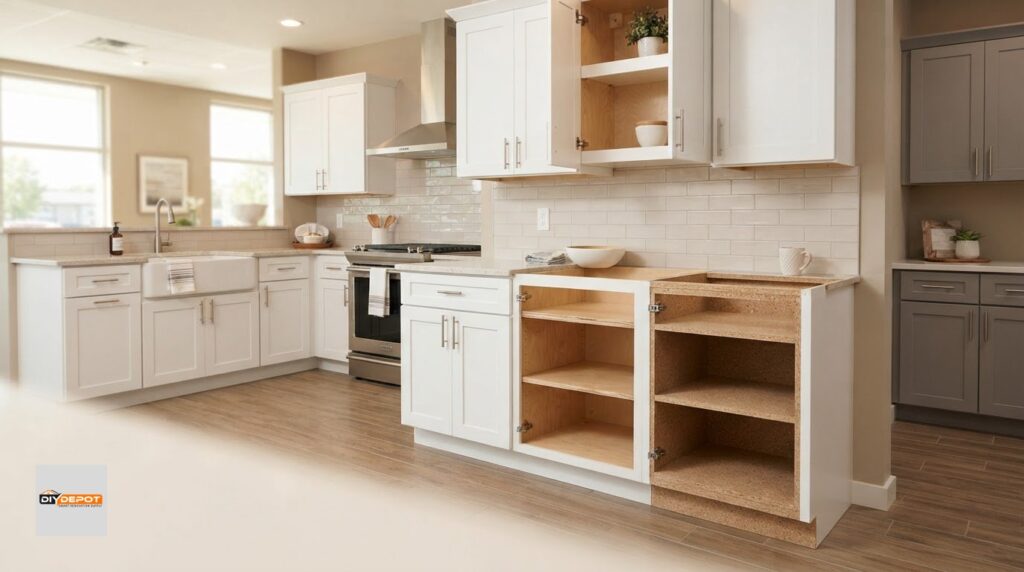
Full overlay can also provide more storage than partial overlay or inset cabinetry when built with frameless construction. Cabinet construction matters here, not the overlay label by itself. Consider the cabinet box and interior layout alongside door coverage. This helps avoid assuming that every full overlay cabinet offers the same usable space.
There are tradeoffs. Full overlay doors cover more of the cabinet frame, so their sizing and placement need closer attention than partial overlay fronts. Partial overlay doors are generally more forgiving to manufacture and install. In a full overlay run, uneven gaps or misaligned fronts can stand out because the fronts sit close together.
Materials also affect the comparison. Partial overlay cabinets use fewer materials and are generally more budget-friendly. Full overlay costs vary with the quality and craftsmanship selected, though full overlay is generally more affordable than inset cabinetry. Inset requires more craftsmanship, so compare construction choices rather than treating appearance as the only cost factor.
- Choose full overlay if you prefer a close-set, contemporary appearance with little frame showing.
- Consider partial overlay if a visible frame, more forgiving fit, or lower material use matters more.
- Compare construction if storage is a priority, since frameless construction affects usable space.
A Shaker door style can work with full overlay, but the closer spacing puts more focus on alignment across the cabinet run. The same simple door profile may look more traditional with partial overlay because more frame remains visible. Consider the whole kitchen, including cabinet rows and drawers, before deciding which effect suits your room.
Full overlay’s main benefits are its polished appearance, tighter door spacing, and potential for greater storage in frameless construction. Its tradeoffs include closer fit requirements and material and craftsmanship choices that influence cost. Compare cabinet styles and options as you narrow down the look and construction that suit your kitchen.
DIY Depot: Base Shaker Cabinets
DIY Depot offers Base Shaker Cabinets for kitchen projects where cabinet layout and door style need to work together. If you’re deciding between full and partial overlay, Professional Kitchen Design can help you consider how each reveal fits your kitchen plans. Vanity Shaker Cabinets and Wall Shaker Cabinets are also available for other areas of the home.
Once you’ve settled on the look and construction that suit your needs, explore cabinet options and plan your next steps. A clear overlay choice helps you narrow down the cabinet style for your project.
Contact DIY Depot to discuss your cabinet project.
Make your cabinet choice part of the kitchen plan
Your decision about full overlay vs. partial overlay cabinets can guide the next planning step: picture how cabinet fronts will work with your kitchen layout and how you use the room. Consider which areas need storage, how the cabinet run will look as a whole, and which door style feels right for your home. A clear plan makes it easier to move from comparing options to selecting cabinets for your project.
DIY Depot offers Base Shaker Cabinets, Vanity Shaker Cabinets, and Wall Shaker Cabinets. If you’re ready to explore cabinet choices for your kitchen, contact DIY Depot about your cabinet project.
Take the next step at a pace that feels comfortable. With your priorities in view, you can shape a kitchen that feels considered and personal.
Frequently Asked Questions
What’s the difference?
The difference is how much of the cabinet frame the closed door or drawer front covers. Full overlay creates a closer-set look, while partial overlay leaves more of the frame visible. For a quick visual check, look at the cabinet front: broad frame lines around the doors indicate partial overlay. If the fronts cover most of the frame, it’s full overlay.
What is the difference between full overlay and partial overlay cabinets?
Full overlay uses larger fronts that cover most of the cabinet face, while partial overlay leaves more frame showing around doors and drawers. This affects appearance and construction: full overlay creates a more continuous row of fronts, while partial overlay makes the frame part of the visible pattern. When comparing samples, look at how the fronts sit beside one another, not just at one door by itself.
How much of the cabinet face frame does full overlay cover versus partial overlay?
Full overlay doors cover nearly the entire face frame, leaving very little visible. Partial overlay typically leaves 1/2-1 inch of frame around each door and drawer, with 1-2 inches visible between doors and drawers. These measurements describe visible frame, not the open space needed for a door to swing. Compare a closed front with its surrounding frame to see the difference clearly.
What are the typical door and drawer gap measurements for full and partial overlay cabinets?
For partial overlay, the visible frame is typically 1/2-1 inch around each front and 1-2 inches between doors and drawers. Full overlay fronts sit closer together, but the construction facts here provide no standard gap measurement for them. Also, visible frame width and the clearance between neighboring moving fronts aren’t the same measurement, so don’t treat them as interchangeable.
How do full overlay and partial overlay cabinets compare in price?
Partial overlay is generally more budget-friendly because it uses fewer materials. Full overlay costs vary with the quality and craftsmanship selected, so overlay style alone can’t establish a project’s total cost. For a useful comparison, evaluate the same cabinet layout and door style, then consider the construction and materials involved. This helps separate overlay’s cost effect from other choices.
Which cabinet overlay style works best for modern, traditional, and transitional kitchens?
Full overlay commonly suits modern and contemporary kitchens, where closely set fronts create a streamlined look. Partial overlay can suit traditional kitchens because the visible frame adds definition. Transitional kitchens can work with either style: choose the reveal that best balances traditional details with cleaner lines. A simple Shaker front, for example, can support either direction, while its overlay changes the overall effect.