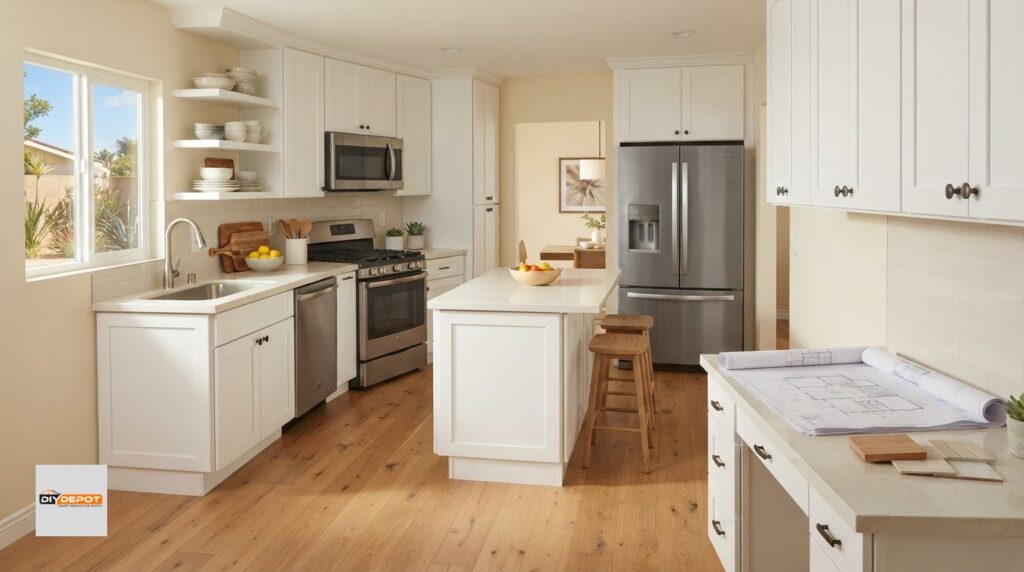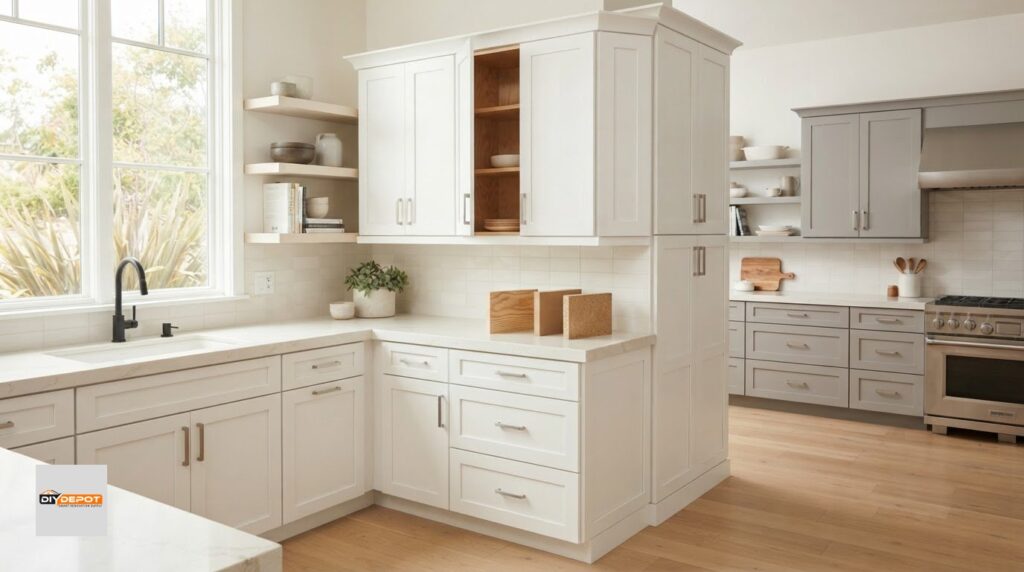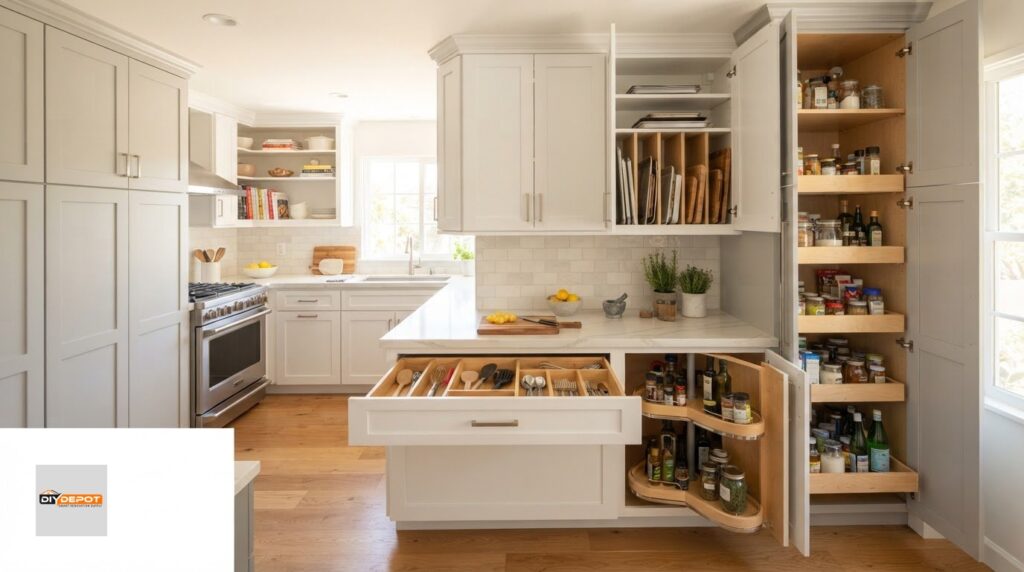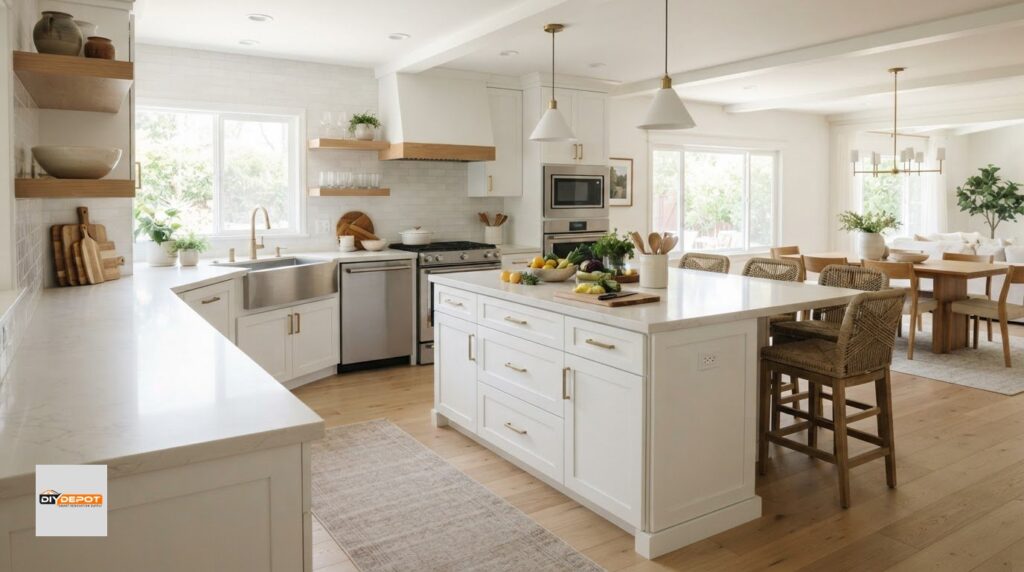

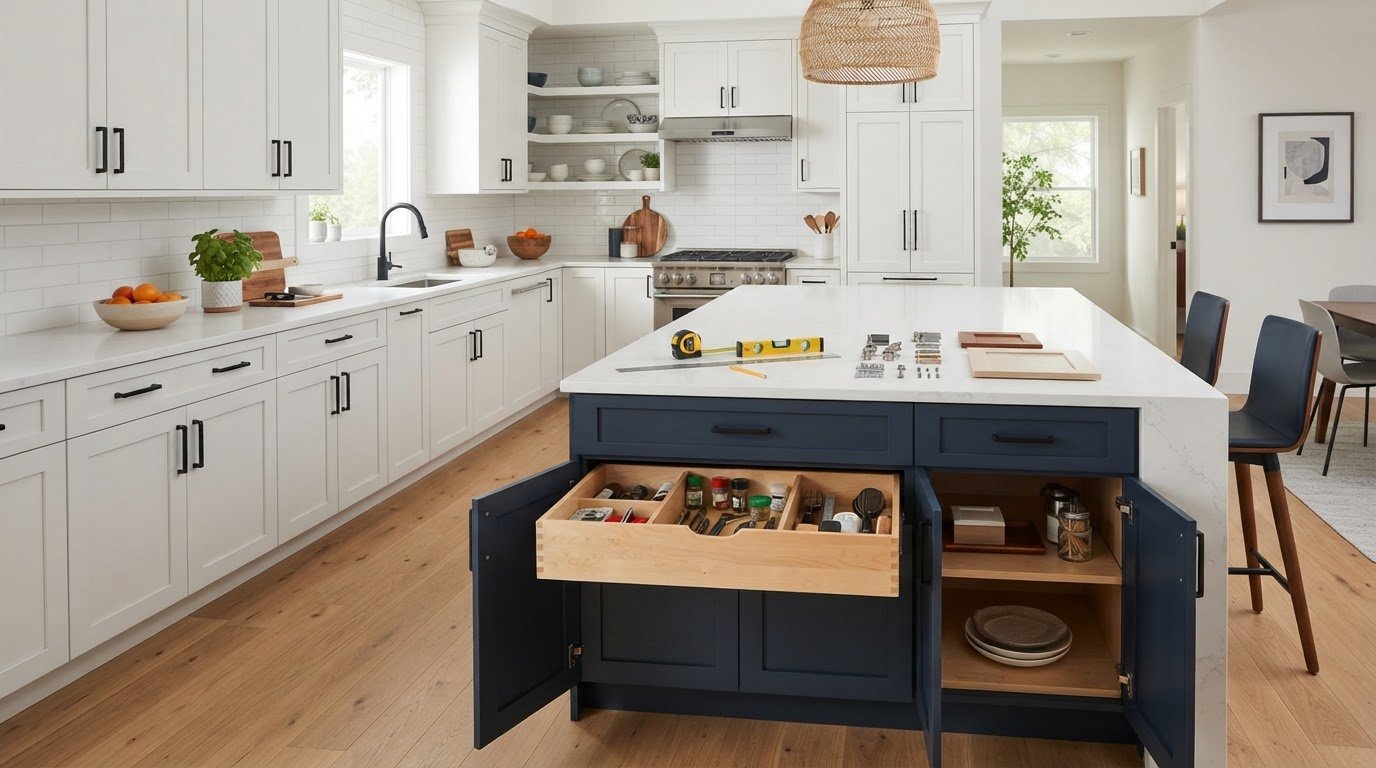
Could stock kitchen cabinets be a smart choice for a long-lasting, polished kitchen rather than a compromise? It’s a fair question if you’re concerned about construction quality, deciding between ready-to-assemble and pre-assembled cabinets, or figuring out how standard sizes will fit your layout. With careful product checks and accurate planning, stock cabinetry can deliver a finished look that suits your room.
This guide explains what construction details to compare, how RTA and pre-assembled cabinets differ, and how to map standard sizes to your kitchen before ordering. You’ll also find practical ways to create a cohesive design without commissioning custom cabinetry.
From choosing base and wall cabinets to planning the layout, the right decisions can help you make the most of your budget and avoid fit problems. Professional kitchen design support, assembly, and installation are also available if you’d like help with the process.
Key Takeaways
- Compare cabinet-box materials, door components, hardware, and finish details before choosing stock kitchen cabinets.
- Weigh stock and custom options against your budget, layout, and project schedule.
- Measure the room and make a simple layout plan to check where standard cabinet sizes will fit.
- Understand what RTA assembly involves and whether professional assembly or installation would make the project easier.
- Use Shaker cabinetry and coordinated design choices to create a polished look without custom cabinetry.
Understanding Stock Kitchen Cabinets in 2026
Stock cabinetry is made in set dimensions for common kitchen layouts, rather than built to order for a specific room. Standard sizes can simplify planning and replacement, but they make measuring especially important. If a wall or corner does not align neatly with the cabinet run, you may need fillers or finished panels to create a clean fit. For an overview of cabinet construction and standard kitchen cabinet sizes, see Wikipedia’s guide to kitchen cabinets.
Stock does not automatically mean flimsy or suitable only for a quick update. Consistent manufacturing and a range of finishes and configurations make stock cabinetry a practical option for homeowners who want a polished result without commissioning custom cabinets. Quality still varies, so compare the materials and construction of the specific cabinets you’re considering.
Shaker is a common choice for stock lines because its simple frame-and-panel door pairs easily with different finishes, hardware, and countertops. Warehouse-direct purchasing can offer value by reducing the number of retail layers between supplier and homeowner. Compare the full order, including delivery, assembly, and installation where applicable, rather than judging by cabinet price alone.
Stock vs. RTA: What Is the Difference?
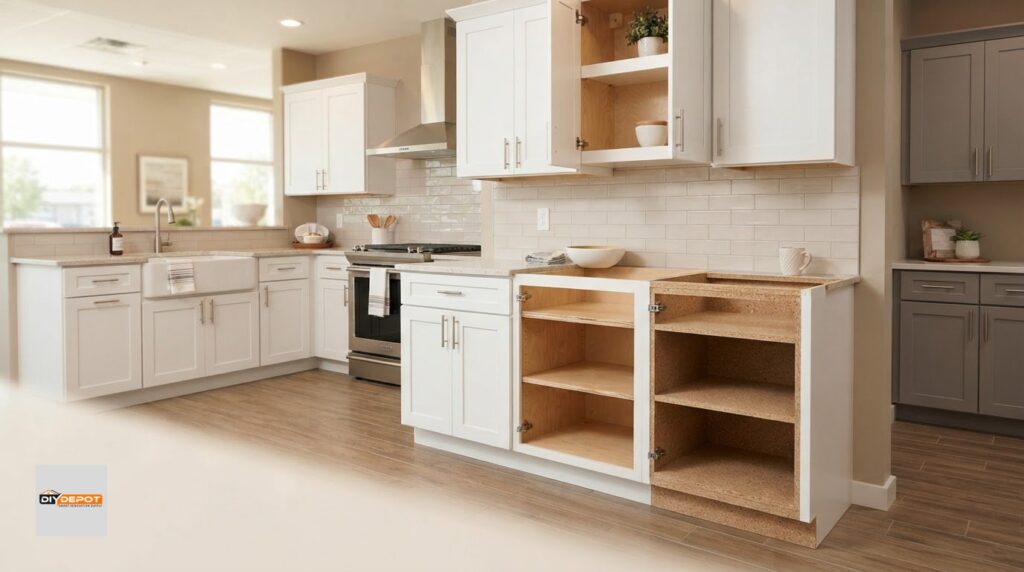
Stock describes how cabinets are made and sized. Ready-to-assemble (RTA) describes how they arrive. RTA cabinets are stock cabinets shipped as components for assembly, while pre-assembled stock cabinets arrive built. When comparing RTA options, check the materials, packaging, assembly instructions, and what help is available if you don’t want to build the cabinets yourself.
Flat-packed boxes can be easier to handle during transport, but components still need protection from moisture, impacts, and rough handling. Assembled cabinets take up more room in transit and may require careful delivery handling, but skip the cabinet-building step at home. Before ordering either option, confirm what the shipping arrangement covers, how to document damage, and whether assembly is included or must be arranged separately.
The Evolution of Shaker Style
Shaker doors have clean lines and restrained detailing, so they can work in farmhouse-inspired kitchens as well as modern, minimalist spaces. Hardware, countertops, and surrounding finishes can shift the overall look without replacing the cabinets. That flexibility makes Shaker a useful choice for stock lines, where sizes and door styles are selected in advance.
A timeless design may appeal to a wider range of future buyers, but no cabinet style guarantees resale value. Choose a look you’ll enjoy living with, then check that the available stock sizes and configurations suit your room.
Evaluating Quality: Materials and Construction Standards
A cabinet’s door style may catch your eye, but the box, joints, hardware, and finish all matter for everyday use. Compare the written specifications for each option. Don’t assume every stock cabinet uses the same materials, or that a thicker panel alone guarantees better performance.
Plywood vs. Particle Board: What to Check
Plywood is made from bonded wood layers, while particle board is formed from compressed wood particles. A well-made plywood box can offer reliable screw-holding strength and may handle occasional moisture better than particle board, but construction quality and proper installation matter for either material. Ask whether the sides, bottom, back, and shelves use the same material. A cabinet described as “plywood” may still use other materials for some components.
For a base cabinet under a stone countertop, don’t guess at load capacity. Ask the manufacturer for the cabinet’s weight rating and installation requirements, and confirm that the countertop will be supported as specified. Panel thicknesses such as 1/2 inch or 3/4 inch are useful details to compare, but they aren’t a substitute for complete construction specifications. In areas exposed to splashes and humidity, check how exposed edges are sealed and what care the finish requires.
Doors, Finishes, and Hardware
Solid wood and medium-density fiberboard (MDF) each have trade-offs. Solid wood has visible grain and can respond to changes in humidity. MDF has a smooth, consistent surface that can work well under paint. Ask which materials are used for the door frame, center panel, and cabinet face frame, if included. This lets you compare like with like instead of relying on a general label.
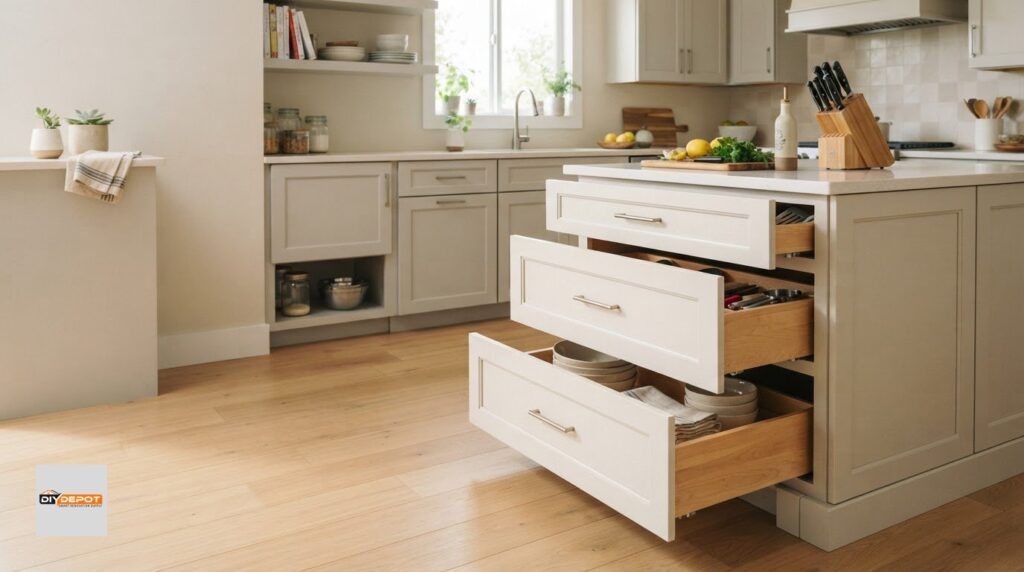
Check the moving parts, too. Standard hinges allow a door to close freely, while soft-close hinges slow it near the end of its swing. Adjustable hinges make it easier to fine-tune door alignment after installation. For drawers, check whether the glides are side-mounted or under-mounted, how smoothly they travel, and whether the manufacturer provides a load rating. Strong glides and secure installation help drawers stay aligned during regular use.
Ask how the finish is made and cared for. Find out whether it is UV-cured, how it handles routine cleaning and moisture, and what maintenance the manufacturer recommends. UV curing describes a production process, not a guarantee of performance. Compare care guidance and warranty terms instead of treating the label as proof of durability.
Before choosing, make a short comparison list: box materials, panel thickness, door construction, hinge adjustability, drawer-glide type, finish details, and installation requirements. Use the same questions for each Shaker cabinet option, then confirm the specifications for the products you plan to order.
Stock vs. Custom Cabinets: Which is Right for You?
The right choice depends on how closely your kitchen fits standard dimensions, how much design flexibility you need, and when you want the cabinets. Custom work can address unusual dimensions or specific design requests, but it may add cost and waiting time. Stock cabinetry can suit common layouts, especially when careful planning helps standard sizes work together.
As of Q3 2026, typical lead times are 1 to 3 weeks for in-stock RTA cabinets, 2 to 4 weeks for assembled stock cabinets, and 6 to 12 weeks or more for custom orders. Timing varies by supplier and order, so confirm the current estimate before setting a renovation schedule. For more on the RTA option, see this 2026 guide to ready-to-assemble kitchen cabinets.
When Stock Is the Practical Choice
Stock kitchen cabinets often make sense in kitchens with familiar footprints and standard runs of base and wall cabinets. They can also suit projects with firm timing needs, provided the sizes and finishes you want are available when you order. If your room has unusual angles or dimensions, plan how each cabinet will meet the wall, appliances, and neighboring units before committing.
Stock doesn’t have to look generic. A designer can arrange standard widths to suit the room, then use fillers to close narrow gaps and trim to create a more finished, built-in appearance. Crown molding, light valances, and toe kicks can complete the design when they suit the layout. Confirm which components are included and which must be sourced separately.
Flexibility, Finish, and Long-Term Value
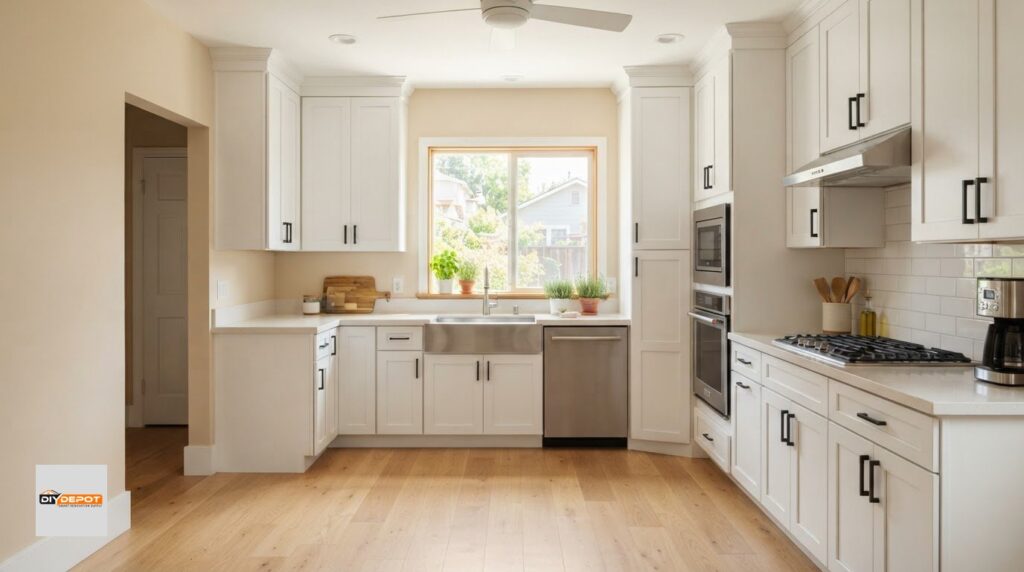
Stock options may offer more design flexibility than their standard sizes suggest. Professional kitchen design can help turn measurements and daily needs into a coordinated layout using available sizes. White Shaker cabinets, for example, can create a clean, classic look. Changing hardware, counters, and lighting can make the room feel more farmhouse-inspired or streamlined. Explore white Shaker cabinet ideas for another perspective on this versatile style.
Custom cabinetry may be worthwhile if standard sizes can’t reasonably accommodate your layout or design needs. But added customization doesn’t automatically mean a higher resale return. Home value depends on the overall renovation, the quality of the finished kitchen, and what buyers in your market prefer. Compare the full project scope, not just cabinet cost. A well-planned stock layout may leave room in the budget for other visible improvements, while custom work may solve a specific fit problem. Choose the option that meets your needs without paying for flexibility you won’t use.
Planning and Designing with Stock Cabinetry
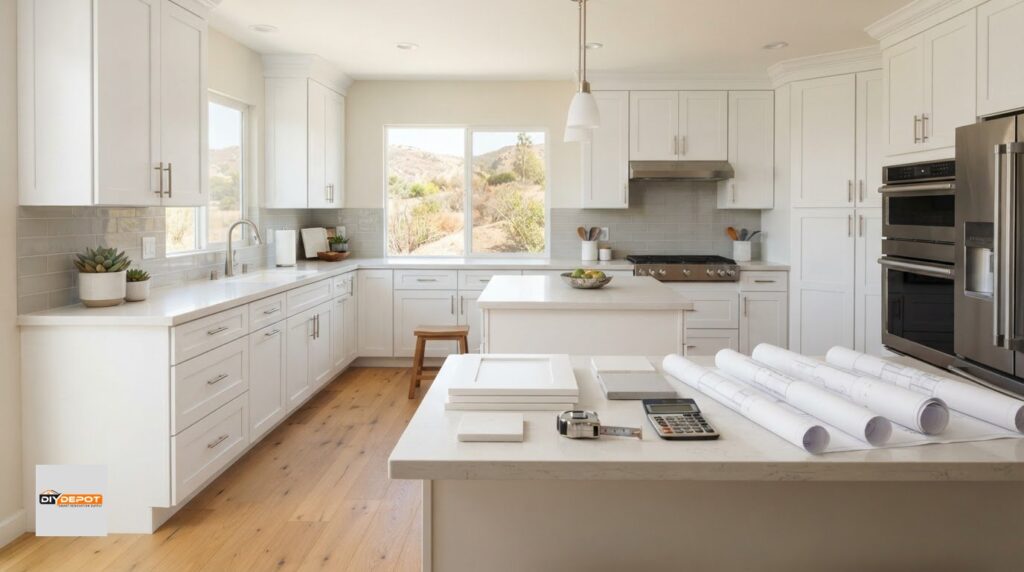
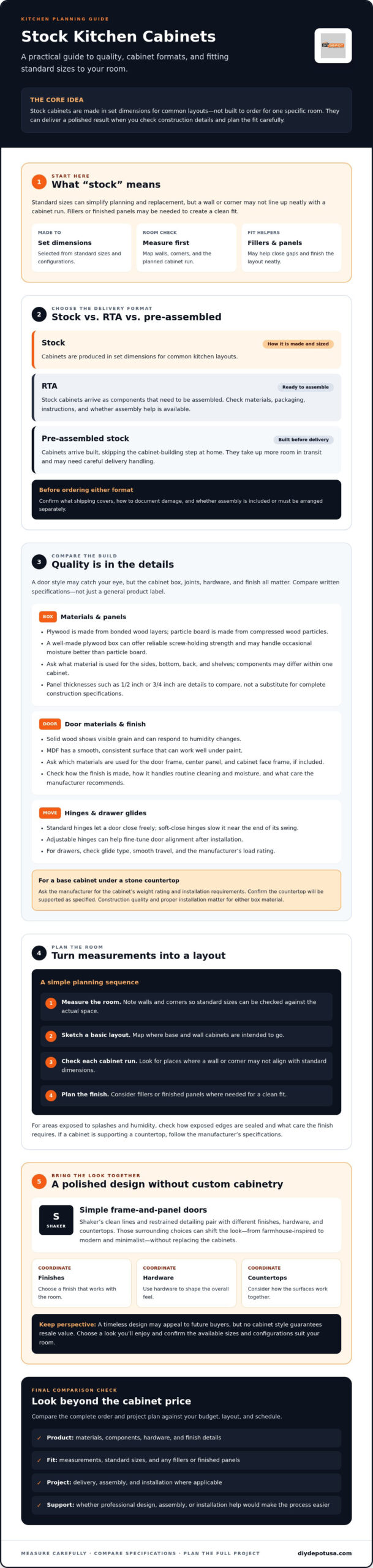
A reliable cabinet plan starts with the room, not the shopping cart. Because stock sizes come in set increments, small measuring or clearance errors can affect the whole layout. Record dimensions carefully, mark fixed features, and check how appliances, doors, and drawers will work once the cabinets are in place.
Measure the Room and Mark Obstacles
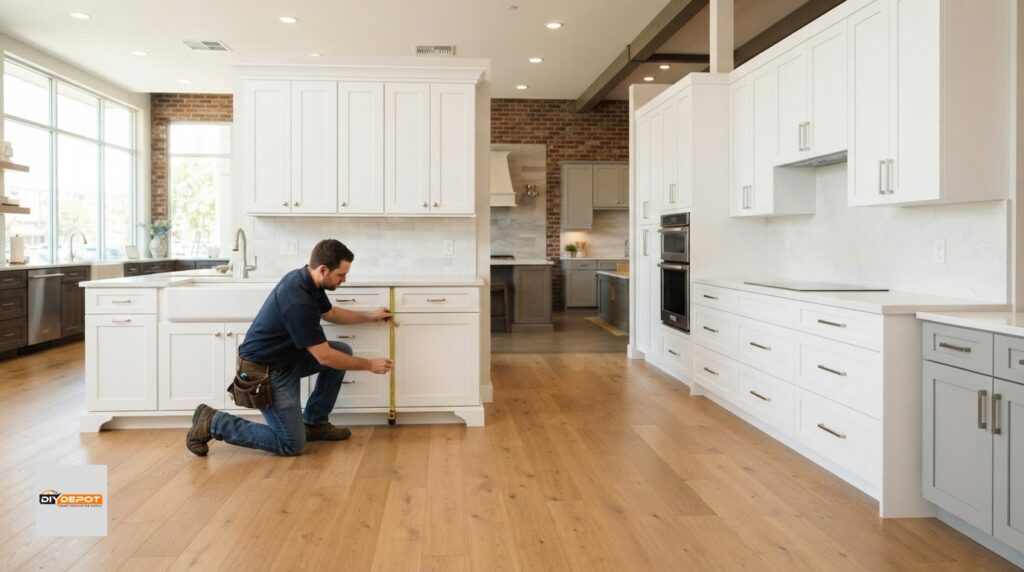
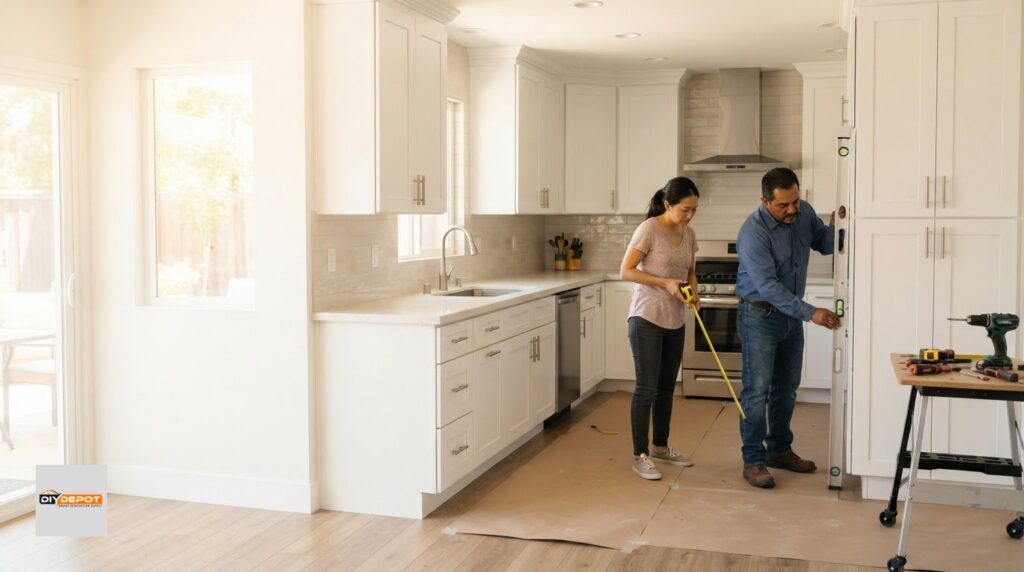
Measure each wall at floor, counter, and ceiling height. Note any differences because walls and floors aren’t always perfectly straight. Record dimensions to the nearest 1/8 inch, and mark plumbing and electrical locations, appliance centerlines, windows, trim, and door openings on a simple plan. Include window casing and the swing path of each doorway so cabinet doors won’t collide with them.
A 1/4-inch measurement error can throw off alignment across a full cabinet run, leaving gaps or making the last cabinet difficult to fit. Recheck measurements before ordering, and confirm appliance dimensions and required clearances against the manufacturers’ specifications.
Plan for Movement, Storage, and Corners
Map the sink, stove, and refrigerator before settling on cabinet locations. The traditional work-triangle idea can help you consider the paths between these key areas, but your room, appliance doors, and household routines should guide the final plan. Check that cabinet and appliance doors can open without blocking walkways or one another.
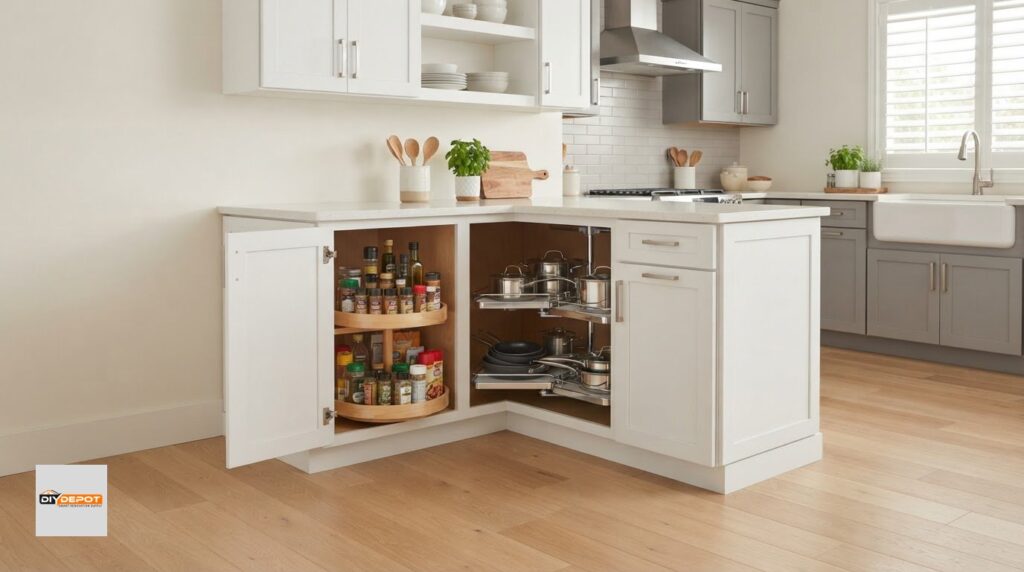
Wall Shaker cabinets can make better use of vertical space, especially when there’s room to extend storage higher on the wall. Check ceiling height, window placement, and access to frequently used items before deciding how high to go. Plan corners, too. Options such as a Lazy Susan or a blind base cabinet may help use the space, but confirm dimensions and access before choosing a configuration.
Use Design Support Before You Order
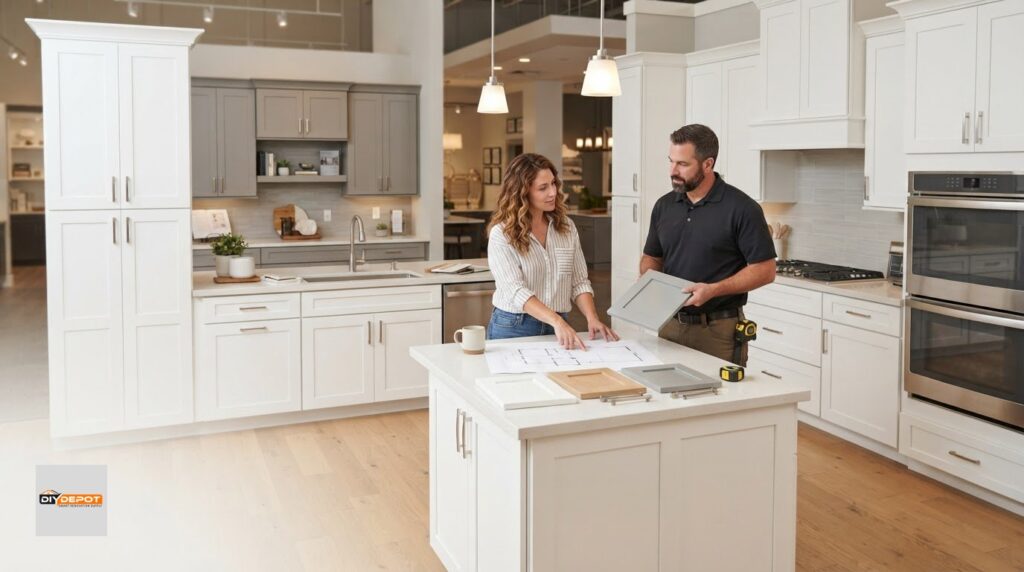
A layout drawing or online planner can help organize cabinet sizes, but it may not flag every plumbing conflict, clearance issue, or mismatch between a cabinet and an appliance. A professional designer can review measurements, identify potential problems, and help coordinate the layout before you order. For more on the process, read this professional kitchen design guide.
Thoughtful planning helps stock kitchen cabinets feel tailored to the room. If you’d like help turning your measurements into a workable cabinet layout, book a kitchen design appointment.
The Final Steps: Assembly, Installation, and Delivery
Once your cabinet plan is set, preparation can make delivery and installation easier to manage. Ready-to-assemble (RTA) cabinets arrive in boxes with components that need to be identified and assembled before installation. Set aside a clear, dry staging area, keep box labels visible, and follow the manufacturer’s instructions. Check that the shipment matches your order before assembly begins. If you’d rather skip the build-it-yourself step, professional assembly and installation are options to consider.
DIY or Professional Installation?
Installation may suit a capable DIYer with the right tools, help lifting cabinets, and time to work carefully. The process typically involves establishing a level reference line, shimming cabinets where floors or walls are uneven, and fastening them securely to wall studs according to the manufacturer’s instructions. Upper cabinets can be heavy and awkward to handle, so plan for safe lifting and support.
Uneven floors and walls that aren’t plumb can make a cabinet run look crooked or leave doors out of alignment if you don’t account for them. An experienced installer can help manage those adjustments. Consider your comfort with measuring, leveling, and fastening before deciding. This DIY vs. professional cabinet installation guide can help you weigh the options.
Prepare for Delivery and Inspect the Order
Before delivery, clear a path from the drop-off point to the staging area. Protect nearby floors, keep pets and household traffic away from stacked boxes, and check in advance what the delivery arrangement includes, such as placement or handling requirements. Direct free delivery is available for eligible orders, so confirm whether it applies to your address and review the current terms before ordering.
When the shipment arrives, compare box labels and quantities with your order. Look for crushed corners, punctures, or signs of moisture, and photograph visible damage before moving or opening affected boxes. Unpack carefully and check the cabinet parts against the packing information. Contact the seller promptly if anything appears damaged or missing, and follow its process for reporting the issue. Inspecting early gives you a chance to address problems before assembly or installation begins.
DIY Depot USA offers assembly and installation of its Shaker cabinets, along with direct free delivery for eligible orders. If you’re planning the final steps for your stock kitchen cabinets, you can discuss your cabinet project with the team.
Build a Kitchen You’ll Love for Years
A successful cabinet project comes down to a few practical choices: compare construction details, make sure the layout fits your room, and plan for delivery and installation before ordering. Stock kitchen cabinets can create a polished look when you choose materials carefully and match standard sizes to your kitchen’s needs.
You don’t have to manage every step alone. DIY Depot USA offers warehouse-direct pricing, professional kitchen design support, and assembly and installation services for its Shaker cabinets. That support can help make the process more straightforward, whether you’re comfortable doing some of the work yourself or would prefer extra assistance.
Ready to plan your project? Browse DIY Depot USA’s Shaker cabinets and explore your options.
Frequently Asked Questions
What is the average lifespan of high-quality stock kitchen cabinets?
There isn’t one dependable lifespan for every stock cabinet. It depends on materials, construction, installation, and care. Check the box and drawer specifications, protect cabinets from ongoing leaks and excess moisture, and follow the manufacturer’s cleaning guidance. Quality stock kitchen cabinets can serve well over time, but a specific lifespan can’t be promised without details about the product and conditions in your kitchen.
Can I paint stock Shaker cabinets if I want a custom color later?
Often, but the right approach depends on the cabinet’s existing finish and door material. Painted wood and MDF may need different preparation, and some factory finishes require careful sanding and a compatible primer. Before starting, ask the cabinet manufacturer whether repainting is suitable and how it affects the finish warranty. Test the paint system on an inconspicuous area, and follow the product directions for preparation and curing.
How do stock cabinets handle heavy granite or quartz countertops?
They can support a stone countertop only if the cabinet construction, installation, and countertop support meet the manufacturers’ requirements. Don’t assume a cabinet material or panel thickness alone establishes its load capacity. Ask the cabinet supplier for applicable weight ratings and installation guidance, then confirm support needs with the countertop fabricator. Cabinets should be level, securely installed, and properly supported before the stone is placed.
Are stock cabinets available in non-standard heights for taller ceilings?
Stock cabinets are generally made in set sizes, so non-standard heights may not be available in a particular range. Check the available dimensions before planning around a tall ceiling. Depending on the product options and room measurements, a designer may be able to use standard cabinets with suitable stacked units, fillers, or trim to create a balanced appearance. Confirm ceiling clearances and exact components before ordering.
What is the typical lead time for warehouse-direct stock cabinetry?
Lead time depends on whether cabinets are in stock, ready to assemble, or pre-assembled, as well as supplier processing and delivery arrangements. As of Q3 2026, typical estimates are 1 to 3 weeks for in-stock RTA cabinets and 2 to 4 weeks for assembled stock cabinets. Confirm the current estimate for your order and delivery address before scheduling installation, since timing can vary.
Do stock cabinets come with a warranty for the finish or hardware?
Warranty coverage varies by manufacturer and cabinet line, so check the written terms before ordering. Look for the coverage period, what the terms say about finish wear and hardware, exclusions, and how to report a potential issue. Ask whether coverage depends on approved installation or care practices. Don’t assume the finish and hinges or drawer glides have identical terms, or that normal wear is covered.
Is it cheaper to buy RTA cabinets or pre-assembled stock cabinets?
RTA cabinets may cost less to ship or buy because they arrive unassembled, but the total depends on the supplier, delivery, and whether you pay for assembly. Pre-assembled cabinets arrive ready for installation, which can reduce work at home but may affect handling and shipping costs. Compare the full order, including delivery and assembly, rather than judging by cabinet price alone.
Can I mix and match different stock brands in one kitchen?
Yes, but check dimensions, finish, door profiles, and construction details carefully before combining brands. Two cabinets described with the same color name may not match in tone, and small differences in height, depth, or door proportions can stand out in a continuous run. Compare samples in your kitchen’s lighting, and plan where each brand will appear. Ordering from one line can make a consistent look easier to achieve.