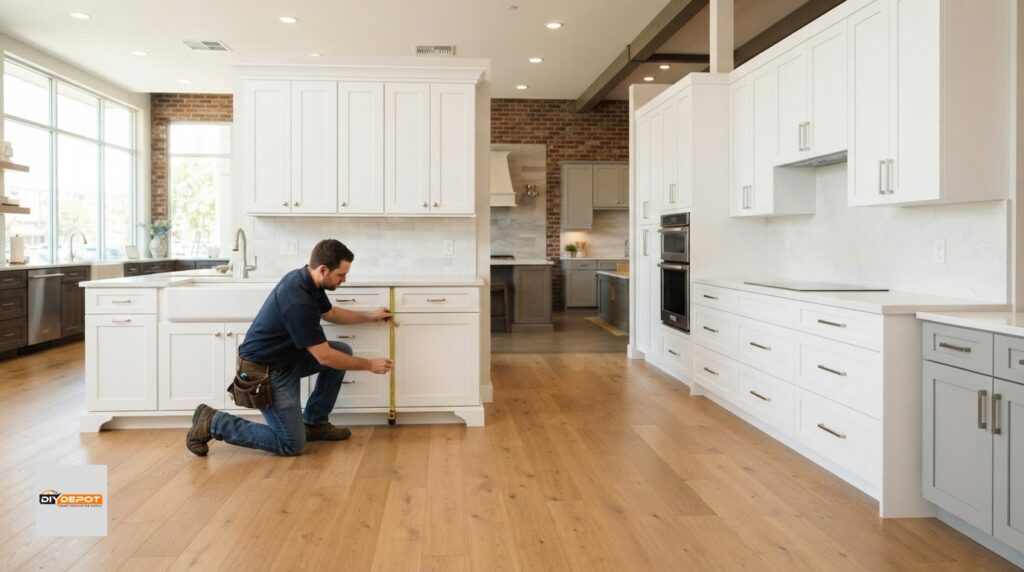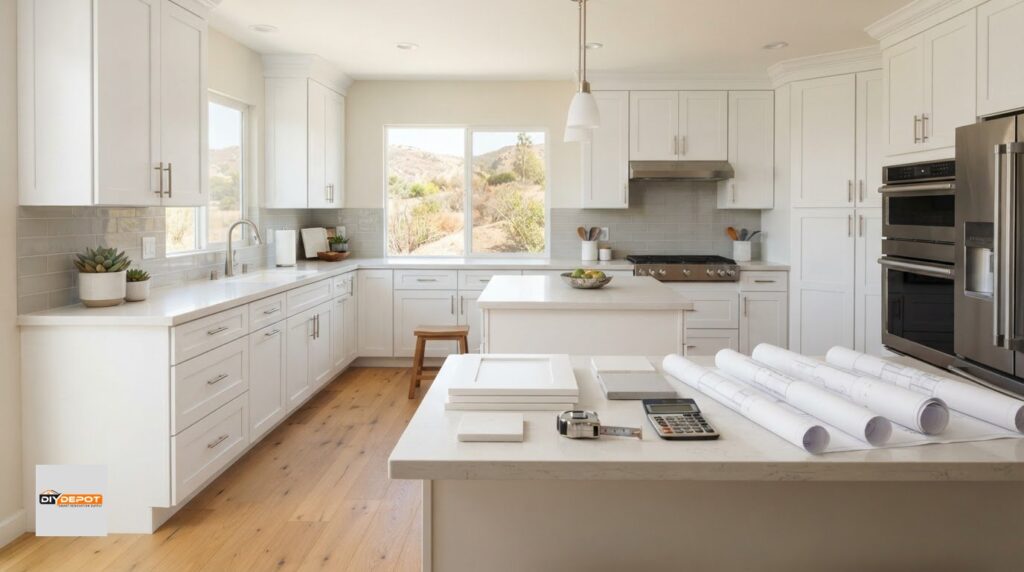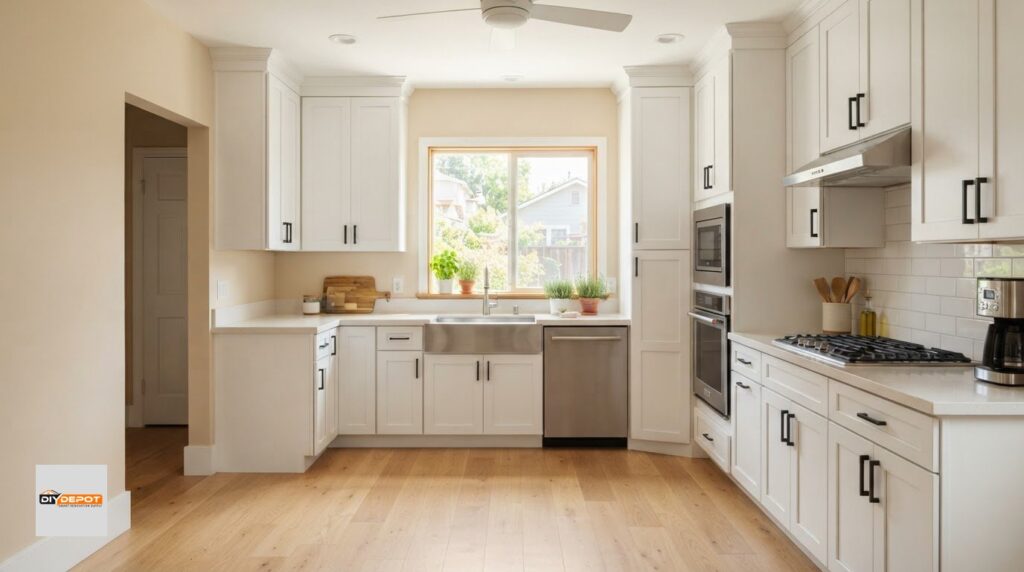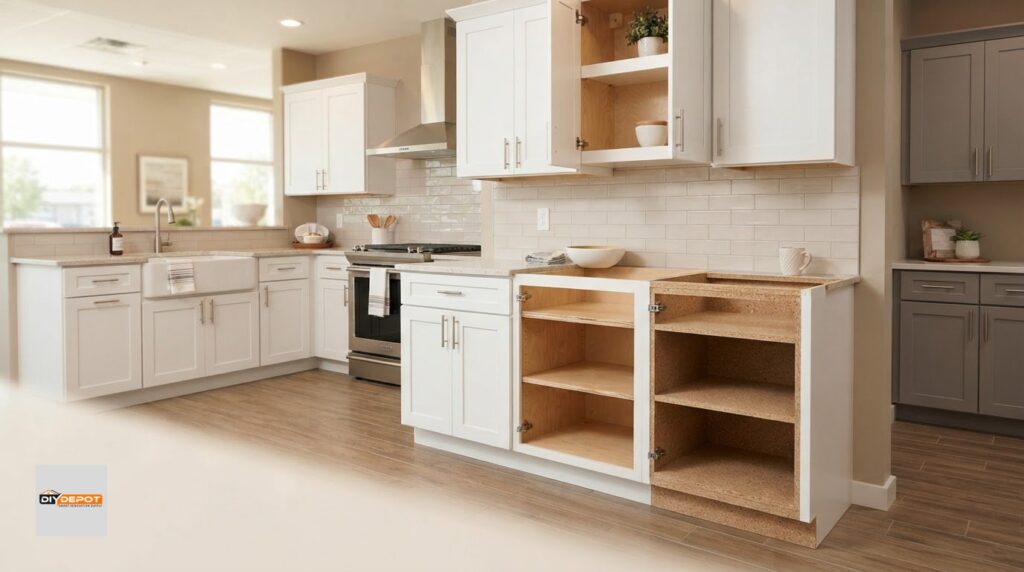

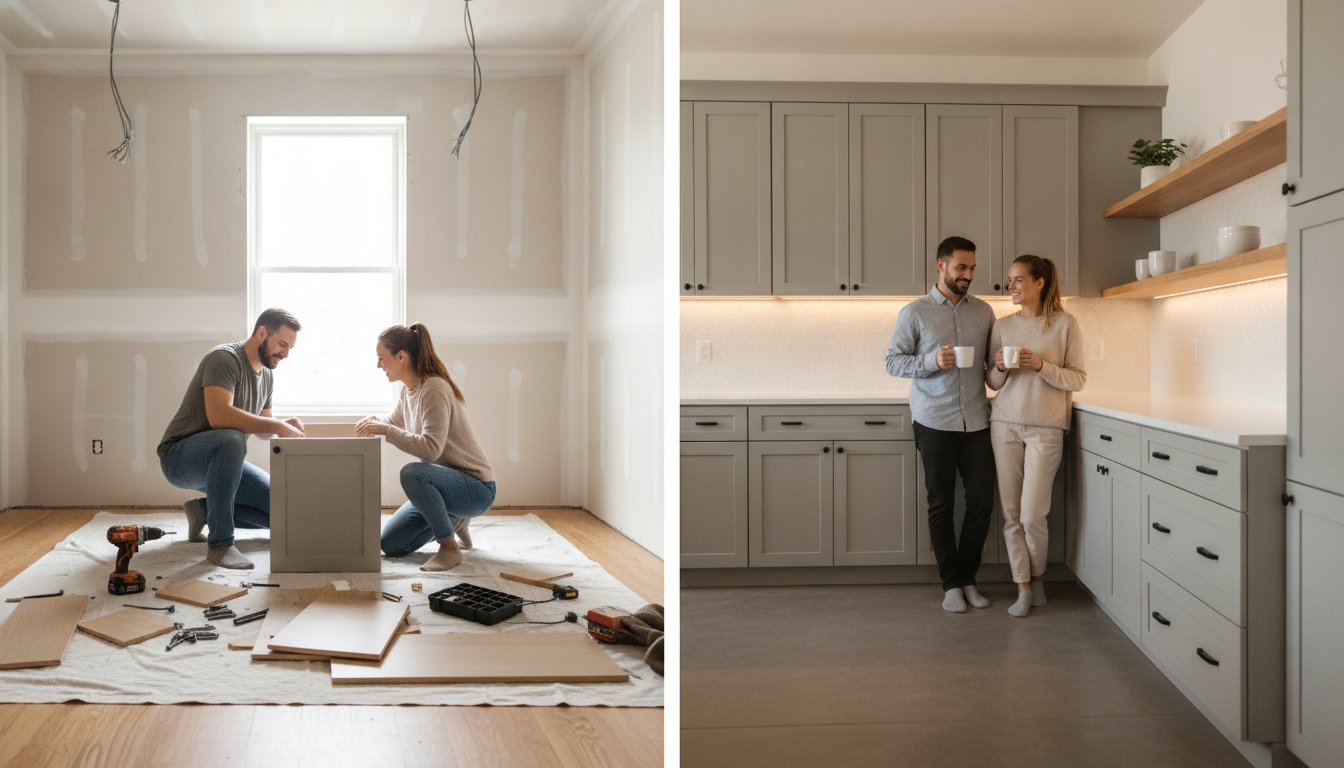
The most expensive cabinet option isn’t always the one that delivers the highest quality finish in your new kitchen. When you’re planning a major renovation, the choice between RTA vs pre-assembled cabinets often feels like a high-stakes gamble between your time and your bank account. You want that stunning, high-end aesthetic, but you also want to keep your project costs under control. It’s natural to worry about whether flat-pack assembly is too difficult or if pre-assembled units will arrive damaged after their journey to your home.
We understand that you’re looking for a stress-free path to a beautiful kitchen. This guide will help you find the perfect balance by comparing the costs, material durability, and shipping timelines of both options for the 2026 market. We’ll explore the real differences between plywood and MDF and help you decide if the assembly savings are worth the effort. By the end of this article, you’ll have a clear checklist to ensure your project stays on schedule and your new Shaker cabinets look professionally installed.
Key Takeaways
- Understand the fundamental differences between RTA flat-packs and factory-built units to choose the right foundation for your kitchen renovation.
- Learn how the logistics of RTA vs pre-assembled cabinets impact your total budget, including how flat-packing can significantly reduce freight costs.
- Use our 2026 decision checklist to assess your DIY comfort level and project timeline so you can avoid common installation delays.
- Discover how professional kitchen design and finishing touches like crown moldings can make stock Shaker cabinets look like expensive custom cabinetry.
- Explore the benefits of buying warehouse-direct cabinets and opting for professional assembly and installation to get a high-end finish with less stress.
RTA vs. Pre-Assembled Cabinets: Defining the 2026 Standards
Choosing between RTA vs pre-assembled cabinets used to be a choice between a low price and a high-quality finish. In 2026, that’s no longer the case. The industry has evolved to ensure that both formats meet rigorous durability standards, making the decision more about your project timeline and labor preferences than the final look of your kitchen.
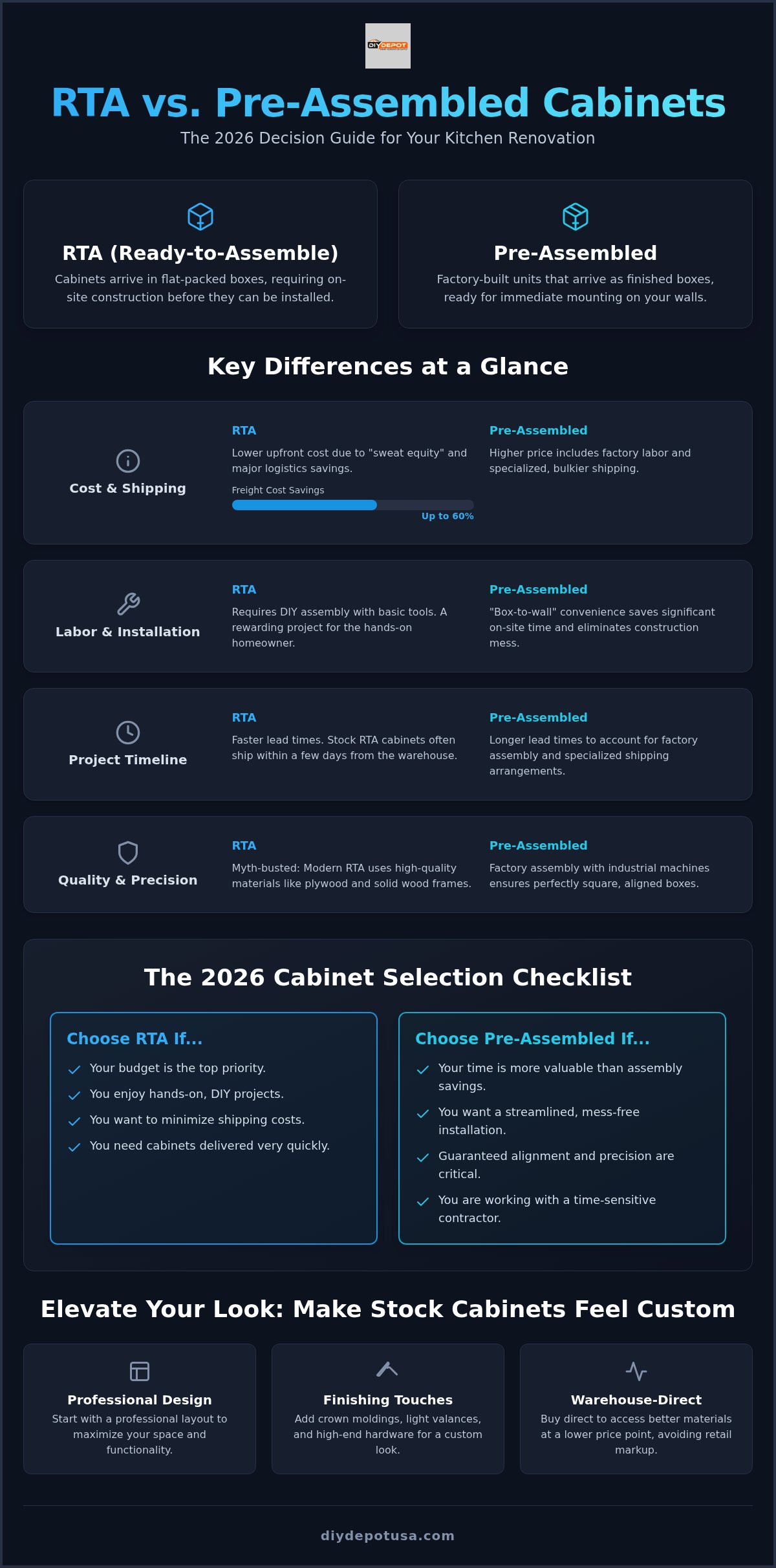
You’ll receive Ready-to-Assemble (RTA) cabinets in flat-packed boxes, which require on-site construction before they’re ready for the wall. Pre-assembled cabinets are factory-built units that arrive as finished boxes, ready for immediate mounting. Both options fall under the “stock” umbrella, meaning they’re built in standardized sizes and kept in inventory for faster delivery than custom orders. This inventory model allows for high-quality materials to be used at a much lower price point than traditional custom cabinetry.
One of the biggest misconceptions is that RTA cabinets are made of inferior materials. Modern professional-grade stock cabinets, whether flat-packed or pre-built, typically feature furniture-grade plywood boxes and solid wood frames. You don’t have to sacrifice durability for savings. Whether you choose base shaker cabinets or wall-mounted units, the structural integrity remains consistent across both formats in today’s market.
The Anatomy of an RTA Cabinet
RTA units follow a standardized sizing system, usually moving in 3-inch increments to help you map out your kitchen layout efficiently. Regarding assembly, you’ll often see cam-lock systems for quick construction or traditional wood glue and staples for a permanent bond. Shaker styles are particularly popular in the RTA world because their clean lines make for a sturdy, timeless construction that handles the assembly process beautifully. These units are designed for the DIY enthusiast or the contractor who wants to maximize their budget without compromising on the material quality.
The Pre-Assembled Advantage
The primary benefit of pre-assembled units is the factory-controlled environment. These cabinets are built on specialized assembly lines where industrial machines ensure every box is perfectly square. This precision reduces the risk of alignment issues during installation. For busy homeowners, the “box-to-wall” convenience is a massive win. You won’t have to deal with the extra labor, the construction mess, or the space required to build multiple units in your living room. It’s the most straightforward path to a functional kitchen, especially when you’re working against a tight deadline.
The Economics of Cabinetry: Analyzing Price and Labor
Understanding the financial impact of your choice requires looking beyond the sticker price. When comparing RTA vs pre-assembled cabinets, the most significant price drivers aren’t the materials themselves, but the logistics and labor involved in getting them to your kitchen. By analyzing these factors, you can decide where your money is best spent.
Flat-packing is a logistics powerhouse. Because these units occupy significantly less space on a delivery truck, they can reduce freight costs by up to 60% compared to fully built, palletized boxes. This efficiency is a primary reason why RTA is often the go-to for budget-conscious renovators. Additionally, by choosing warehouse-direct models, you’re avoiding the markup associated with retail showrooms. This lean approach lowers the bottom line for both formats, though the savings are most pronounced with RTA units. A professional kitchen design can help you visualize which logistics path fits your floor plan and budget most effectively.
Lead times also play a role in your economic strategy. Stock RTA cabinets often ship within a few days because they’re already boxed and ready in the warehouse. Pre-assembled units require extra time for factory construction and specialized shipping to ensure the built boxes don’t shift or crush during transit. If your project has a hard deadline, the speed of RTA might save you from costly contractor delays.
Calculating the Real Cost of RTA
Don’t forget to factor in the “hidden” costs of tools and your own time. While wholesale kitchen cabinets offer the best ROI for property flippers, you’ll need a drill, wood glue, and a clear workspace to be successful. The “sweat equity” you invest is where the real savings happen. If you enjoy the process, the labor is free; if you find it frustrating, that’s a cost in itself.
When Pre-Assembled is the Smarter Investment
Sometimes your time is worth more than the assembly savings. If you’re hiring a professional contractor, their hourly rate for on-site assembly might actually exceed the factory’s assembly fee. Pre-assembled units also reduce the total “kitchen-out-of-commission” time. By arriving ready for the wall, they minimize construction mess and get your home back to normal faster. When comparing the total project budget, always weigh the cabinet price against the local labor rates for installation. This is also the time to factor in other skilled trades; for instance, hiring an electrician Fountain Hills AZ to update your wiring or install new fixtures can prevent costly delays once the cabinets are in place.
For homeowners undertaking a full-scale remodel, partnering with a design-build firm like Meraki General Contracting can help streamline the entire process, from structural changes to the final cabinet installation.
Making the right choice between RTA vs pre-assembled cabinets requires a realistic look at your project’s constraints. While the financial savings of flat-packs are attractive, they aren’t the only factor in a successful renovation. Use this structured framework to determine which path aligns with your lifestyle and renovation goals.
Before you place an order, ask yourself these four critical questions:
- What is my timeline? If you need a functional kitchen in two weeks, pre-assembled units are your best bet. If you have two months to spare, the assembly phase of RTA won’t feel like a burden.
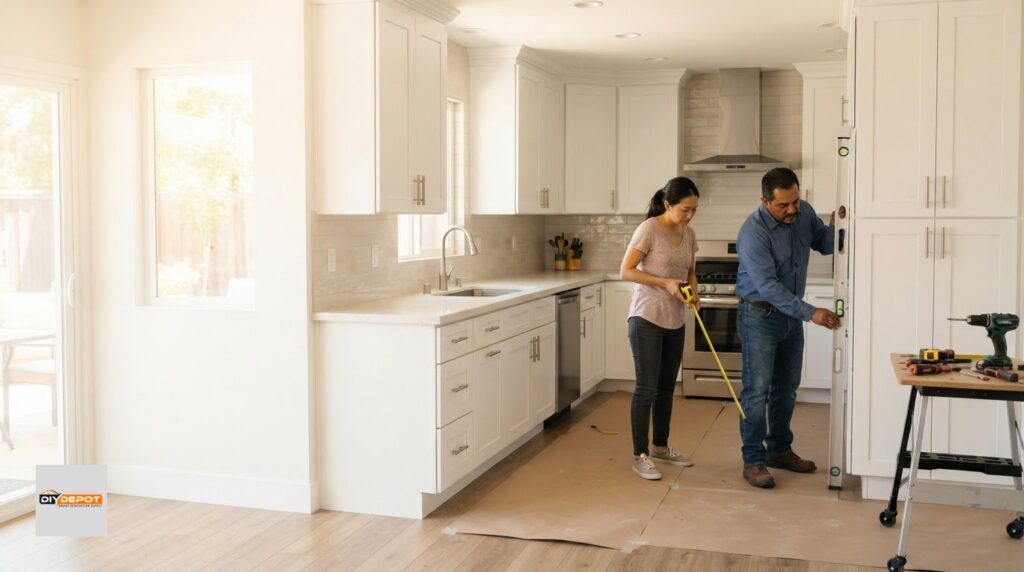
- What is my skill level? You don’t need to be a master carpenter, but you should feel comfortable using a power drill, applying wood glue, and taking square measurements.
- Do I have the space? A typical kitchen order involves 20 or more boxes. You’ll need a clean, dry, and climate-controlled area to store these units and a separate staging ground for assembly.
- What is my budget priority? Decide if saving approximately $2,000 on a standard kitchen is worth the 20 to 30 hours of labor you’ll invest in building the boxes yourself.
The DIY Readiness Test
Success with ready to assemble kitchen cabinets depends on having the right tools on hand. You’ll need a cordless drill with various bits, a rubber mallet for gently seating joints, and wood glue for extra reinforcement. Expect a learning curve. Your first cabinet might take 45 minutes to build as you study the instructions, but by the tenth unit, you’ll likely finish in under 15 minutes. Always prioritize ergonomics by building on a waist-high table rather than the floor to avoid back strain during the process.
Logistics and Delivery Checklist
The delivery experience varies significantly between these two formats. Pre-assembled cabinets arrive on large, heavy pallets that require clear driveway access for a lift-gate truck. In contrast, RTA shipments consist of individual flat boxes that are easier to move into a garage or spare room. Regardless of your choice, establish an inspection protocol. For pre-assembled boxes, check for crushed corners or structural shifts. For flat-packs, verify that each box is sealed and free of punctures. Taking advantage of direct free delivery helps keep your overhead predictable and ensures your materials arrive safely at your doorstep.
Bridging the Gap: Making Stock Cabinets Look Custom
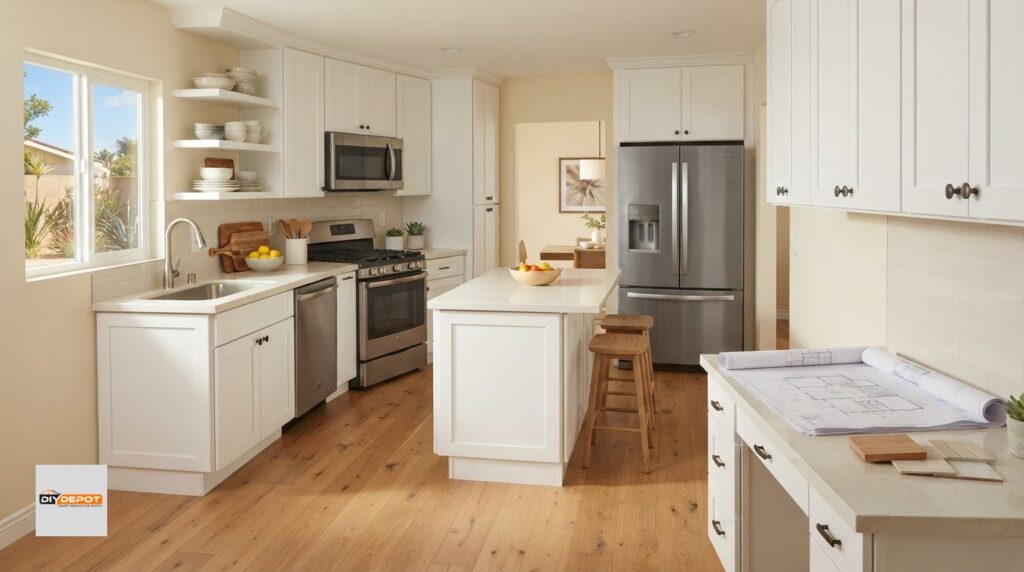
Many homeowners worry that choosing between RTA vs pre-assembled cabinets means settling for a generic look with awkward gaps. This isn’t the case. The secret to a high-end finish lies in how you use architectural details to bridge the distance between standard sizes and your specific wall dimensions. With the right strategy, stock units can look identical to expensive, custom-built cabinetry.
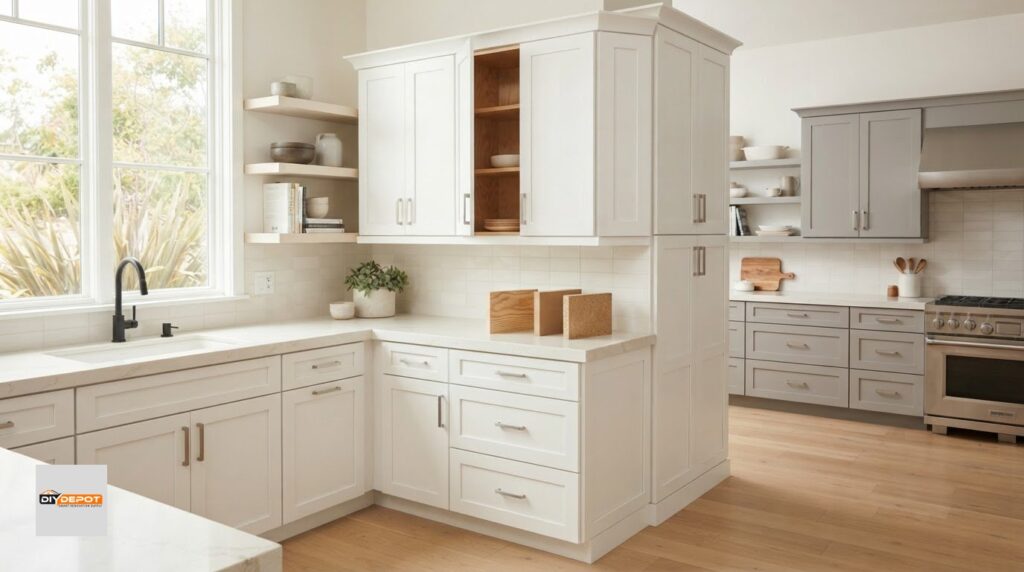
Fillers are the unsung heroes of a professional installation. These matching strips of wood allow you to account for uneven walls or non-standard corners, ensuring your layout looks seamless. Adding crown moldings to the top of your wall units and matching toe kicks at the bottom creates a continuous, built-in appearance. You can also use kitchen base cabinets creatively to build custom islands or furniture-style ends. By backing two rows of base units together and adding decorative side panels, you get a luxury centerpiece for a fraction of the cost. High-quality hardware and under-cabinet lighting act as the “jewelry” of the room, elevating the entire aesthetic.
Design Support as a Value Multiplier
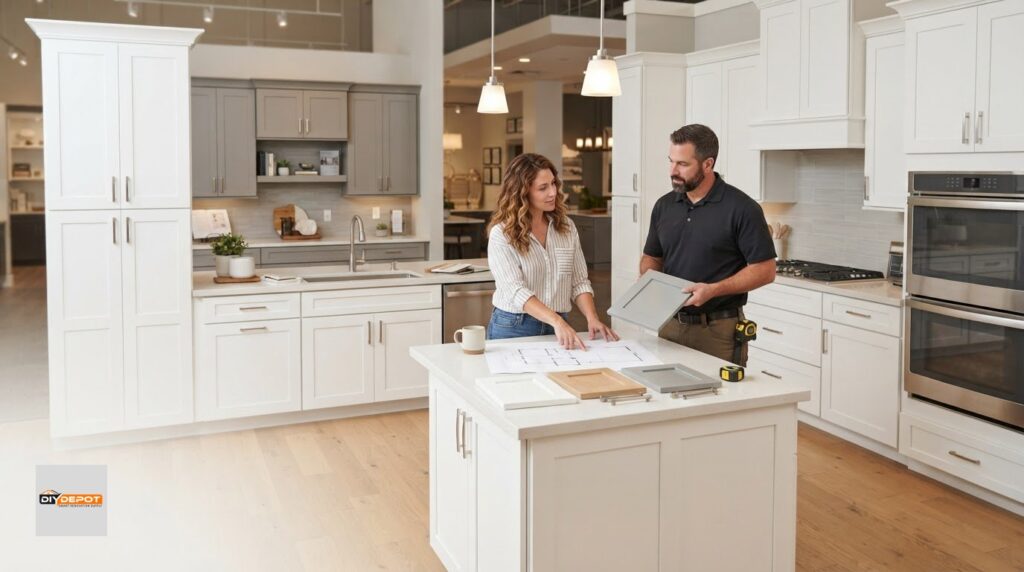
Professional kitchen design services are the most effective way to ensure your stock units fit like a glove. Designers use 3D renderings to help you visualize the space before you order, which prevents costly measurement mistakes. They also optimize your workflow by ensuring your layout follows the “kitchen triangle” rule. This traditional design principle places your sink, stove, and refrigerator in an efficient path to reduce unnecessary steps while cooking. A well-planned layout makes even the most affordable RTA units feel premium and thoughtful.
Material Integrity
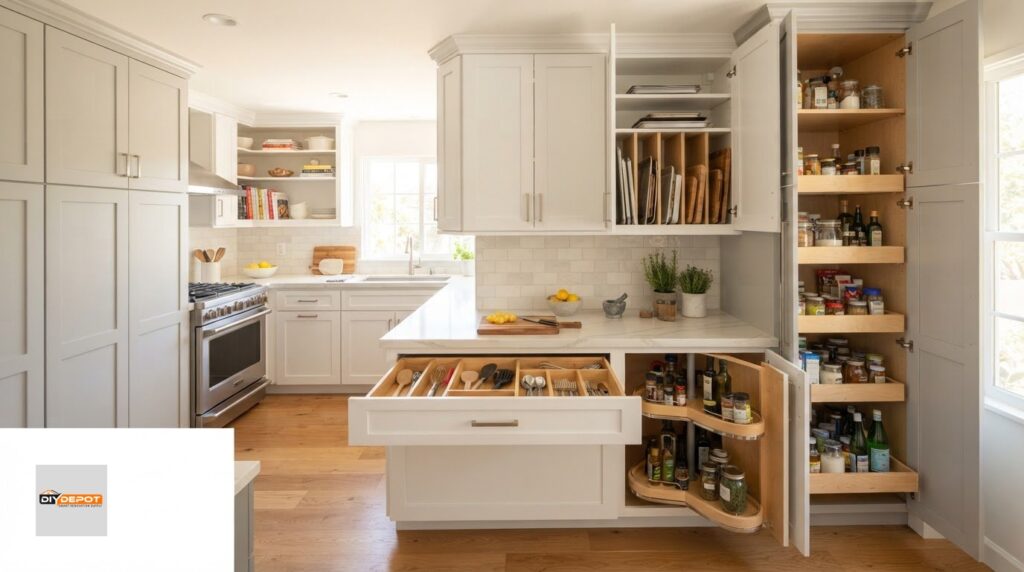
Quality isn’t just about the layout; it’s about the components you touch every day. Solid wood Shaker frames remain the gold standard for durability because they resist warping in high-traffic kitchens. When selecting your units, look for soft-close hinges and under-mount drawer slides as standard features. These components prevent slamming and ensure a smooth, quiet experience that lasts for years. Regarding finishes, factory-applied paints and stains provide a level of protection against moisture and heat that’s difficult to achieve with on-site DIY painting. Ready to start your layout? Browse our shaker cabinet collections to find the perfect foundation for your home.
The DIY Depot USA Advantage: Professional Assembly & Installation
The decision between RTA vs pre-assembled cabinets doesn’t have to be an all-or-nothing choice. While many retailers force you to choose between the cost savings of flat-packs or the convenience of factory-built units, we offer a strategic middle ground. By purchasing warehouse-direct RTA units and opting for our professional assembly services, you capture the financial benefits of the RTA model without the stress of building the boxes yourself. This hybrid approach ensures you get the best value without sacrificing your weekends to a pile of instruction manuals.
Expert installation is the final, critical step in ensuring your kitchen lasts for decades. Even the highest-quality furniture-grade plywood can fail if the boxes aren’t perfectly level, plumb, and secure. Our team understands how to handle the nuances of a renovation, from scribing fillers to ensuring every drawer slide operates with a whisper-quiet glide. This professional touch protects your investment and guarantees that your high-end aesthetic isn’t compromised by visible gaps or misaligned doors. A secure install is about more than just looks; it’s about the long-term structural integrity of your home.
We specialize in Shaker styles, including base shaker cabinets, wall units, and vanities. This focused inventory allows us to maintain strict quality control and offer faster lead times in the 2026 market. By mastering one timeless style, we ensure that every component fits together perfectly, from the initial design phase to the final finishing nail. This specialization means we always have the parts and expertise needed to keep your project moving forward without delay.
Our Professional Service Model
Our model is designed to reduce the typical renovation friction by combining warehouse-direct pricing with professional-grade assembly and installation. Having the same team handle your professional kitchen design and the eventual installation creates a seamless experience. You won’t have to worry about a contractor blaming a designer for a measurement error because we take ownership of the entire process. This single point of contact simplifies your project and provides the neighborly support you need during a large-scale home improvement task. It’s a partnership built on reliability and clear communication.
Getting Started with Your Project
Transforming your kitchen is a straightforward process when you have a trusted partner. Start by submitting your room measurements through our website to receive a professional design quote. In the 2026 market, we prioritize predictable timelines, ensuring your cabinets are delivered and installed according to a clear, manageable schedule. Whether you’re looking for wall shaker cabinets to maximize storage or a full kitchen overhaul, we’re here to help you achieve professional-grade results with confidence. Visit DIY Depot USA today to start your design and take the first step toward the kitchen you’ve always wanted.
Building Your Future Kitchen with Confidence
Choosing between RTA vs pre-assembled cabinets is a strategic decision that shapes your entire renovation experience. You’ve learned that both formats now offer high-quality materials like solid wood Shaker frames and furniture-grade plywood. The real difference lies in your project timeline and how much labor you want to handle. By utilizing professional design support and architectural touches like crown molding, you can achieve a high-end, custom aesthetic regardless of which box format you select.
We are here to simplify your journey by offering warehouse-direct pricing on premium Shaker cabinets alongside professional assembly and installation services. You get the financial advantage of direct sourcing with the peace of mind that comes from expert craftsmanship. Every project also includes free expert design support to ensure your layout is perfect before the first box arrives at your door. You don’t have to manage the complexity alone.
Start Your Dream Kitchen Design with DIY Depot USA
Your dream kitchen is closer than you think. With the right partnership, your renovation can be a manageable and rewarding transformation that you’ll enjoy for years to come.
Frequently Asked Questions
Are RTA cabinets lower quality than pre-assembled ones?
No, modern RTA cabinets aren’t lower quality. In the 2026 market, both RTA and pre-assembled units use the same furniture-grade plywood and solid wood Shaker frames. The main difference is who puts them together. High-end RTA units feature the same soft-close hinges and under-mount slides you’d find in factory-built options. You’re getting the same structural integrity; you’re just handling the final construction step yourself to save on shipping and labor costs.
How much money can I really save by choosing RTA cabinets?
Choosing RTA can lead to significant savings, primarily through reduced logistics costs. Flat-packing reduces freight expenses by up to 60% because the boxes take up much less space on a truck. You also skip the factory assembly labor fee. When comparing RTA vs pre-assembled cabinets, many homeowners find they save thousands on a full kitchen. These savings allow you to upgrade other areas, like countertops or appliances, while keeping your total budget under control.
How long does it take to assemble a single kitchen cabinet?
The assembly time depends on your experience level. Your first cabinet might take 45 minutes as you get used to the instructions and hardware. Once you’ve built a few, you’ll likely finish each unit in about 15 to 20 minutes. It’s helpful to set up a dedicated workspace with all your tools ready. For a standard kitchen with 20 boxes, plan for about 20 to 30 total hours of assembly labor.
Do I need special tools to build RTA cabinets?
You don’t need specialized carpentry equipment. Most projects require only a few basic household tools: a cordless drill with various bits, a rubber mallet for seating joints, and wood glue for extra reinforcement. A level and a tape measure are also essential for the installation phase. We recommend building on a waist-high table to make the process easier on your back. It’s a straightforward process that most DIY-capable homeowners can handle with ease.
Can RTA cabinets be used in professional contractor projects?
Yes, many professional contractors prefer RTA units for their clients. They offer a high-end look while keeping the project budget manageable. Contractors often appreciate that flat-packs are easier to transport and store on a busy job site compared to bulky pre-assembled boxes. When paired with professional kitchen design, these units provide a custom finish that meets the standards of any high-end renovation. It’s a reliable way for pros to deliver quality results efficiently.
What happens if a part is missing from my RTA shipment?
If you discover a missing or damaged part, you should contact support immediately. We prioritize a stress-free experience, so we’ll work to get the correct component to you as quickly as possible. It’s always best to inspect your entire shipment upon delivery before you begin the assembly process. This proactive step ensures your project stays on schedule. Our goal is to be your partner in success, providing the help you need without delays.
Are pre-assembled cabinets harder to ship without damage?
Pre-assembled units are slightly more vulnerable during transit because they are fully built and hollow. While they’re palletized and protected, the larger boxes are more susceptible to crushing or shifting if not handled carefully. In contrast, flat-packed RTA boxes are dense and sturdy, making them very resilient during shipping. Regardless of which format you choose, we provide direct free delivery with a focus on ensuring your cabinets arrive in perfect, ready-to-install condition.
Can I hire someone to assemble my RTA cabinets for me?
Yes, you can definitely hire professionals for this task. At DIY Depot USA, we offer both assembly and installation services for our shaker cabinets. This bridges the gap for homeowners who want the warehouse-direct savings of RTA but don’t have the time or tools to build the units themselves. When deciding between RTA vs pre-assembled cabinets, remember that our expert team can handle the labor for you, ensuring a professional-grade finish without the stress.