
What if your kitchen already has more storage than you think, just not in the places you need it? Crowded counters and hard-to-reach cabinets can make cooking feel like a daily puzzle, but adding cabinets isn’t always the first answer. Learning how to maximize kitchen storage space starts with identifying what’s underused and making the storage you have easier to reach.
It’s frustrating when deep shelves hide everyday essentials or awkward corners become catchalls. A practical plan can help you decide what to clear out, what to reorganize, and where a storage upgrade could make a lasting difference.
Start with a simple kitchen audit, then arrange items around how often and where you use them. Next, put overlooked corners, cabinets, and shelves to work. If essential items still have no sensible home, you’ll have a clearer idea of whether a cabinet or layout change could help. The goal is a kitchen that’s easier to use, without rushing into a renovation before you know what’s needed.
Key Takeaways
- To learn how to maximize kitchen storage space, spot unused capacity before deciding whether you need a bigger renovation.
- Group preparation, cooking, cleaning, food storage, and serving items by task. Keep everyday essentials close to where you use them.
- Match shelves, drawers, pull-outs, and vertical dividers to the items they hold so you can find and reach belongings easily.
- Clear counters by storing occasional-use appliances and tools elsewhere. Weigh open shelving’s convenience against dust and visual clutter.
- Identify which storage functions are missing before exploring cabinet options or layout changes.
How to Maximize Kitchen Storage Space: Start with a Simple Kitchen Audit
Crowded counters and hard-to-reach cabinets can make even a familiar recipe feel like a juggling act. Before changing the layout or replacing cabinetry, take stock of what you own and how your kitchen works. A short audit can reveal practical improvements in the space you already have.
Usable storage is space matched to the items you own and the routines you follow. A shelf may look roomy, but if everyday dishes are stacked behind seldom-used serving pieces, that space isn’t working well. The goal is to make storage easy to see, reach, and return to its proper place.
What should you measure and notice before reorganizing?
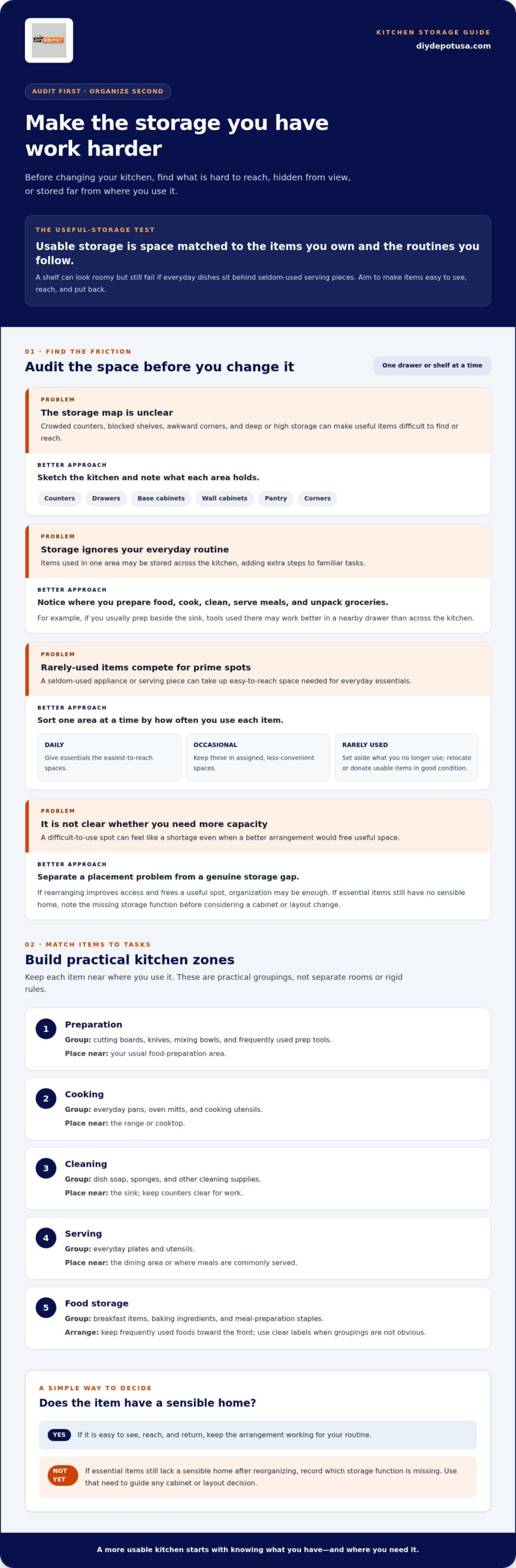
Start with a simple map of the kitchen. Mark the counters, drawers, base cabinets, wall cabinets, pantry, and corners, then note what each area holds. You don’t need detailed measurements yet. Look for blocked shelves, awkward corners, crowded work areas, and items stored so high or deep that you avoid using them.
Pay attention to household routines, too. Notice where you prepare food, cook, clean up, serve meals, and unpack groceries. If you usually prep beside the sink, for example, tools used there may be more useful in a nearby drawer than across the kitchen. Consider kitchen work triangle principles as one reference for thinking about how movement between key work areas affects your routine.
- Counters: Note what stays out and whether it takes up prep space.
- Drawers and cabinets: Record what’s easy to reach and what gets buried.
- Pantry and corners: Look for crowded shelves or items that disappear from view.
How do you decide what deserves kitchen storage?
Take items out one area at a time and sort them into daily-use, occasional-use, and rarely-used groups. Be honest about what you reach for. A pan used every week deserves more accessible space than a duplicate appliance used once in a while. Set aside things you no longer use, and relocate usable items that belong elsewhere or donate them if they’re in good condition.
Keep the audit manageable. You don’t have to empty every cabinet at once. Work through one drawer or shelf, then decide where its contents should go. As you sort, note whether the problem is placement or a genuine shortage of capacity. If rearranging improves access and frees a useful spot, organization may be enough. If essential items still have no sensible home, record the missing storage function. That distinction helps you decide how to maximize kitchen storage space without rushing into a renovation.
Organize Kitchen Storage by Zones and Frequency of Use
Once you know what you want to keep, give items a clear home based on the tasks you do in the kitchen. Think in zones: preparation, cooking, cleaning, food storage, and serving. These don’t need to be separate rooms or perfectly defined areas. They’re practical groupings that reduce extra steps and make it easier to put things away.
Storage works best when each item lives near the place where you use it. A mixing bowl is easier to grab near your usual prep area, while a favorite spatula belongs close to the stove. This simple principle can make a kitchen more functional without adding storage.
How can you set up practical kitchen work zones?
Start with your actual habits, not an idealized layout. If you usually chop vegetables beside the sink, store cutting boards, knives, and mixing tools in a nearby drawer or cabinet. Keep everyday pans and cooking utensils close to the cooking area, so you can reach them without crossing the room. Store dishware near the dishwasher or the place where you commonly set the table.
- Preparation: Group cutting boards, knives, mixing bowls, and frequently used prep tools.
- Cooking: Keep everyday pans, oven mitts, and cooking utensils near the range or cooktop.
- Cleaning: Place dish soap, sponges, and other cleaning supplies near the sink, while keeping counters clear for work.
- Serving: Store everyday plates and utensils near the dining area or the spot where meals are served.
Keep occasional-use cookware and special serving pieces in assigned spaces that are less convenient to reach. The goal isn’t to make every item equally accessible. Reserve the easiest spots for things you use most, while keeping less-used items easy to find when needed.
How should you arrange food and small kitchen items?
Group pantry goods by how you use them. Keep breakfast items together, baking ingredients in one area, and meal-preparation staples in another. If containers look alike or a grouping isn’t obvious, add a clear label. This can help everyone in the household return items to the right place.
Visibility matters. Keep frequently used foods toward the front of a shelf, and avoid stacking items in a way that hides what’s behind them. Store small tools in a drawer near their task, grouping similar items so you can find what you need without rummaging. For more ideas on connecting storage choices to practical kitchen design, explore design tips for maximizing kitchen space.
Use the plan as a guide, not a rigid set of rules. If more than one person cooks, consider who needs access to each zone and whether shared essentials are easy to reach. If a cabinet change could better support your routine, plan cabinet choices around the zones you’ve identified. That way, any next step responds to how your kitchen is actually used.
Use Cabinets, Corners, and Vertical Space More Effectively
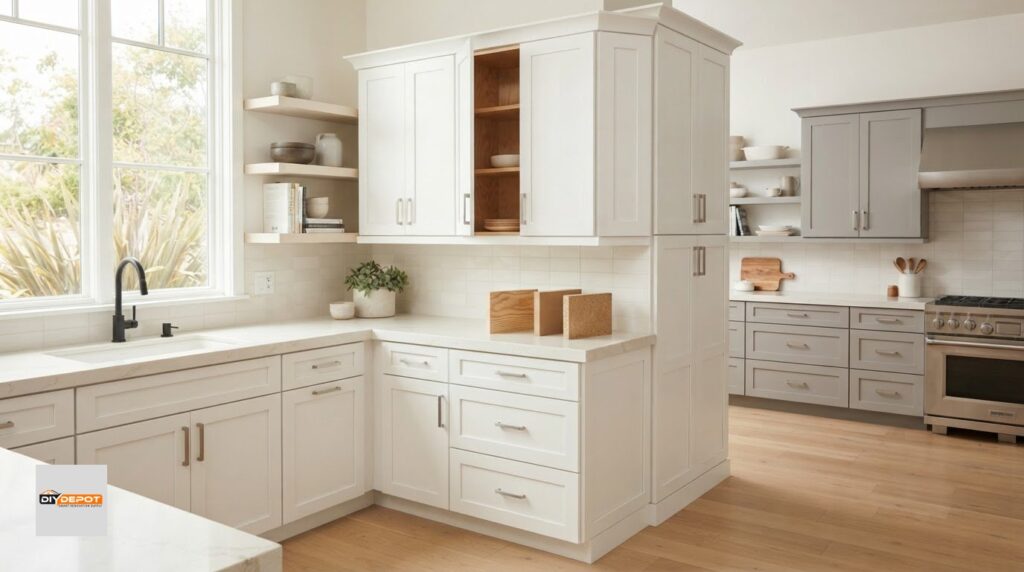
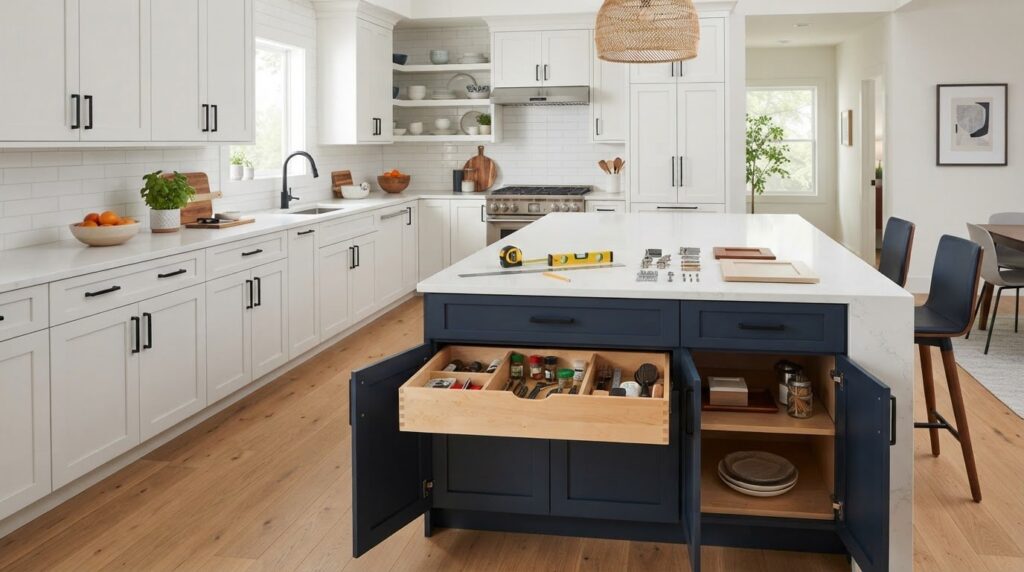
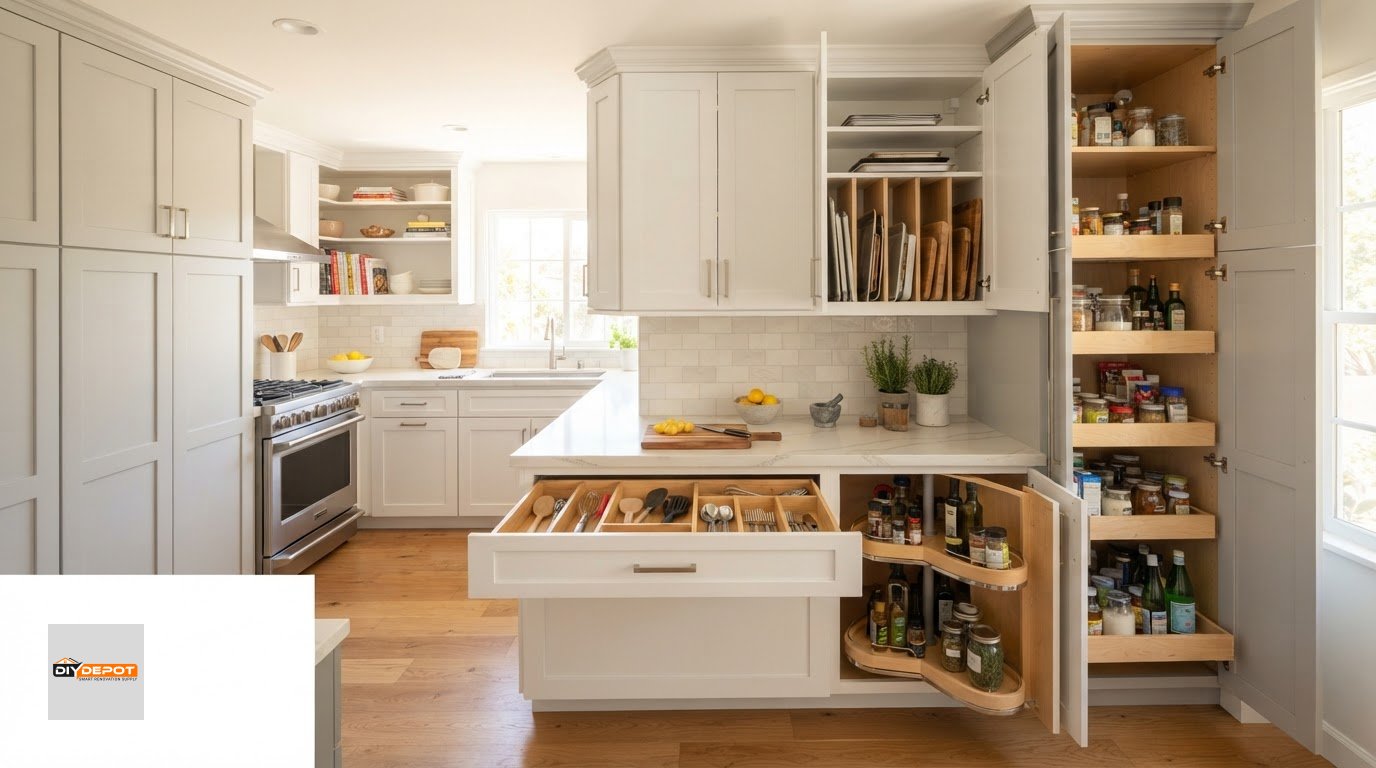
Once items have sensible homes, look at how each cabinet stores and reveals them. A fixed shelf can hold plenty but leave things hidden at the back. A drawer makes contents easier to scan, while a pull-out brings items forward. Door storage can work for light, compact items, and corner solutions can improve access where standard shelves leave a hard-to-reach space.
Choose an organizer based on what needs to fit and how you want to reach it, not just on the space it promises to save. Before buying, check the cabinet’s usable width, depth, and height, along with obstructions such as hinges, pipes, or a door that needs room to open. An organizer that doesn’t fit smoothly can make access more difficult.
Which storage solutions help deep cabinets and corners?
Start by grouping similar items in the problem cabinet. A rotating shelf, often called a lazy Susan, turns stored goods toward you instead of requiring you to reach around items in front. For a corner, compare options by visibility and access: rotating surfaces can suit smaller containers, while shelves may better accommodate larger or less frequently used belongings.
- Fixed shelves: Keep simple groups together, but avoid placing everyday items behind bulky ones.
- Drawers: Make contents easy to see from above, especially smaller tools and utensils.
- Pull-outs: Bring stored items forward, which can help in deep cabinets.
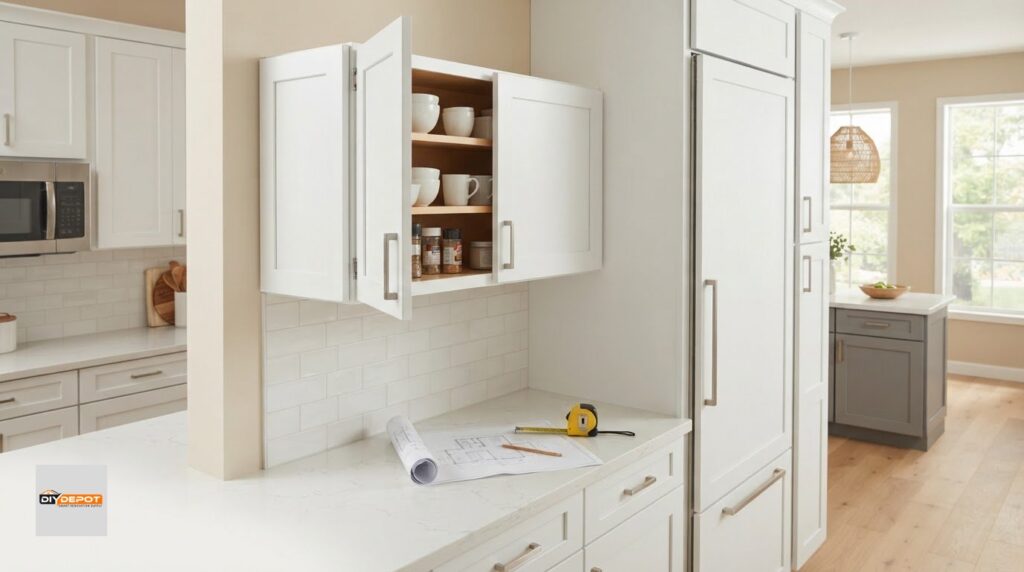
- Door storage: Use for suitable lightweight items, leaving clearance so the door closes freely.
- Corner organizers: Choose based on the shape and size of the items you need to reach.
Try arranging the contents before selecting an organizer. If a corner mostly holds baking ingredients, for example, a rotating surface may make containers easier to find. If it holds larger cookware, prioritize a setup that lets you remove each piece without shifting a stack.
How can vertical space increase usable cabinet storage?
Vertical dividers let you store trays, cutting boards, pot lids, and baking sheets upright instead of stacking them flat. You can pull out one piece without lifting the rest. An added shelf or riser can create a second level for smaller items, such as cups or pantry containers, while keeping them visible. Keep heavy cookware and frequently used pieces low and easy to reach.
Stackable containers can make better use of cabinet height, especially when their contents remain visible or clearly identified. Avoid building tall stacks that hide items behind or underneath others. Leave enough room to lift containers out comfortably, and keep heavier ones on lower shelves for steadier handling.
For a practical test, place the items you use most where you can reach them without moving other belongings. Then check that drawers and pull-outs travel freely, doors close, and organizers sit securely. Those fit checks help you decide whether a simple insert will solve the access problem or whether the cabinet itself limits what can be stored. That’s a useful step in figuring out how to maximize kitchen storage space with the cabinetry already in place.
Make a Small Kitchen Feel More Spacious Without Losing Storage
A small kitchen can feel cramped even when its cabinets hold plenty. Too much may be competing for counter space, or extra storage may block the way you move through the room. Aim for a balance: keep everyday work areas open while making stored items easy to reach.
Try this order before adding more cabinetry:
- Clear surfaces: Relocate appliances and tools you don’t use during everyday cooking.
- Reorganize cabinets: Make existing storage easier to see and use before adding more.
- Consider added cabinetry: Explore this if you still lack a useful, accessible home for essential items.
Can you create more storage without a full kitchen remodel?
A careful reset is a practical first move. Remove unnecessary items from counters, give remaining belongings useful homes, and try organizers that suit the cabinets you already have. A wall-mounted rack or shelf can make use of an empty wall, but place it where it won’t interfere with normal movement, cabinet doors, or the work surface below. If wall updates require working around electrical fixtures or tight clearances, creative home improvement studios like 2d6 Designs offer handy hardware solutions to keep installations clean and functional.
Choose wall storage for items you reach for often, not simply because a wall is empty. A row of frequently used utensils may be handy near a prep area, while a shelf above a busy counter could make that work zone feel crowded. Think about what you’ll store, how you’ll reach it, and whether it leaves the kitchen comfortable to use.
When does adding storage create new problems?
Extra shelves aren’t helpful if they make a counter harder to use or narrow a daily path. Open shelving keeps dishes and jars visible and within easy reach, but exposed items can collect dust and create visual clutter. Closed cabinets hide contents and create a tidier appearance, though items inside may be less visible unless they’re arranged thoughtfully.
Before adding storage, check how the kitchen feels during normal tasks. Can you move between the refrigerator, sink, and cooking area without detours? Is there enough clear counter space to prepare a meal? Keep primary work surfaces and the paths between them open. A storage change should make the room easier to use, not just give more objects a place to sit.
If you’re deciding whether a cabinetry change could add useful capacity, first identify what function is missing and where it would work best. Planning cabinet choices around the available space can help keep storage and movement in balance. Use your daily routines and the areas you want to keep clear to guide the plan.
For a small kitchen, the best answer may be a better arrangement rather than more shelves. Clear surfaces, make existing cabinets work harder, then consider new cabinetry only if an essential storage need remains. That measured approach can help you figure out how to maximize kitchen storage space without making the room feel tighter.
Know When New Kitchen Cabinets Can Solve a Storage Problem
Reorganizing can reveal more room, but it can’t fix every limitation. If essential items still have no practical home after you’ve cleared unused belongings and adjusted where things go, the issue may be cabinet capacity or arrangement. Identify what isn’t working before choosing new cabinetry.
What signs suggest your current cabinets are the real limitation?
Look for persistent overflow, repeated access problems, or storage functions your current cabinets don’t provide. Perhaps pantry goods have no suitable place, cookware competes for a single crowded cabinet, or a corner remains difficult to use despite reorganizing. Separate essentials from changes you’d simply like to make. This keeps a cabinet update focused on daily needs.
Write down each unresolved problem and where it occurs. Be specific: “need an easier-to-reach place for pans” is more useful than “need a better kitchen.” Note whether the issue comes from a lack of capacity, an awkward location, or storage that doesn’t suit the items. If the problem disappears after rearranging, a cabinet replacement may not be necessary.
How can cabinet planning support a better storage layout?
Start with the missing function, then consider what cabinet type and location could support it. Drawers may make everyday items easier to access. A pantry cabinet can help group food storage, while a corner cabinet can address an awkward spot. Match choices to the available space and how your household prepares, cooks, and serves food.
Before settling on a layout, list the cabinets you’d change and the purpose each change should serve. Distinguish must-haves from preferences, such as a dedicated place for cookware versus a particular visual arrangement. This keeps the plan grounded in practical use and gives you a clearer basis for comparing cabinet options.
DIY Depot offers base, wall, and pantry shaker cabinets, with White Shaker as its primary collection and Grey Shaker as another option. Professional kitchen design support can help connect household routines, available space, and cabinet choices. DIY Depot also provides assembly and installation of its shaker cabinets, so you can plan the storage update around the products and services available for your project.
There’s no need to replace cabinets simply because the kitchen feels crowded. First determine whether the problem is organization, access, or true capacity. That distinction is central to how to maximize kitchen storage space while making choices that serve everyday use.
If a cabinet update feels like the right next step, take a look at the available kitchen cabinets and consider which options align with your storage priorities and space.
Take the Next Step Toward a Kitchen That Works Better
Your kitchen doesn’t need to change all at once. Choose one persistent frustration, such as a cabinet that’s difficult to use or an everyday item without a sensible home, and let that guide your next decision. A focused improvement can make daily routines easier, while a clear list of unresolved needs can help you plan a larger update with purpose.
That’s the practical approach to how to maximize kitchen storage space: make choices around the way you cook and move through the room, rather than adding storage without a clear reason. If a cabinet update is the next step for your space, explore kitchen cabinet options and consider which choices best fit your priorities.
Start with the improvement that would make the biggest difference to your everyday routine. For cabinet options and professional kitchen design support, explore DIY Depot USA’s shaker cabinets and take the next step toward a kitchen that works better for you.
Frequently Asked Questions
How can I maximize kitchen storage space without remodeling?
Use cabinet doors and drawer interiors as carefully as the main shelves. A small tray inside a drawer can corral measuring spoons, clips, or other loose tools, while an inventory note inside a cabinet can help prevent duplicate grocery purchases. These modest changes can make existing storage work harder. DIY Depot USA is based in Bakersfield and serves customers in California, including Bakersfield, Fresno, Santa Maria, San Luis Obispo, Santa Barbara, Ventura, Visalia, Oxnard, Kern County, and Kings County, as well as Las Vegas and the Phoenix area.
What is the best way to organize a small kitchen?
Choose one daily routine, such as making coffee or packing lunch, and set up the few items needed for it together. Keep that small group easy to reach, then store occasional-use items elsewhere. This creates a reliable routine without requiring a full cabinet overhaul. If several people share the kitchen, agree on where common tools return after use. Consistent homes reduce time spent searching and make shared spaces easier to maintain.
How do I make deep kitchen cabinets easier to use?
Keep small or easily lost items together in a removable bin so you can lift the group out instead of reaching blindly. Use the cabinet’s front area for things you grab often, and reserve the back for items you use less. For cookware, store pieces near the cabinet opening when possible, rather than building a tall stack that must be taken apart to reach one pan.
Are open shelves a good way to add kitchen storage?
They can be useful if you’re comfortable keeping displayed items orderly and wiping the shelves as part of your regular kitchen cleanup. Open shelves work well for a small, consistent set of dishes or cups you use often. They’re less helpful for assorted packages or rarely used pieces that can make the room feel busy. Before adding one, consider whether the wall location is convenient without crowding a work area.
How can I create pantry storage if my kitchen has no pantry?
Give one cabinet or a defined section of existing storage a pantry role. Separate foods you’re currently using from unopened extras, and keep a short inventory nearby so you can see what needs replacing before shopping. If you buy groceries for different household members or meal plans, assign each a small, clear area. This keeps food supplies contained instead of spreading across several cabinets.
What should I store under the kitchen sink?
Use this cabinet for cleaning supplies and related items you reach for near the sink, such as dish soap, sponges, and spare trash bags. Keep products grouped in a portable caddy so you can move them aside when cleaning the cabinet. Arrange items around the plumbing, leaving the shutoff area accessible, and avoid packing the space so tightly that you can’t spot a drip or reach what you need.