
The biggest spice rack isn’t always the one that makes cooking easier. The right spice rack solutions for wall cabinets depend on what you use most, how the cabinet opens, and whether you can see the labels once the jars are stored. When spices crowd a shelf or disappear behind taller containers, even a quick meal can involve unnecessary searching.
You can often make existing storage more useful without adding clutter or choosing an organizer that won’t fit. Before shopping, measure the cabinet’s usable interior width, depth, and height, then measure the jars you plan to store. Jar sizes vary, so an organizer that suits one collection may not work for another.
This guide compares tiered shelves, pull-out organizers, door-mounted racks, and other practical options for wall cabinets. You’ll learn how each style affects visibility and access, what to measure, and how to match storage to your cooking habits. If you’re planning a kitchen update, consider cabinet placement and shelf access alongside your wall cabinet choices and overall kitchen design.
Key Takeaways
- Compare spice rack solutions for wall cabinets by access style and how they use space, rather than looking for one option that suits every kitchen.
- Check the organizer’s dimensions and mounting requirements against the cabinet’s usable space, including clearance for hinges and door movement.
- Match storage to your cooking routine. Keep frequently used spices easy to reach and consider how each organizer affects visibility.
- Plan spice storage alongside cabinet placement and cooking zones to make the overall kitchen layout work more smoothly.
- During a renovation, include shelf access and wall cabinet storage in your broader kitchen design plan.
Spice Rack Solutions for Wall Cabinets: Start With the Storage Problem
A spice jar can be right in front of you and still be hard to find. In a deep wall cabinet, jars behind the front row can disappear from view. Tall containers can also make a short shelf feel crowded, while leaving an awkward gap above shorter jars. The challenge isn’t simply finding room for spices. It’s arranging them so you can spot and reach what you need without shifting everything else.
A wall-cabinet spice solution is a rack or organizer that makes spices easier to see and reach within the cabinet space you already have. Unlike general cabinet storage, which may hold dishes or pantry goods, spice storage gives small containers a consistent place. The right choice depends on your shelf layout, the jars you own, and how you cook.
That principle applies across storage traditions, too. A Masala Dabba: A Traditional Spice Storage Solution keeps frequently used spices together in a dedicated container. Its form differs from a cabinet organizer, but the useful idea is familiar: give ingredients a clear, convenient place.
Why spices become hard to find in wall cabinets
Cabinet depth can hide labels when jars sit in several rows. Shelf height matters as well. A tall jar at the front may block smaller containers behind it, while unused space above short jars can make the shelf feel inefficient. The collection may technically fit, yet take extra effort to scan.
Mixed container sizes complicate a single-row arrangement. Short tins, wide jars, and taller bottles don’t line up neatly, so labels may face different directions or become obscured. Adding more containers can increase capacity, but packing them tightly often reduces visibility and makes it harder to return each jar to its place.
There’s a practical trade-off: a compact arrangement may hold more, while a more open layout can make individual labels easier to find. Rather than aiming to fit every spice on one shelf, consider which ones you reach for often and whether you can see them at a glance.
What a useful spice setup should make easier
Start with three everyday tasks: recognizing labels, reaching a jar without moving others, and putting it back in a stable, predictable spot. If you regularly have to lift the front row to find one ingredient, the storage arrangement is working against your routine. Clear labels help, but their position and visibility matter just as much.
Separate frequently used spices from occasional ingredients. Keep everyday seasonings in the easiest-to-reach area. Less-used baking spices or specialty blends can sit farther back or higher up, provided they remain identifiable. This simple grouping makes the most-used part of the cabinet more functional without giving every jar prime shelf space.
A useful setup supports cooking, not just capacity. When choosing among spice rack solutions for wall cabinets, balance visible labels, quick access, and a sensible home for each container. The best arrangement is the one that fits your cabinet and makes your usual cooking steps more straightforward.
Five Spice Storage Styles That Work Inside or Around Wall Cabinets
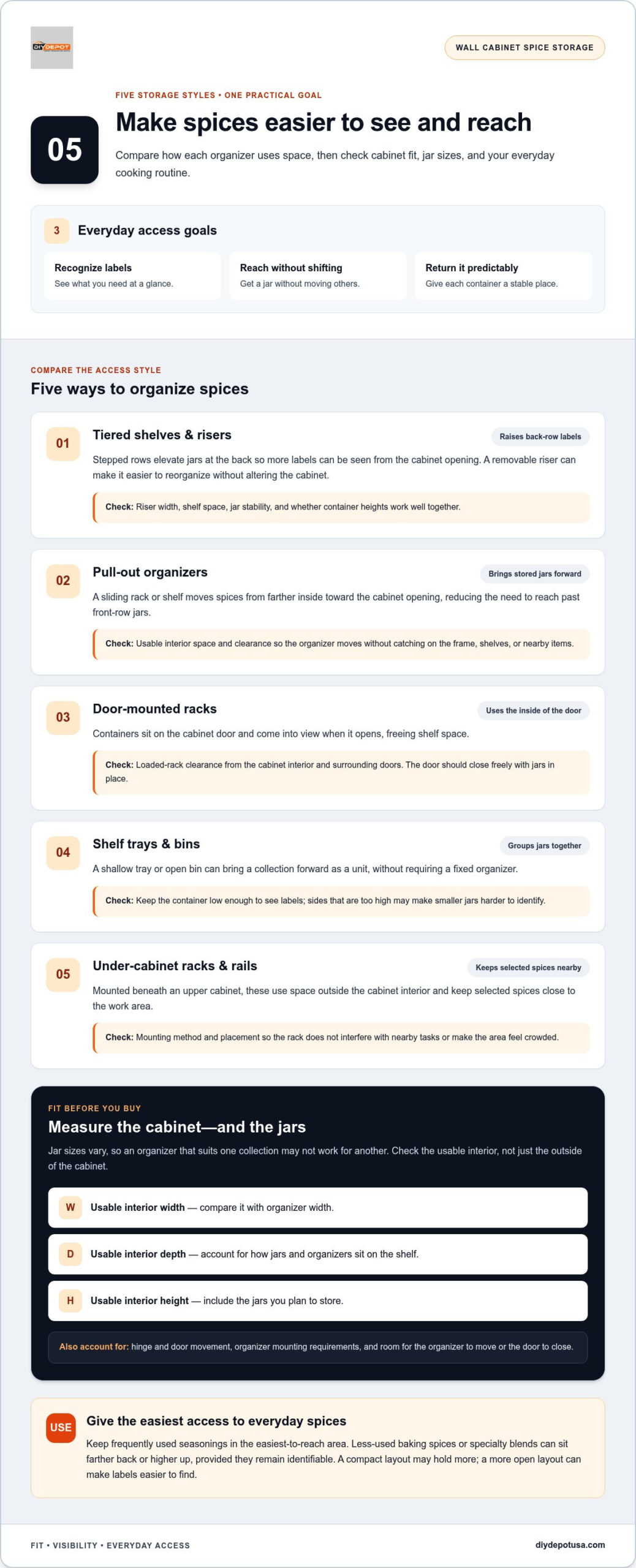
Different organizers solve different access problems. A raised shelf can bring labels into view, while a pull-out brings stored jars closer to you. Other options use the cabinet door or the space beneath the cabinet. These are storage categories, not cabinet types: the wall cabinet houses or supports the organizer, which is a separate item. Sizes, attachment methods, and installation requirements vary, so compare the organizer’s dimensions and instructions with your cabinet.
- Tiered shelves and risers: Stepped rows elevate jars at the back, making more labels visible from the cabinet opening. They can work well on a broad, uncluttered shelf, especially when containers are similar in height. Check the riser’s width and make sure jars sit securely on each level. A removable riser can be a straightforward choice if you want to reorganize without altering the cabinet.
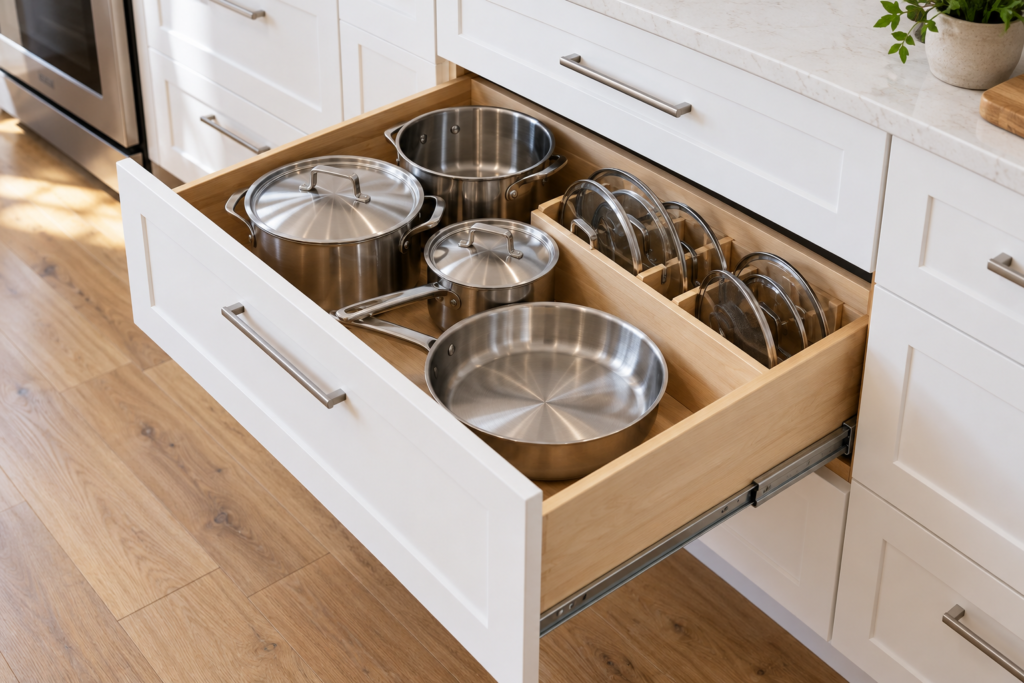
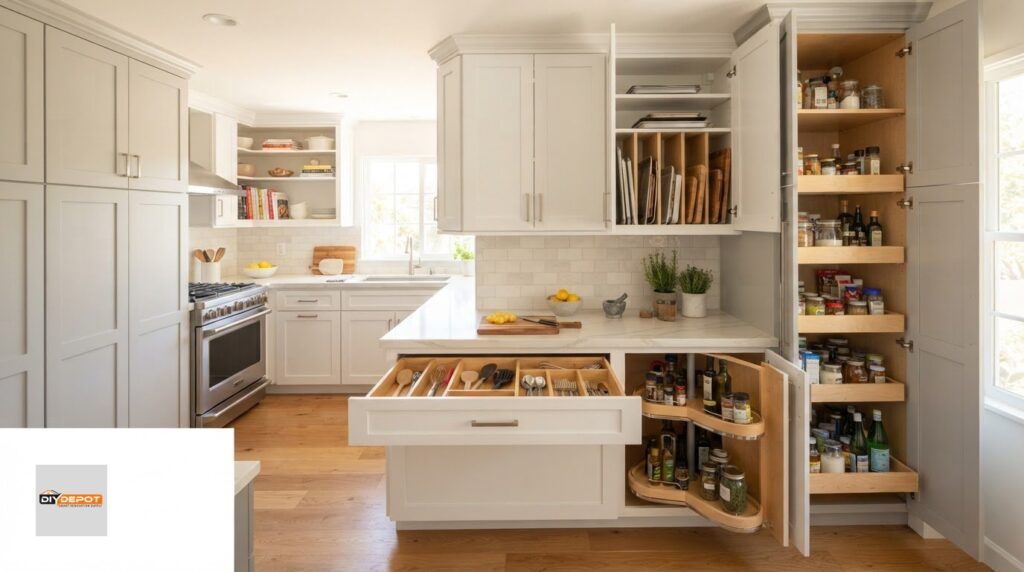
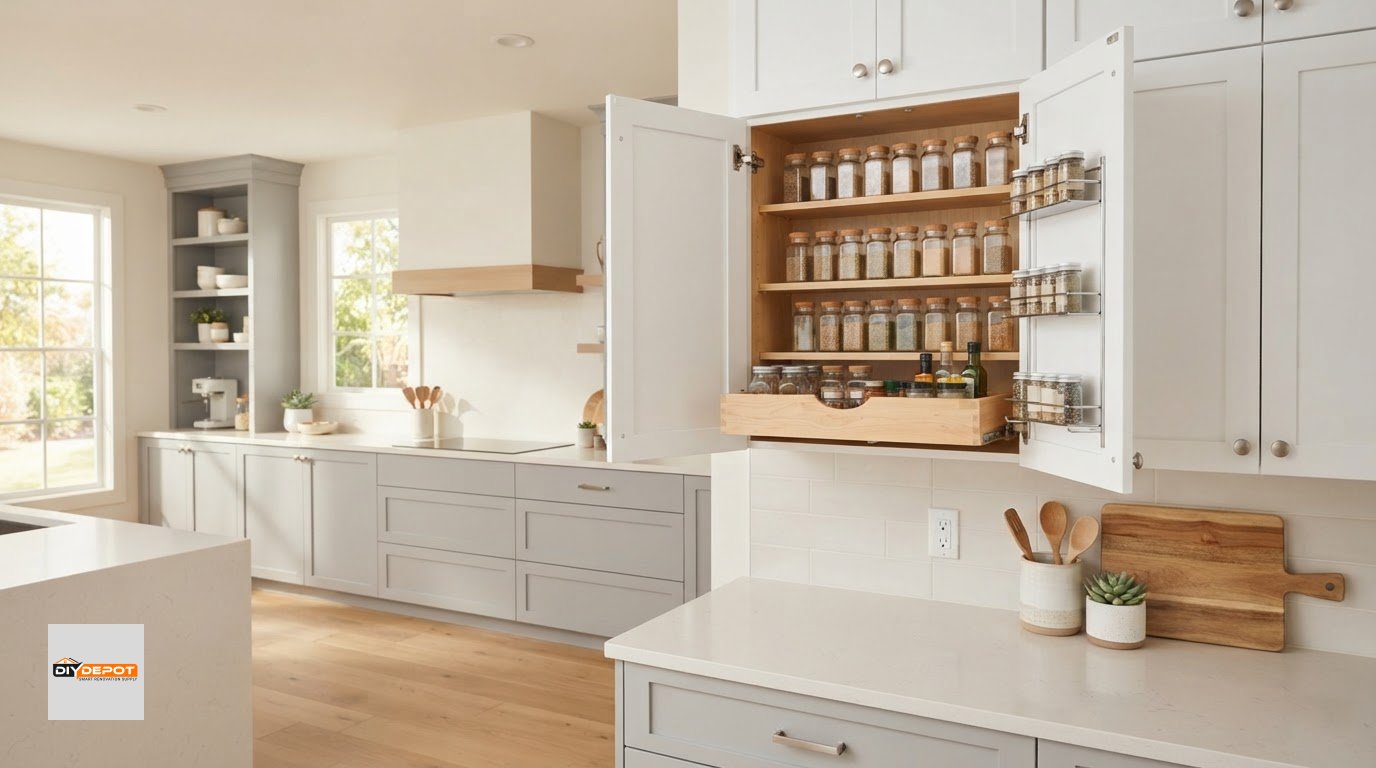
- Pull-out organizers: A sliding rack or shelf moves spices stored farther inside toward the cabinet opening. This can reduce reaching past front-row jars, but the organizer needs room to move without catching on the cabinet frame, shelves, or nearby items. The cabinet’s usable interior and the organizer’s mounting requirements determine whether this approach fits.
- Door-mounted racks: These use the inside of a cabinet door to hold containers within easy view when the door opens. They can free shelf space, but the loaded rack needs clearance from the cabinet interior and surrounding doors. Attachment methods differ, so follow the product’s installation instructions and make sure the door closes freely with jars in place.
- Shelf trays and bins: A shallow tray or open bin groups jars together and can make it easier to bring a collection forward as a unit. This can suit a simple shelf where a fixed organizer isn’t needed. Keep the container low enough to see labels, and consider whether its sides make smaller jars harder to identify.
- Under-cabinet racks or rails: Mounted beneath an upper cabinet, these use space outside the cabinet interior and keep selected spices close to the work area. They may be handy for a small everyday group, but they also leave containers visible on the wall. Consider the mounting method and placement so the rack doesn’t interfere with nearby tasks or make the area feel crowded.
Adjustable or modular organizers can help accommodate a mix of jar sizes, but their range and configuration differ by design. In every case, weigh visibility against capacity. A compact arrangement may hold more, while a more open one can make individual containers easier to spot. These spice rack solutions for wall cabinets work best when the organizer suits both the cabinet and the way you cook.
If you’re planning a kitchen renovation, professional kitchen design can help you consider cabinet placement and shelf access as part of the wider layout.
Compare Wall Cabinet Spice Racks by Fit, Visibility, and Everyday Use
A side-by-side comparison shows what each organizer needs from the cabinet and what it makes easier to reach. Capacity isn’t fixed for any style. It depends on the organizer’s design, the dimensions of your jars, and the usable space inside the cabinet. Compare fit requirements and trade-offs, not just a stated jar count.
| Style | Access pattern | Cabinet fit checks | Likely trade-offs |
|---|---|---|---|
| Tiered shelf or riser | Raises rear jars so labels can be seen over the front row. | Check shelf width, height, and whether the jars sit securely on each level. | Improves visibility on an open shelf, but may take up space that could hold taller containers. |
| Pull-out organizer | Moves spices stored farther inside toward the cabinet opening. | Check interior width and depth, mounting needs, and room for the organizer to move. | Can make deeper storage easier to reach, but its hardware and movement need clear space. |
| Door-mounted rack | Keeps jars on the inside of the door for access when it opens. | Check door clearance, shelf position, attachment method, and whether the door closes with jars in place. | Uses door space instead of a shelf, but can conflict with nearby shelves or cabinet contents. |
| Simple shelf organizer | Groups jars on a tray or in a bin that can be moved together. | Check the shelf footprint and organizer height, including space above it. | Offers a straightforward way to group containers, but labels may be harder to see if jars sit in one flat row. |
Which solution suits different cabinet layouts?
An open shelf with room around it may suit a riser or shallow organizer, as long as it doesn’t block neighboring items. In a deeper cabinet, compare a fixed arrangement with a pull-out that brings contents forward. For tight clearances, check both shelf height and the full door swing. An organizer that fits when the door is closed may still interfere as it opens.
How cooking habits change the right choice
Frequent cooks may prefer a small, visible group of everyday spices near the front, even if the rest of the collection sits elsewhere. Occasional cooks might favor a compact tray that keeps less-used jars together. With mixed containers, adjustable dividers or modular organizers may help, but make sure labels remain readable after arranging the jars.
For spice rack solutions for wall cabinets, fit and visibility matter more than nominal capacity. An organizer is useful only if it fits your cabinet and makes the spices you need easy to find. Use the comparison to narrow the style, then assess your actual space and the organizer’s specifications before choosing.
Measure and Plan a Wall Cabinet Spice Rack Before Buying
A quick fit check can prevent an organizer from blocking a shelf, catching on a door, or leaving jars awkward to reach. Measure the cabinet’s usable interior rather than relying on its outside dimensions. Then compare those measurements with the organizer’s stated requirements and the jars you plan to store. This sequence makes it easier to assess spice rack solutions for wall cabinets before buying.
- Empty the intended area. Remove jars and other items so you can see the shelf edges, cabinet sides, hinges, and obstructions. Decide whether the organizer will sit on a shelf, attach to the door, or move in and out.
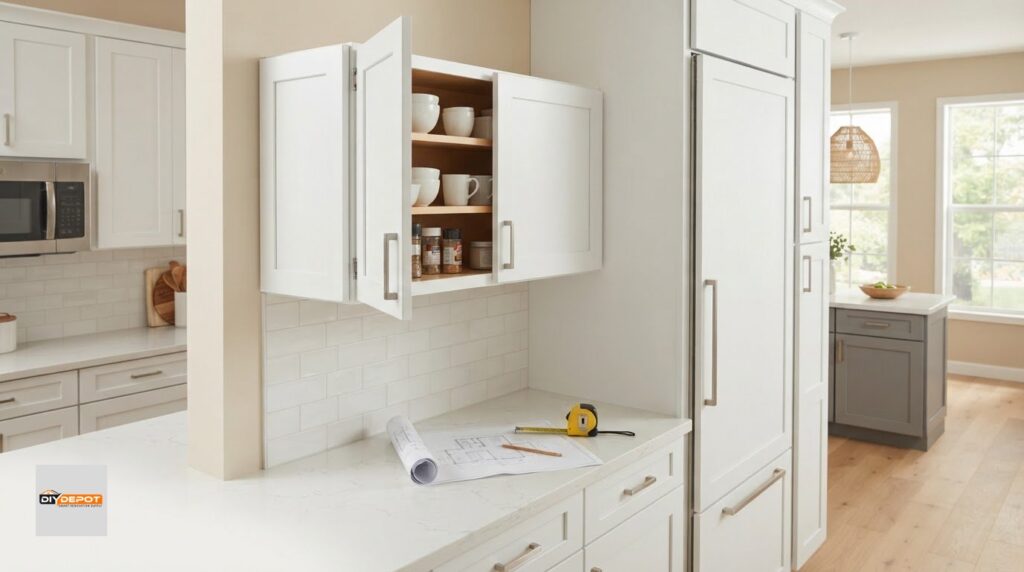
- Measure usable space. Record the clear interior width, shelf depth, and vertical clearance. Note the shelf position, hinge locations, and how far the door swings. The organizer must fit without blocking neighboring storage or the cabinet’s movement.
- Check your jars. Measure the containers you want to store, including taller or wider outliers. Consider whether labels will face outward in the planned arrangement and whether the containers fit securely in the organizer.
- Compare specifications and instructions. Match your notes against the stated dimensions, clearance needs, and mounting requirements. Follow the organizer’s installation instructions rather than assuming all racks attach the same way.
Measure usable cabinet space, not just the outside
Exterior measurements don’t show how much room remains inside once cabinet sides, hinges, and shelves are accounted for. Measure between the interior walls for clear width, from the back of the shelf to the front for usable depth, and from the shelf surface to the next obstruction for vertical clearance. Record door swing and hinge positions, then compare each measurement with the organizer’s requirements.
Plan placement, access, and installation
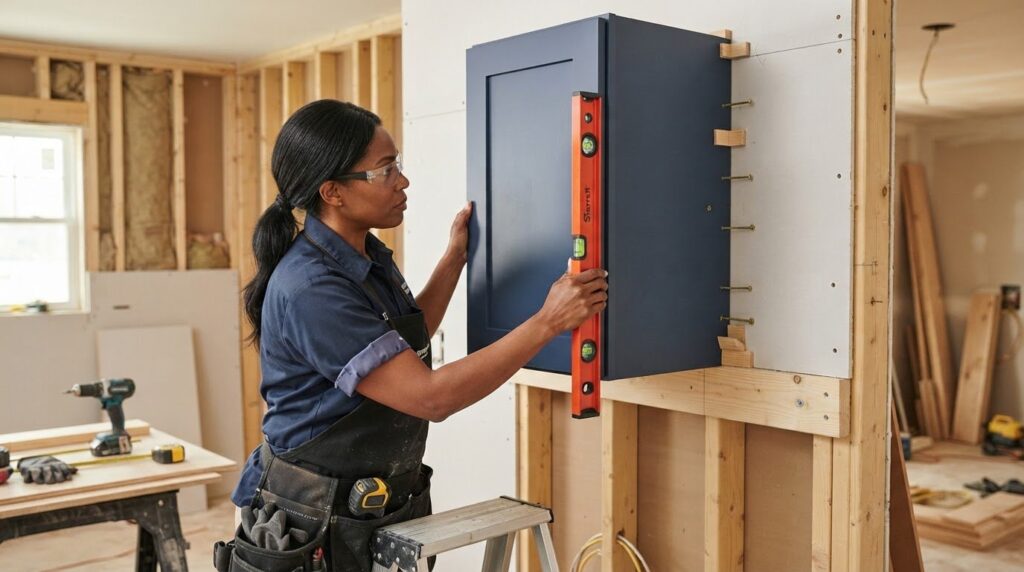
Choose a cabinet that’s convenient to your cooking area, but avoid placing frequently used spices where an open door or organizer interferes with your workspace. Before mounting, consider how jars will be reached and returned. Make sure the cabinet door opens and closes freely with the organizer in place, and follow the product’s installation directions.
For a useful final check, mark the organizer’s approximate footprint on the empty shelf with removable notes or a simple paper template. Put a few of your actual jars in that space and test whether labels remain visible and nearby items are still accessible. This won’t replace the organizer’s measurements or instructions, but it can reveal awkward placement before installation.
If you’re planning a kitchen update, book an appointment for professional kitchen design to consider cabinet placement and storage access as part of the overall layout.
Plan Wall Cabinet Spice Storage as Part of Your Kitchen Layout
A convenient spice setup starts with more than the organizer. Its location affects whether it supports your routine or becomes another item to reach around. Think about the path from food preparation to cooking: where you chop, where you use the cooktop, and which ingredients you reach for most. Placing spices near the relevant work area can make everyday tasks flow more naturally, as long as cabinet doors and nearby storage remain easy to use.
Spice storage works best as one part of a coordinated layout. The wall cabinet provides the location, while the organizer shapes how jars are arranged and accessed. Planning both together helps avoid choosing a setup that fits in isolation but feels inconvenient once other cabinets, counters, and cooking activities come into play.
Coordinate spice access with wall cabinet placement
During wall cabinet storage planning, consider which cabinet is easiest to reach from your main preparation area without crowding the workspace. A spice location near the cooktop may suit your routine, while a spot nearer the counter may make more sense if you season ingredients as you prep. Account for neighboring cabinet doors and the path you take through the kitchen. Easy access should feel natural, without requiring you to work around an open door or move other items first.
Before settling on a location, picture a typical cooking task from start to finish. Can you reach the spices you use without crossing a busy work area? Does opening the cabinet interfere with another door or with someone working nearby? A small change in cabinet placement can affect access every day, so consider how the full kitchen works rather than treating one shelf as a standalone storage spot.
When cabinet design support can help
If you’re updating a kitchen, professional design support can help organize cabinet locations around how you prepare meals and move between work areas. Discussing which items need to be close at hand, where counter space matters, and how you use wall cabinets can make storage decisions part of a wider plan. Professional kitchen design helps connect those everyday priorities with cabinet layout choices.
A simple planning note can make those choices clearer. List the area where you prepare food, the ingredients you reach for most, and any cabinet doors or nearby features that could affect access. That gives you a practical starting point for thinking about wall cabinet placement and the storage arrangement that may suit it.
There’s no need to solve every storage detail at once. If you’re exploring a kitchen update, DIY Depot offers cabinet options and professional kitchen design support. Browse cabinet options as you consider what could work in your home.
Make Your Kitchen Work Better for You
Your spice storage can be a small but meaningful part of a kitchen that feels easier to use. As you plan what comes next, think about how cabinet placement supports your routines, not just how much it can hold. The right layout can give everyday ingredients a natural place near the work areas where you use them.
Thoughtful spice rack solutions for wall cabinets start with a clear picture of your kitchen and the way you cook. If a larger update is on your mind, DIY Depot USA is a Bakersfield-based kitchen cabinet retailer with wall cabinet options and professional kitchen design support. White Shaker and Grey Shaker collections offer practical starting points for planning your space.
Take the next step at your own pace. Explore kitchen cabinets and professional design support as you consider what could work in your home. A more functional kitchen can begin with one well-planned change.
Frequently Asked Questions
These storage considerations can help homeowners planning kitchens across California, including Bakersfield, Fresno, Santa Maria, San Luis Obispo, Santa Barbara, Ventura, Visalia, Oxnard, Kern County, and Kings County, as well as in Las Vegas and Phoenix.
Can spices be stored in a wall cabinet above the stove?
It’s generally better to store spices away from heat, steam, and direct sunlight when you can. A cabinet near the cooking area may be handy, but repeated exposure above a hot range can affect spice quality over time. If another easy-to-reach cabinet is available, consider using it instead. Keep containers closed and follow any storage directions printed on the package.
Should spices stay in their original jars or be transferred to matching containers?
Either can work if the containers are clean, dry, tightly closed, and clearly labeled. Original packaging keeps product details together, while matching jars can make a collection look more uniform. If you transfer spices, label each container with its name and add purchase or freshness details if useful. Keep the original package information nearby if you may need to check ingredients later.
How can I organize spice jars if they are different sizes?
Group containers by height or how often you use them, and arrange them so labels stay easy to read. A tiered arrangement can help reveal shorter jars behind taller ones, while a simple row may suit a smaller collection. Measure your largest and widest containers before choosing among spice rack solutions for wall cabinets. Don’t force jars into a space where they wobble or are difficult to remove.
Are spice racks suitable for renters?
Yes, a freestanding organizer that rests on a shelf can be a practical rental-friendly choice because it doesn’t require attaching hardware. Fixed or door-mounted racks may need fasteners, so read the installation guidance and review your rental agreement before making changes. Even a removable rack needs enough space for the cabinet door to open and for nearby items to remain accessible.
Can spices be stored in clear jars?
Yes, clear jars can make contents easier to spot, but store them inside a closed cabinet when possible to limit light exposure. Labels still matter because powders and seasoning blends can look alike. For example, label both the jar top and front if you often reach from above or scan jars at eye level. Keep lids secure and containers dry.
Is it better to organize spices alphabetically or by cuisine?
Choose the system that helps you find ingredients quickly. Alphabetical order suits cooks who remember spice names, while cuisine or cooking-style groups can be handy if you often make similar dishes. You might keep everyday seasonings together and arrange less-used jars alphabetically. If several people share the kitchen, use a simple system everyone can follow and return jars to consistently.
What is the best way to keep spice jars from tipping over?
Set jars on a level, stable surface that accommodates their bases, and leave enough room to lift them out without catching neighboring containers. Grouping jars of similar size can reduce gaps that let them lean. After arranging them, open and close the cabinet normally to see whether anything shifts. If a container keeps tipping, move it to a more secure spot rather than wedging it tightly between jars.