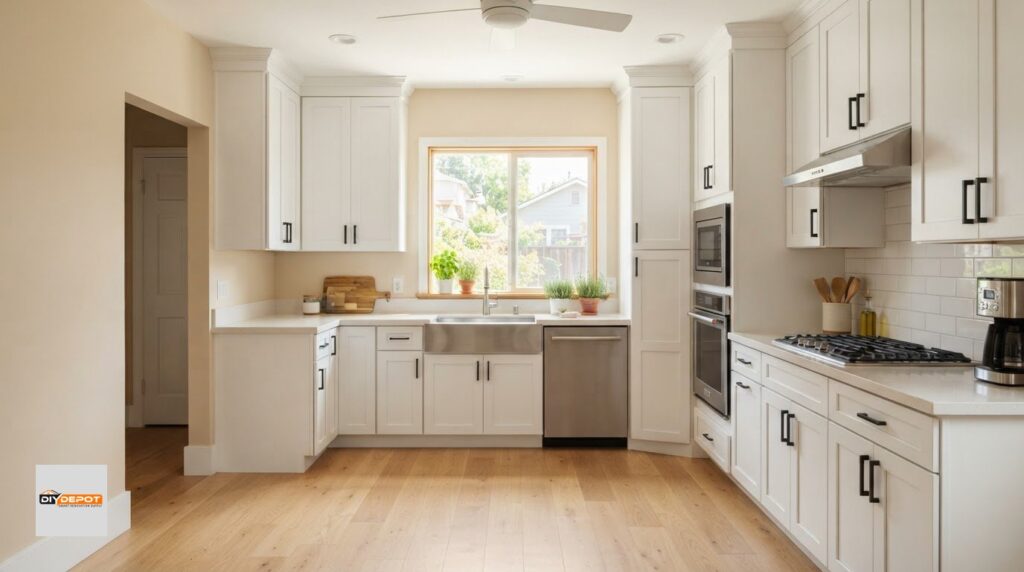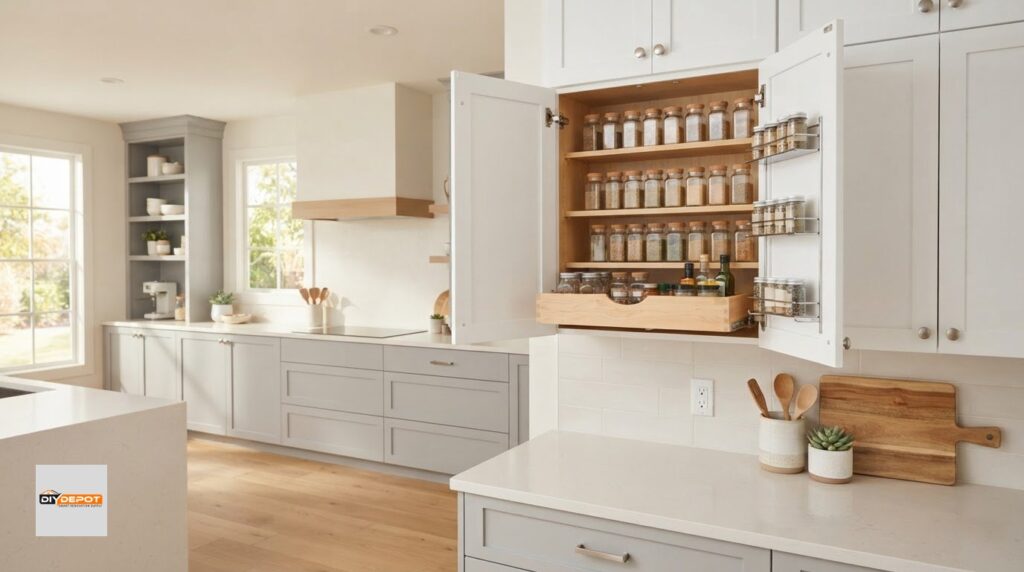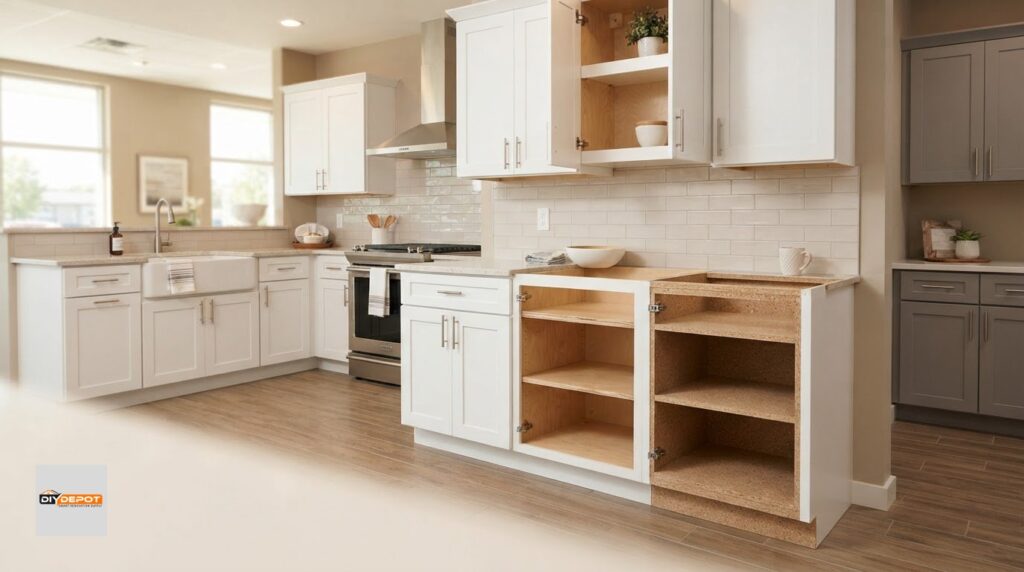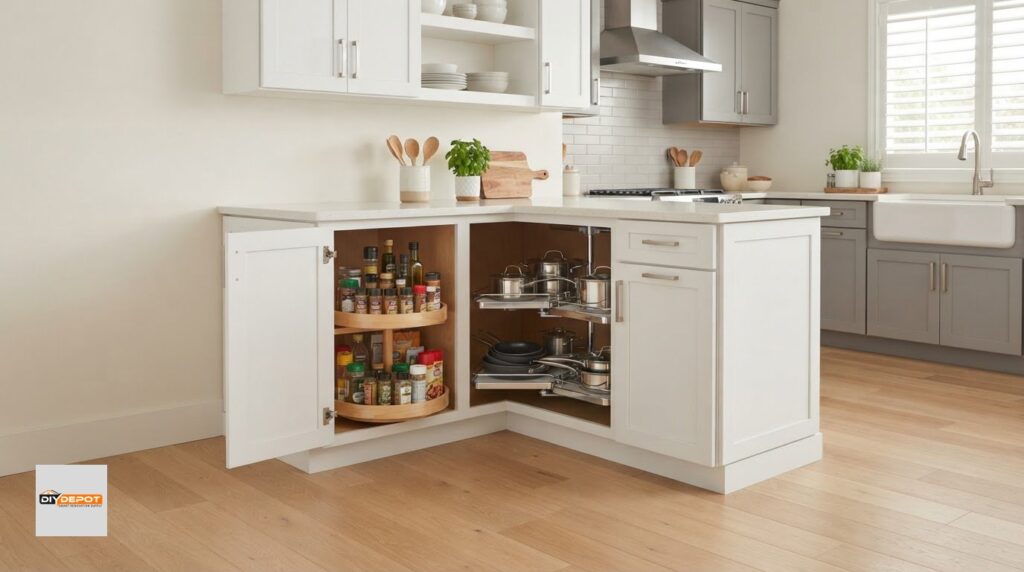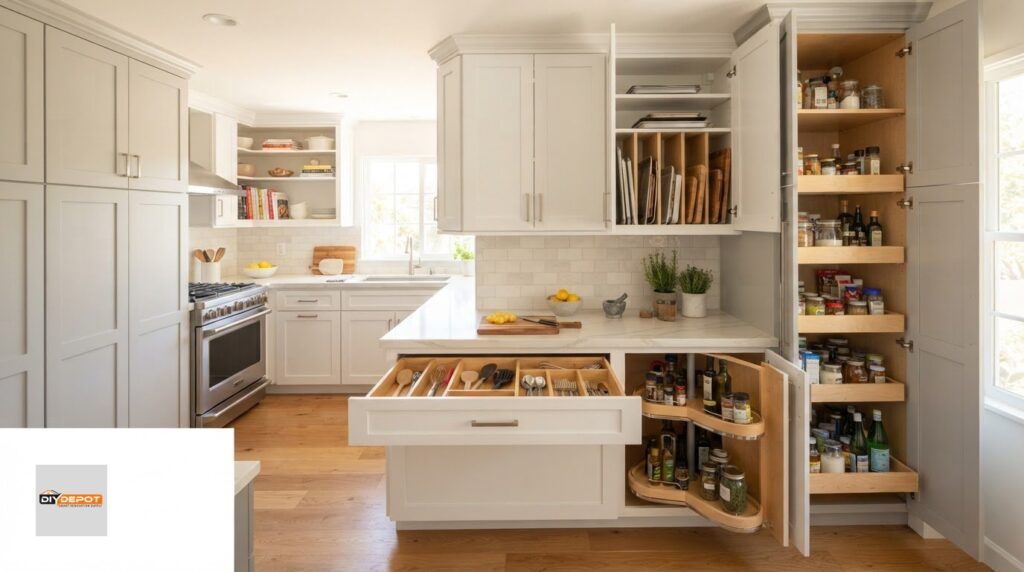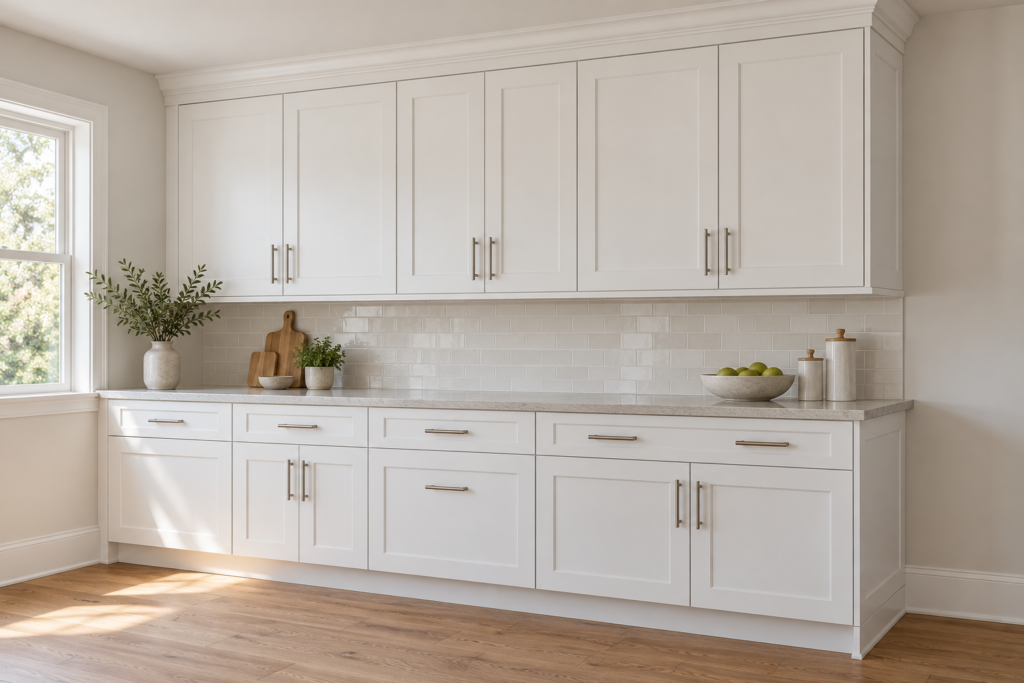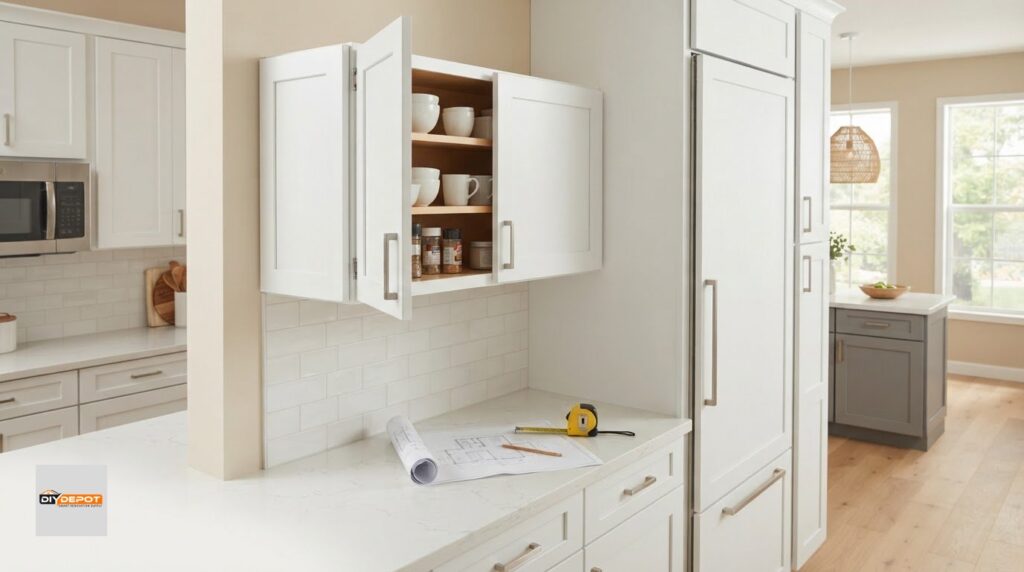

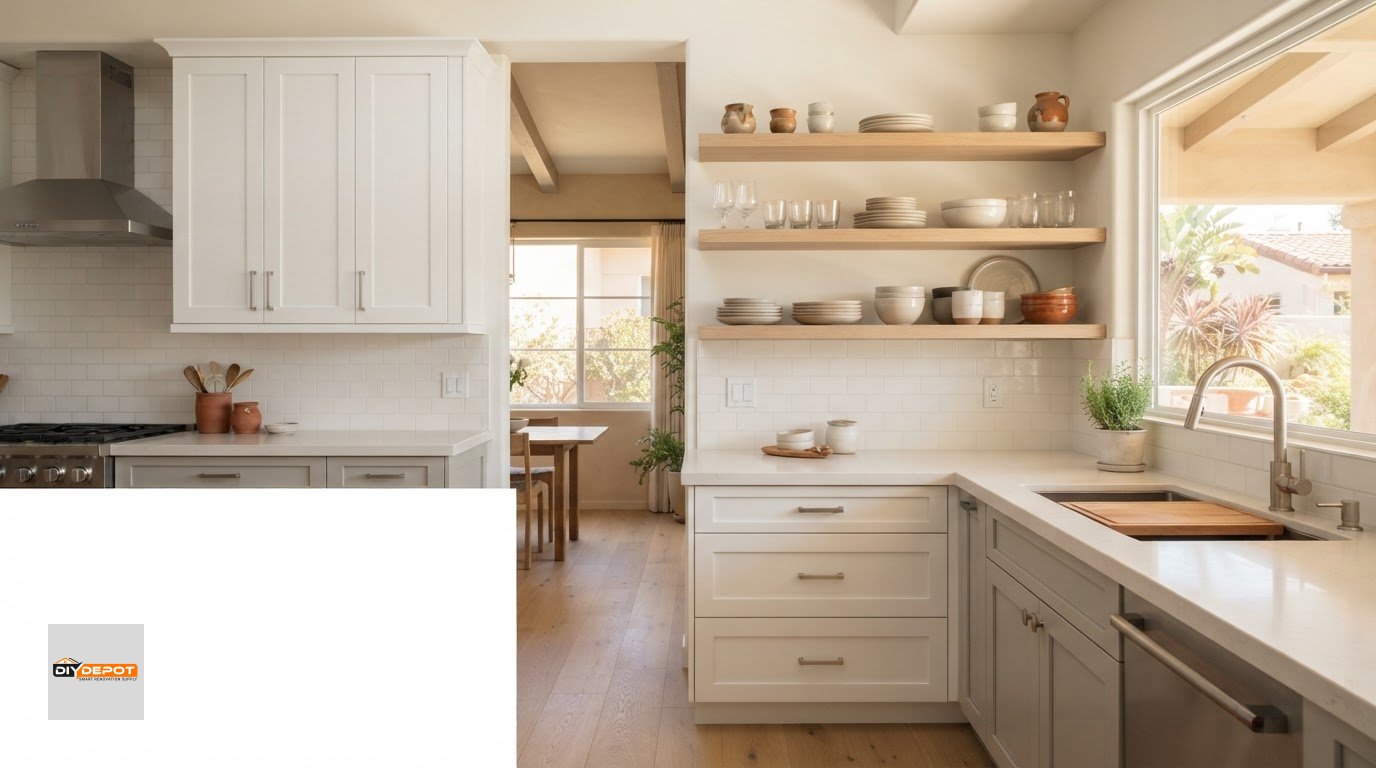
What if the best kitchen storage plan isn’t an all-or-nothing choice? The open shelving vs wall cabinets pros and cons come down to everyday trade-offs: shelves keep dishes visible and within reach, while cabinets hide clutter and protect what you store. It’s reasonable to wonder whether open shelves will look messy or collect dust, and whether removing cabinets will leave you short on space.
The right answer depends on what you keep in your kitchen, how often you use it, and how your walls are arranged. If you like the airy look of shelves but rely on enclosed storage, you can use both.
This guide compares the practical benefits and drawbacks of each option, including cleaning, organization, storage, and how each can affect the feel of your layout. You’ll also find a simple way to plan a mix of open shelving and wall cabinets around your routine.
Key Takeaways
- Compare open shelving vs wall cabinets pros and cons through the everyday needs they serve: easy access and display, or enclosed storage.
- Consider whether you’re comfortable keeping shelf items tidy and handling the extra visible upkeep.
- Think about how much of your kitchen you want to keep out of sight before choosing enclosed cabinets.
- Use your household’s storage habits, display preferences, and cleaning routine to guide your decision.
- A thoughtful mix of wall cabinets and selected open shelves can balance concealed storage with a lighter, more personal look.
Open Shelving vs. Wall Cabinets: What Changes in Kitchen Storage?
The choice is between keeping selected kitchen items visible and easy to reach, or storing them behind cabinet doors. Open shelving puts dishes, glasses, and other everyday items on display. Wall cabinets provide enclosed storage above the counter, letting you tuck those items out of sight. Each option changes how you use the wall, arrange essentials, and keep the kitchen looking orderly.
There’s no need to commit every wall to one approach. Use wall cabinets for items you’d rather conceal and reserve a smaller area for open shelves. The useful question isn’t which option wins in every home, but how each fits your storage needs, layout, and routines.
What counts as open shelving or a wall cabinet?
Open shelving is horizontal storage without a cabinet door in front. Items sit on the shelf in full view, so you can spot and reach them without opening anything. A wall cabinet is an upper cabinet with enclosed storage behind a door. Both can hold kitchen essentials, but they present and protect those belongings differently.
Shelf materials and cabinet styles vary, so the distinction is about how storage is accessed, not a particular finish or look. For a broader perspective on how kitchen layouts and storage have changed over time, explore this overview of the history and design of kitchens.
Why the choice affects daily kitchen routines
Visibility can make frequently used items easier to find and put back. If you reach for the same mugs each morning, keeping them on an open shelf may suit your routine. But whatever stays there becomes part of the room’s visual scene. A neat row of everyday dishes can feel purposeful; a mix of items without a clear place can make the same area feel busy.
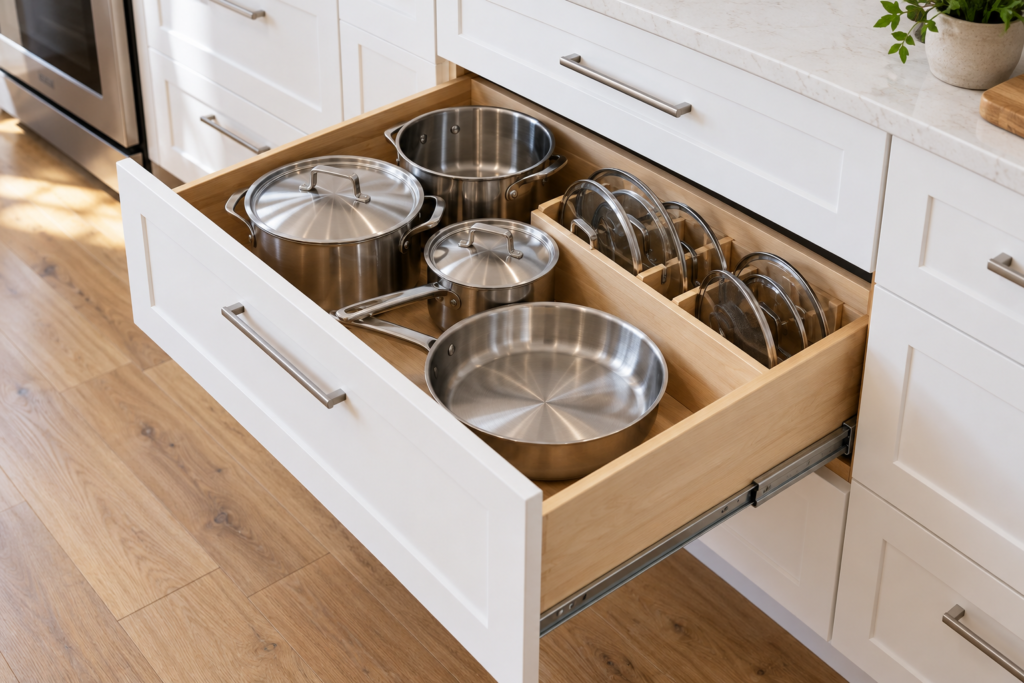
Cabinet doors create a more contained view. They let you store kitchen items without displaying them, which can help if you prefer a calmer appearance or don’t want every shelf arrangement on show. The trade-off is that you open a door to reach what’s inside. Think about which items you use often and whether you want them visible or tucked away.
Upkeep is another practical difference. Open storage leaves items exposed to kitchen dust and cooking residue, so shelves and their contents may need more frequent attention. Enclosed storage keeps items behind doors, while the cabinet exterior still needs routine cleaning. Consider what maintenance feels manageable in your household rather than judging either option by appearance alone.
Finally, look at the available wall space and what else it needs to do. A window, counter workspace, or crowded arrangement of essentials can affect where storage makes sense. Compare visibility, access, upkeep, and storage needs together. Your habits and layout matter more than a universal winner, and a balanced plan can give each storage type a useful role.
Open Shelving Pros and Cons: Easy Access, More Visible Upkeep
Open shelves make chosen kitchen items easy to spot and reach, with no cabinet door to open. That convenience can simplify everyday routines, especially if you use the same dishes or glasses throughout the day. The trade-off is just as straightforward: Open shelves trade immediate access for the responsibility of keeping chosen items visible and orderly.
When open shelves make everyday items easier to reach
Think about what you naturally reach for while cooking or setting the table. Frequently used dishes, drinking glasses, or serving pieces can be handy on an open shelf, where you can see what’s available at a glance. This can also make it easier for other household members to find and return shared items without searching through closed storage.
Visibility offers a chance to give the kitchen a more personal feel. A considered arrangement of everyday ceramics or serving pieces can become part of the room’s look rather than disappearing behind a door. The key is deciding what earns a place on display. Keeping the shelf to a purposeful group of items is easier to maintain than using it as overflow storage for anything without a home.
The upkeep and storage limits to consider
Anything left out is exposed to household dust and kitchen residue. Open shelves and their contents may need more frequent cleaning than items stored behind cabinet doors, particularly if the shelves are near the cooking area. Consider the routine this creates: you may need to wipe the shelf itself and clean items before using them if they’ve been sitting out.
Visual order also depends on what you store there. A few regularly used items can look intentional; mixed packaging, mismatched containers, or a crowded assortment can make the wall feel busy. Before choosing open shelves, picture the things you’d actually put on them, not just an ideal display. If you’d rather keep small appliances, extra supplies, or less attractive packaging out of sight, enclosed storage may be a better fit for those items.
Open shelving also asks you to be selective about what stays within reach. Reserve it for items you use often and have room to arrange neatly, while planning enclosed storage for the rest. That way, the display serves a daily purpose instead of becoming another surface to manage. As you weigh the options, consider whether visible access feels worth the ongoing tidying in your own routine.
If you’re mapping out where display shelves and enclosed storage could work together, book a kitchen design appointment to explore a plan around your storage priorities.
Wall Cabinets Pros and Cons: More Concealed Storage, More Visual Weight
Wall cabinets give kitchen items a place behind doors, which can help the room feel more contained. Instead of seeing dishes, pantry goods, or assorted kitchen supplies on the wall, you see the cabinet fronts. That can suit households that prefer a tidier-looking space or want everyday items stored in designated places. The trade-off is visual: a long, uninterrupted run of upper cabinets may feel prominent, depending on the room and how the cabinets are arranged.
Where wall cabinets offer practical advantages
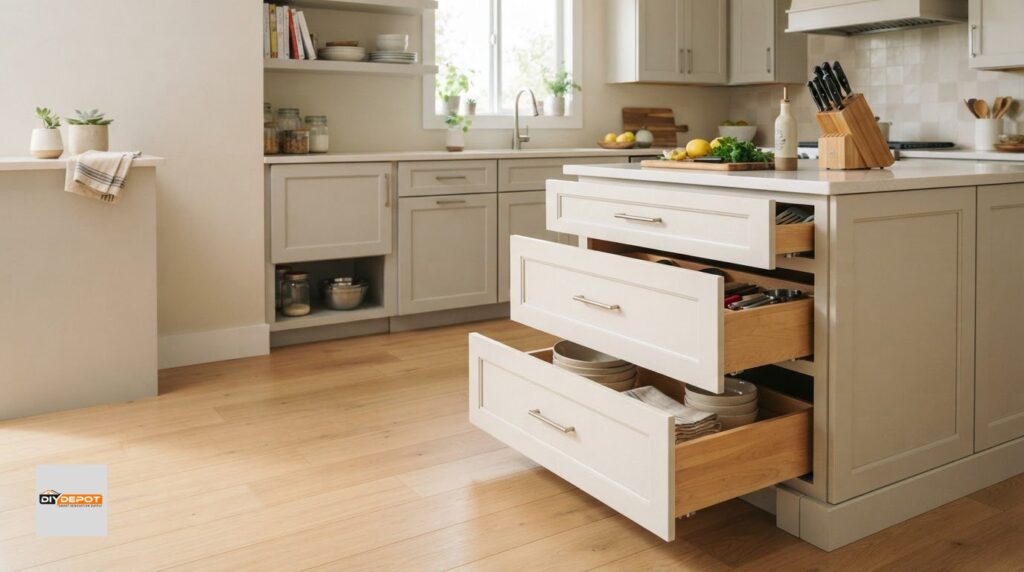
Enclosed storage works well for things you want nearby but don’t necessarily want on display. Plates, glasses, and cooking essentials can stay organized behind doors, ready to use without becoming part of the room’s decor. Grouping similar items together can also make it easier to return them to a consistent spot after meals or cooking. For households that prefer a less visually busy kitchen, cabinet doors provide a simple way to keep stored items out of direct view.
That separation can help when the contents aren’t arranged for display or when you’d rather not keep packaging and miscellaneous supplies in sight. Wall cabinets won’t decide how your storage is organized, but they let you close the door on it. They can also work alongside a smaller display area, so you don’t have to give up visible storage entirely.
Can wall cabinets make a kitchen feel closed in?
They can feel visually heavy to some people, especially when upper cabinets run continuously across a wall. But the effect depends on the room, cabinet placement, and the balance of open and enclosed areas. Look at the whole layout: where the cabinetry begins and ends, what sits beneath it, and whether a section of wall can remain visually open. No single cabinet color or arrangement guarantees a room will feel larger.
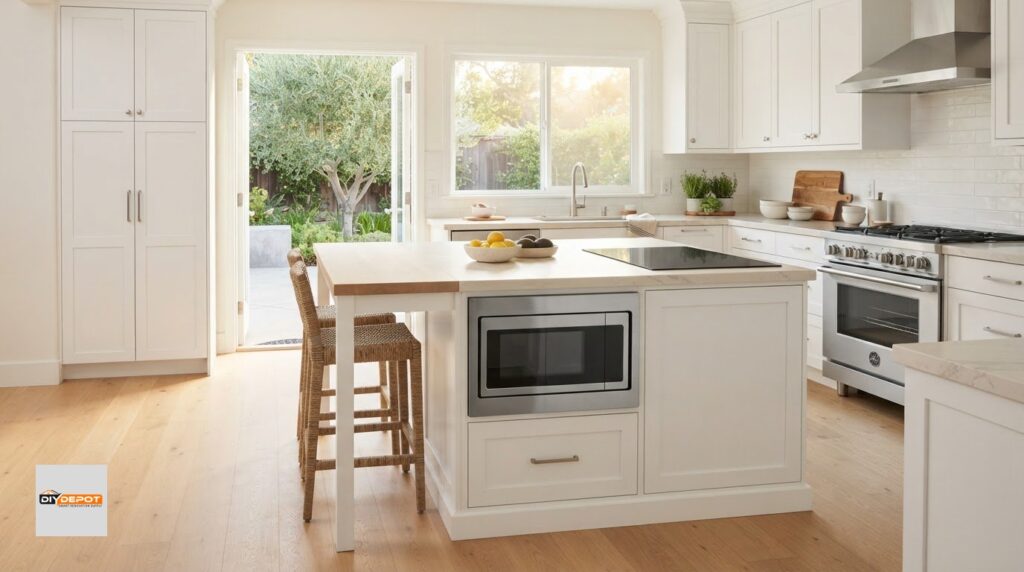
A useful planning step is to identify the walls that need the most concealed storage, then consider whether every remaining section needs cabinetry too. Leaving selected areas open can break up a continuous line of cabinet fronts and create a place for display or simply visual breathing room. The goal is a layout that feels balanced in your actual kitchen, not one that follows a universal rule.
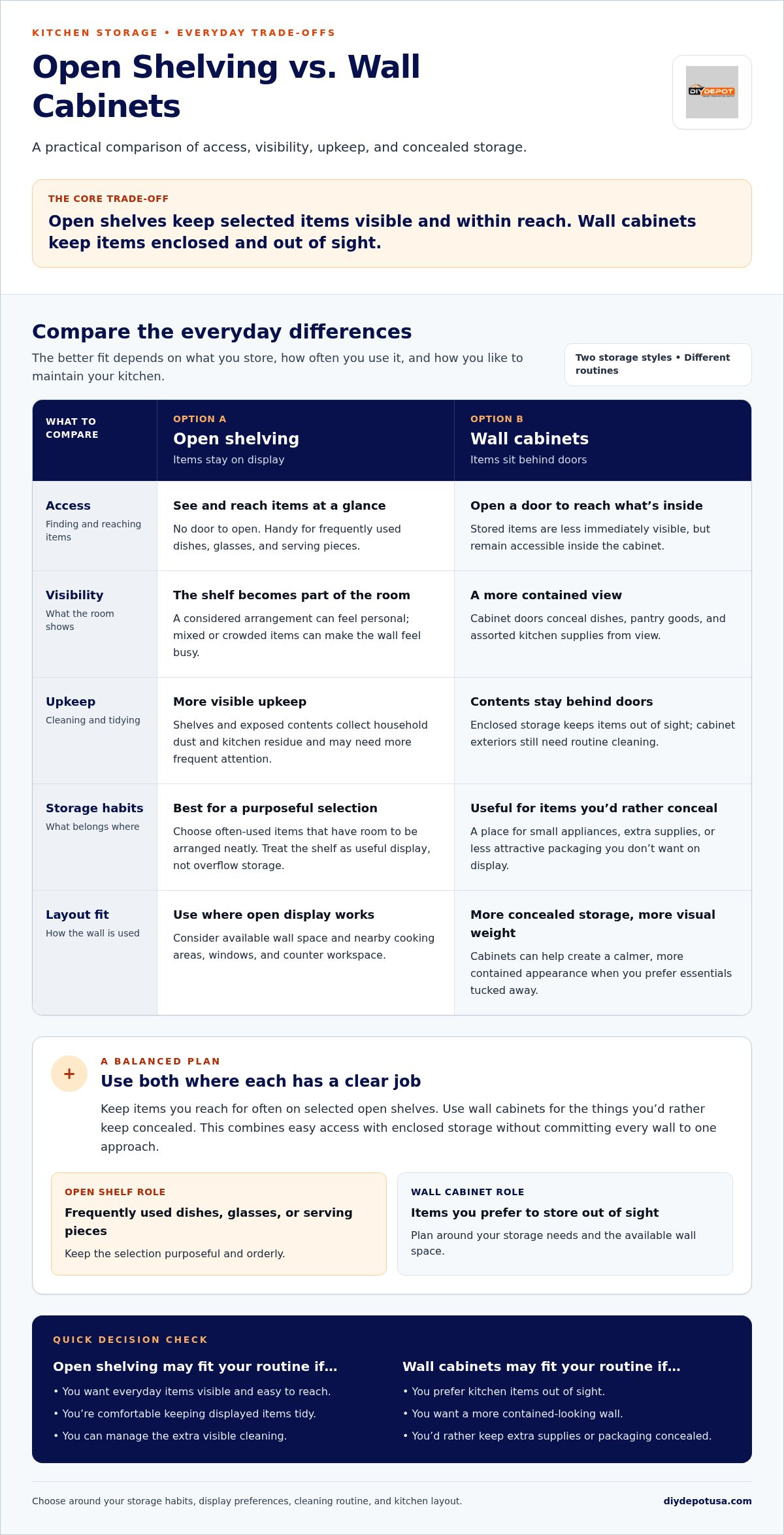
Here’s a quick comparison of the everyday differences:
- Access: Open shelves offer a direct reach; wall cabinets require opening a door.
- Visibility: Shelves show their contents; cabinet doors keep items out of sight.
- Upkeep: Exposed shelf items may need more frequent dusting; cabinet contents stay behind doors, though the exterior still needs routine care.
- Concealment: Shelves display what they hold; wall cabinets provide a more contained appearance.
These are practical distinctions, not promises about exact capacity, cost, or performance. Consider which items you want close at hand, which you prefer to conceal, and how much upper cabinetry feels comfortable in your layout. A considered mix can preserve useful enclosed storage while avoiding a solid stretch of cabinets across every wall.
How to Choose Between Open Shelving and Wall Cabinets for Your Routine
A useful storage plan starts with what happens in your kitchen every day, not with a photo of a finished room. Before choosing shelves, cabinets, or both, think about what your household uses, what you want on display, and how much tidying feels realistic. This simple framework can turn the open shelving vs wall cabinets pros and cons into a decision that fits your habits and layout.
- List what you store and use most. Note the dishes, glasses, ingredients, and cooking items you reach for regularly. Then identify what you’d rather keep behind a door, such as extra supplies or items you don’t use every day.
- Decide what you want to see. Open shelves can suit a small, intentional group of display pieces or daily essentials you like having in view. Wall cabinets can hold the rest, especially if seeing a variety of stored items would feel distracting.
- Be honest about tidying and cleaning. Ask whether you’ll enjoy arranging visible items and keeping shelves clear, or whether a more contained look better matches your routine. Choose a setup you can maintain on an ordinary week, not just on a freshly organized day.
- Review the wall layout. Consider how storage will sit above nearby counters and appliances, and where you need clear space or easy access. Place shelves where they serve a purpose, and avoid assuming every open section of wall needs to be filled.
Match the storage choice to what you keep out
Make two quick lists: items you reach for often, and items you prefer to conceal. The first list can help you decide what deserves an accessible spot; the second shows where enclosed storage may be more comfortable. Choose only a few suitable items for display rather than treating open shelving as the answer for every wall. Let your actual cleaning and tidying habits guide the final mix.
For example, if you like having everyday dishes within easy reach but don’t want miscellaneous kitchen supplies on view, plan a selected display area alongside enclosed storage. If keeping shelves arranged would feel like another chore, give more of the wall to cabinets. There’s no need to make the whole kitchen follow one rule.
Plan the wall as part of the full kitchen
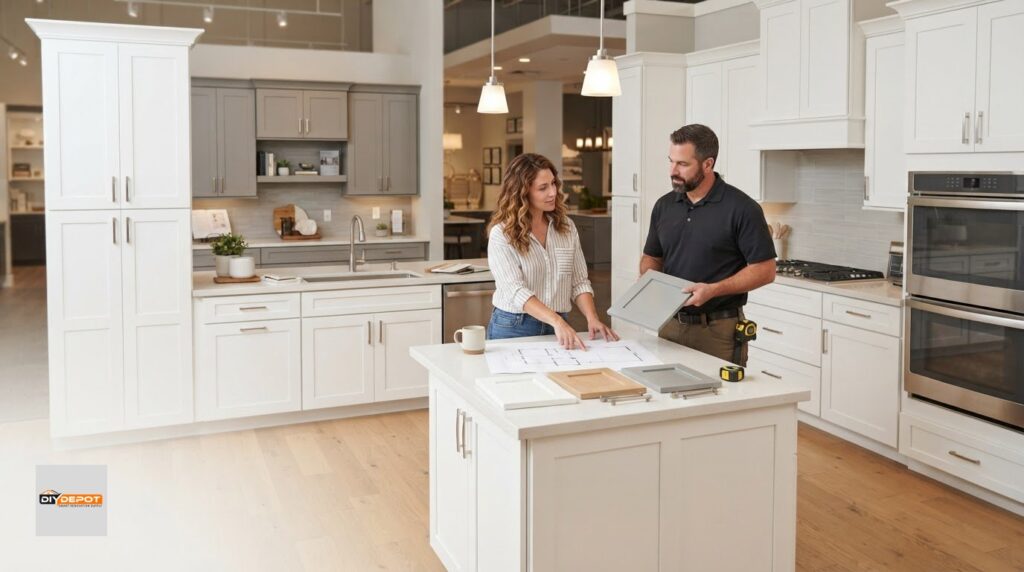
Look at each wall in relation to what sits below it. A counter used for food preparation may have different storage needs from an area beside an appliance or a spot where you want the wall to feel less crowded. Consider the full arrangement before deciding where cabinets end and shelves begin. Professional kitchen design can help connect those storage choices to the overall layout.
If you’ve identified your priorities and want help applying them to your kitchen plan, book a kitchen design appointment to discuss the layout and storage options that fit your routine.
Combine Open Shelving and Wall Cabinets for a Balanced Kitchen Plan
You don’t have to choose between a kitchen where everything is on display and one where every item is behind a door. A mixed plan can preserve enclosed storage for everyday necessities while giving a few selected items a visible place. The right balance depends on what your household stores, how you use the kitchen, and how much wall space is available.
Where a mixed approach can make sense
Picture wall cabinets holding the dishes, pantry goods, or kitchen supplies you’d rather keep out of view, with a small area of open shelving for items you enjoy seeing or use often. This gives display storage a clear purpose without asking it to replace all your enclosed storage. The shelves might suit a spot where you want a visual break or an easy-to-reach place for selected essentials.
There’s no universal shelf-to-cabinet ratio to follow. A household that values concealed storage may use shelves sparingly, while someone who enjoys styling visible items may choose a more prominent display area. Your available wall space matters too. Consider the full layout, including the counters and appliances beneath each section, before deciding where a change in storage type makes sense.
Turn the comparison into a cabinet plan
DIY Depot offers White Shaker and Grey Shaker wall cabinets, along with professional kitchen design support. Planning the mix as part of the overall layout helps connect cabinet placement with the way you want to use the room.
As you weigh the options, sketch the walls and note what each area needs to hold. Label one section for items to conceal and another for a deliberate display, then check that the plan leaves the kitchen comfortable to work in. This exercise can turn a general preference into a practical storage plan without assuming every wall needs the same treatment.
If you’d like help thinking through cabinet placement and the balance of open and enclosed storage, book an appointment for kitchen design support. You can also explore kitchen cabinet options as you shape a plan that fits your space and routines.
Make Your Storage Plan the Next Step
Your kitchen storage should support the way you live in it, not force you to change your routines. Use your priorities to shape a plan that feels comfortable day to day, including where you want flexibility and where a defined cabinet layout will help. The pros and cons of open shelving and wall cabinets can guide your choices, but the final arrangement should make sense for your space.
DIY Depot offers wall cabinets and professional kitchen design support to help turn those priorities into a workable layout. White Shaker is the primary stocked cabinet collection, giving you a practical starting point as you consider your options.
Ready to plan your kitchen storage? Explore kitchen cabinet options and start shaping a layout that feels right for your home.
Frequently Asked Questions
Can open shelving work in a small kitchen?
Yes, open shelving can work in a small kitchen if it has a clear purpose and doesn’t crowd the areas you use most. A short shelf near a breakfast or coffee station, for example, can keep a few frequently used items accessible without filling every wall. Consider whether the display will make daily tasks easier or add visual activity to a compact room.
Do open shelves need special dishes or matching sets?
No, you don’t need special dishes or a matching set. Choose pieces you already use and like seeing, then arrange them so there’s room to take an item down and put it back. A collection of everyday bowls and cups can feel personal even if the pieces aren’t identical. If you prefer a coordinated appearance, grouping similar colors or shapes is one option, not a requirement.
Can I install open shelves above a countertop?
Yes, shelves can be planned above a countertop, provided their placement suits the way you use that work area. Think about what you do beneath them: a shelf over a prep zone may hold items you reach for often, while a busy cooking area may be better suited to a different storage plan. Consider the full wall arrangement and cabinet placement before settling on the shelf location.
Are wall cabinets better for storing everyday dishes?
They can be, especially if you prefer dishes stored out of sight or want to keep them grouped behind a door. Think about where you unload clean dishes and where you set the table. Storing plates and bowls in a cabinet that fits naturally into those routines can make putting them away easier. If quick visual access matters more, you might prefer keeping a few daily pieces on open shelves.
Can open shelving and wall cabinets be used on the same wall?
Yes, they can share a wall. For example, you might use cabinets near a work area for items you want concealed and reserve a separate section for a few display pieces. Before deciding, sketch the wall and mark nearby counters, appliances, and windows. This can help you see whether the two storage types will feel intentional together and leave the areas you use accessible.
Should I choose open shelves before selecting kitchen cabinets?
Plan the shelves and cabinets together so you can consider storage, placement, and the overall wall layout at the same time. A kitchen design plan can help clarify how cabinet areas relate to counters and appliances. DIY Depot serves homeowners in Bakersfield and locations across California, including Fresno, Santa Maria, San Luis Obispo, Santa Barbara, Ventura, Visalia, Oxnard, Kern County, and Kings County, as well as Las Vegas and Phoenix.