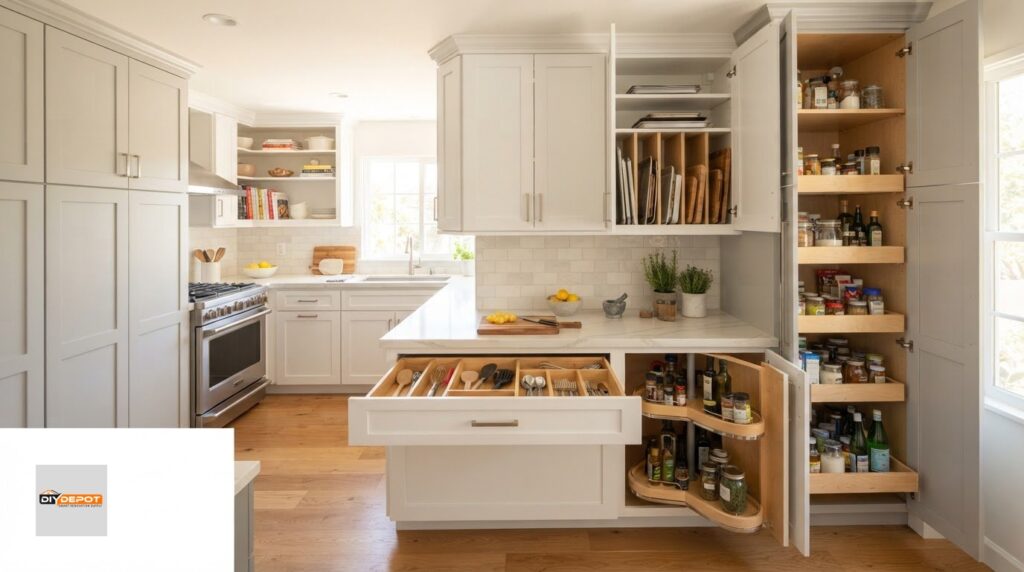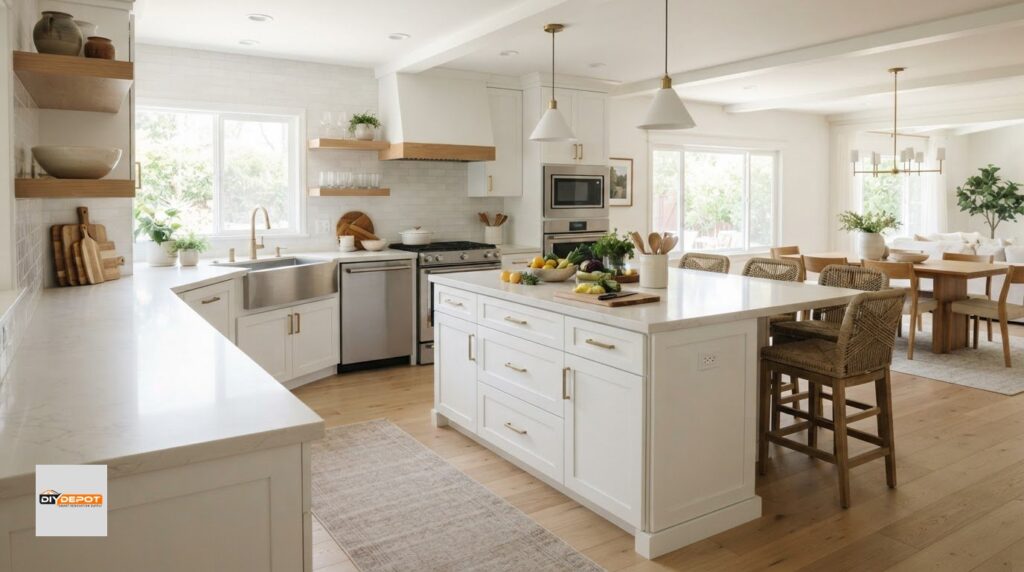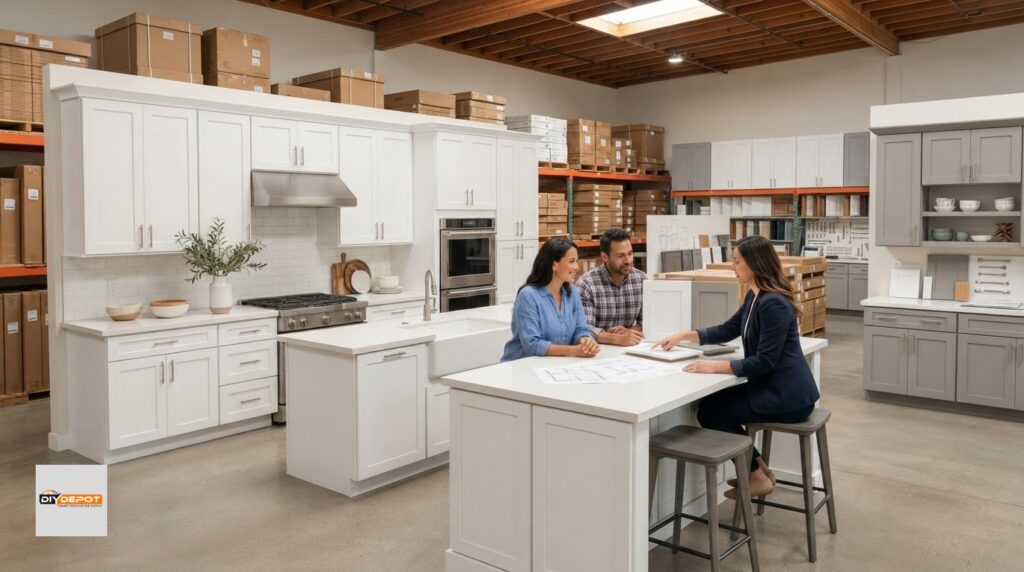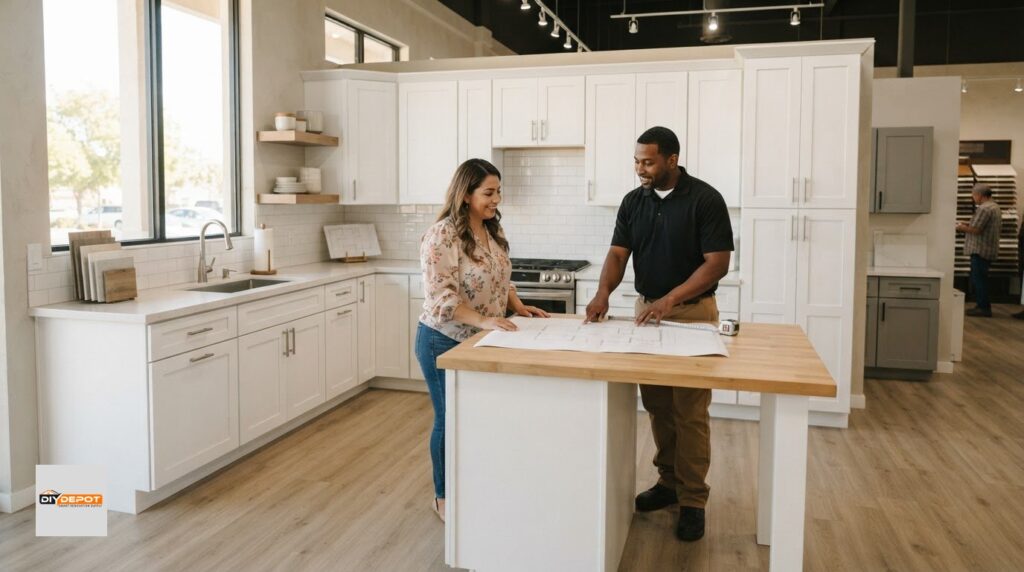

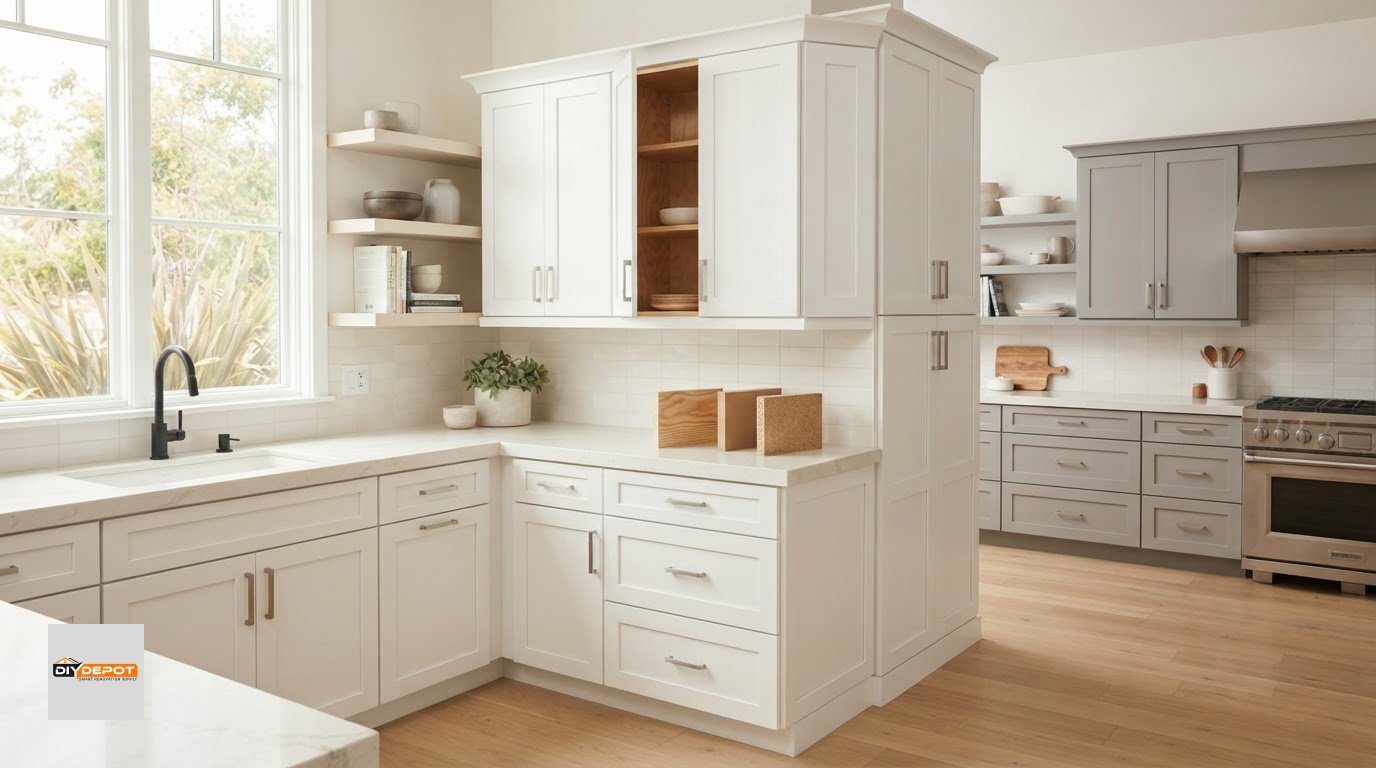
When comparing all plywood shaker cabinets, don’t assume “all plywood” describes every part, from the cabinet box to the doors. The phrase can mean different things in product listings, so check which components it covers before comparing cabinets or deciding what suits your kitchen.
It makes sense to focus on construction and value. But Shaker describes the door style, while “all-plywood” generally refers to cabinet-box construction, not necessarily the doors or drawer fronts. Keeping style and materials separate helps you compare products on the details that matter to your project.
This guide explains how to assess cabinet-box construction, read material and emissions claims, and compare options consistently. You’ll also learn how to consider door materials separately and match cabinet choices to your layout and priorities. DIY Depot offers White and Grey Shaker cabinets, along with kitchen design support to help plan selections around your space.
Key Takeaways
- Read all plywood shaker cabinets claims carefully. Don’t assume every cabinet component uses the same material.
- Compare plywood, MDF, and particleboard by component and project needs, rather than treating one material as the right choice for every kitchen.
- Use product documentation to understand which components a material or emissions claim covers.
- Measure your room and note appliance locations before choosing cabinet types, finish, and assembly needs.
- Consider White Shaker cabinets as the primary style option and Grey Shaker as an alternative. Kitchen design support can help you plan around your layout.
What All-Plywood Shaker Cabinets Actually Means
“All-plywood” is a construction claim, not a cabinet style. It generally points to plywood used in some or all of a cabinet’s structural parts, but the phrase alone doesn’t tell you which parts. A listing may use it to describe the cabinet box without specifying the doors, drawer fronts, shelves, or drawer components.
Shaker, by contrast, describes the visible cabinet-front design. A product described as all plywood shaker cabinets combines a style label with a material claim, and the two labels answer different questions. For a fair comparison, look for details about individual components instead of relying on a broad headline.
Which cabinet parts might a plywood claim describe?
A cabinet has several parts, and a material statement may cover only some of them. Look for separate descriptions of the:
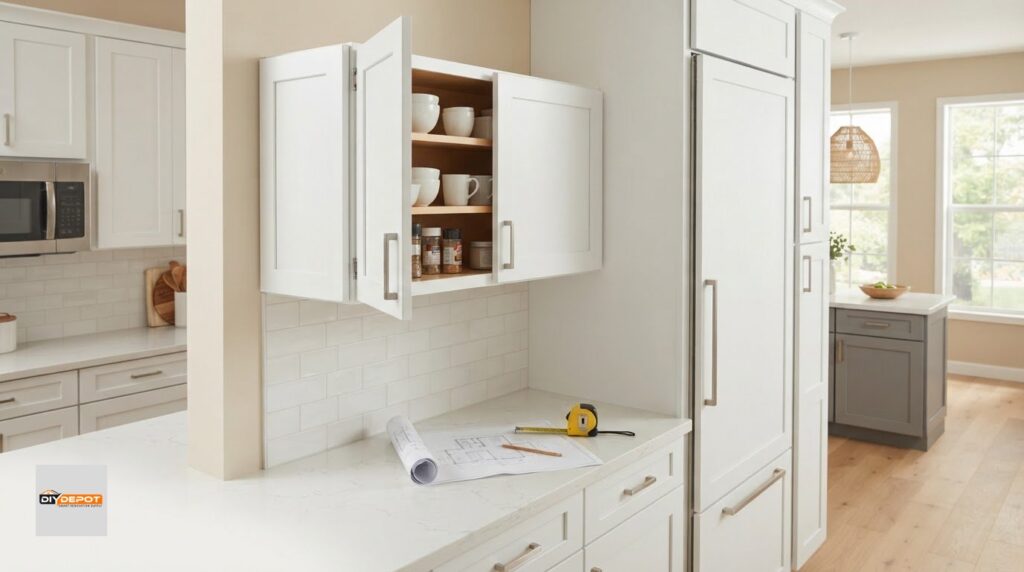
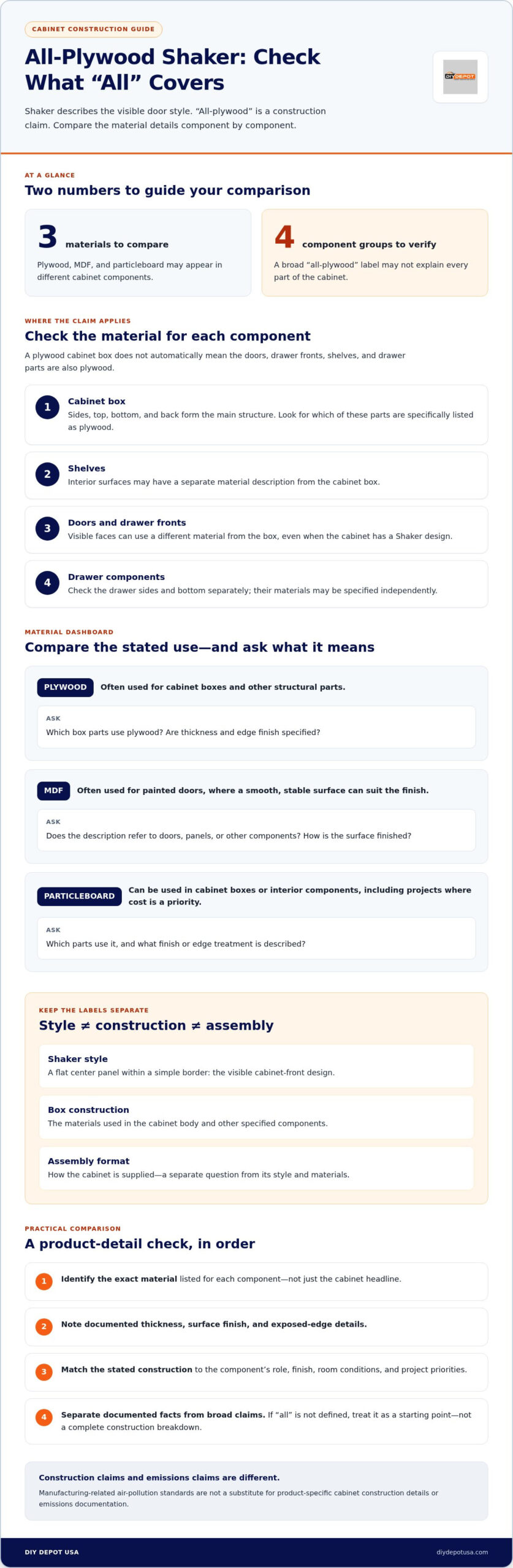
- Cabinet box: The sides, top, bottom, and back that form the main structure.
- Shelves: Interior surfaces that may have their own material description.
- Doors and drawer fronts: Visible faces that can use a different material from the box.
- Drawer components: The drawer sides and bottom, which may also be specified separately.
A claim about a plywood box doesn’t automatically mean every listed component is plywood. For example, a description may identify plywood sides and a bottom, then specify a different material for the doors or drawer parts. That distinction helps you understand the construction without making assumptions about whether the cabinet fits your project.
Read the component details together. If a product description says “all plywood” but doesn’t clarify what “all” covers, treat the phrase as a starting point, not a complete construction breakdown.
How Shaker style differs from cabinet construction
Shaker fronts have a straightforward framed-panel appearance: a flat center panel sits within a simple border. The look is clean and restrained, but the materials behind the front can vary. Cabinets with the same Shaker design may have different box construction, so appearance alone can’t tell you what a cabinet is made from. For historical background, explore the history and principles of Shaker furniture.
Cabinet style describes the visible design, box construction describes the materials in the cabinet body, and assembly format describes how the cabinet is supplied. Keep these questions separate so you don’t mistake a familiar door style or an assembly label for a material specification. For broader style considerations, the Shaker cabinet buying guide can help you consider the look in the context of your kitchen.
Plywood, MDF, and Particleboard: Compare Cabinet Construction
Material names are useful only when you know which cabinet parts they describe. Plywood, MDF, and particleboard can each appear in different components, and a cabinet may combine materials across its box, doors, backs, or shelves. Compare the stated construction with your project conditions instead of treating a material label as a guarantee of performance.
| Material | Typical cabinet use | Useful buyer questions |
|---|---|---|
| Plywood | Often used for cabinet boxes and other structural parts. | Which box parts use plywood? Are thickness and edge finish specified? |
| MDF | Often used for painted doors, where a smooth, stable surface can suit the finish. | Does the description refer to doors, panels, or other components? How is the surface finished? |
| Particleboard | Can be used in cabinet boxes or interior components, including in projects where cost is a priority. | Which parts use it, and what finish or edge treatment is described? |
Compare materials component by component, matching the stated construction to the cabinet’s role, finish, and installation conditions. This keeps the decision grounded in details you can compare instead of an unsupported durability promise.
What to compare across cabinet-box materials
Start with the exact material name for each part, then note thickness wherever the product description documents it. Compare the surface finish and exposed edges, since these details affect the finished appearance and may matter in your layout. If a listing identifies the box sides but says little about the back or shelves, record that difference rather than assuming the entire cabinet uses one material.
Consider the room, too. A kitchen’s moisture exposure and installation conditions can influence which materials and finishes make sense for the project. No material label alone guarantees a particular result. Separate documented facts from promotional wording, then weigh the facts against your priorities, such as appearance, intended use, and budget.
Why construction details matter beyond the cabinet door
A finished door can hide much of a cabinet’s construction. Check descriptions of backs, shelves, drawer sides and bottoms, and exposed edges, not just the front or box sides. For example, one cabinet could have plywood sides, a separately specified back, and drawer components made from another material. These details show what a broad label covers without implying that every part must be identical.
Material claims also shouldn’t be confused with emissions information. The EPA’s information on plywood and composite wood manufacturing addresses manufacturing-related air-pollution standards. It isn’t a substitute for product-specific cabinet construction details or emissions documentation.
Cabinet type affects how materials fit into the overall plan. Consider where base cabinets will sit and how they work with the rest of the kitchen. Kitchen design support can help connect cabinet choices to your room layout.
How to Evaluate Plywood and Formaldehyde-Free Cabinet Claims
Clear documentation turns broad cabinet language into something you can compare. Whether a listing describes all plywood shaker cabinets or calls a product “formaldehyde-free,” identify the evidence behind the wording. Plywood construction alone doesn’t establish an emissions claim. Materials and emissions are separate questions.
Use this sequence to assess a claim:
- Identify the exact claim. Note whether it refers to plywood construction, a formaldehyde emission level, or “formaldehyde-free” wording. Those phrases don’t mean the same thing.
- Locate supporting documentation. Look for product-specific descriptions or records that explain the material or emissions statement. A general brand statement may not apply to the cabinet you’re considering.
- Check component coverage. See which parts the documentation covers, such as the box, doors, shelves, backs, or drawer components. Don’t assume a description of one component applies to the whole cabinet.
A material description tells you what a component is made from. An emissions claim describes a separate property that needs its own supporting evidence.
What evidence makes a material claim useful?
A useful description names both the material and the part it applies to. “Plywood cabinet box” gives you more to work with than “plywood construction,” while a component list can clarify whether the statement covers sides, top, bottom, back, and shelves. If thickness or finish is stated, record those details too so you can compare like with like.
Broad labels leave room for different interpretations. A plywood box description, for example, doesn’t tell you what the doors or drawer parts are made from. Treat missing component details as unanswered information, not proof that those parts use the same material. Keep a short note of each claim and its documented scope as you compare options.
How to read formaldehyde-free language carefully
Read “formaldehyde-free” as a product claim, not as a test result or certification by itself. Supporting documentation should make clear what product or material was evaluated, what the stated result means, and which components it covers. A test or certification statement is useful only when its scope and connection to the cabinet are clear. Don’t infer a health outcome from a label.
U.S. EPA TSCA Title VI emission standards apply to regulated composite wood products, including hardwood plywood, particleboard, and MDF. Compliance with an emissions standard is not the same as proof that a cabinet is entirely free of formaldehyde. Keep the questions separate: one concerns whether a regulated material meets the applicable emissions standard; the other is a specific claim that needs evidence matching its wording and scope.
For a practical comparison, save the product description and relevant documentation together. That makes it easier to distinguish a stated material, an emissions result, and a marketing phrase as you decide which cabinets fit your project.
A Practical Checklist for Choosing All-Plywood Shaker Cabinets
Use this checklist to connect cabinet construction to the kitchen you’re planning. A material label matters, but so do room measurements, storage needs, finish choices, and how you want the cabinets assembled and installed. Compare the same details across options so you can make a decision based on project fit, not just a product headline.
Match cabinet choices to the kitchen plan
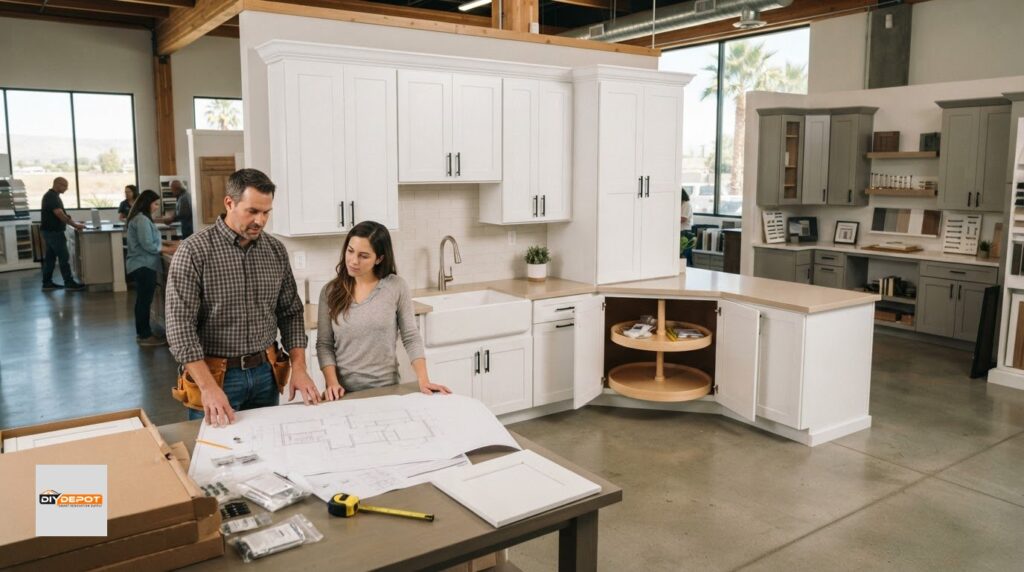
Measure the room and note appliance locations before choosing cabinet configurations. Include doors, windows, corners, and the paths people use through the kitchen. These details help you plan cabinet placement and keep access clear. Then consider what you store and which items need the most convenient access.
- Base cabinets: Plan for lower-level storage and work areas, keeping their relationship to appliances and counters in mind.
- Wall cabinets: Consider what you want within reach and how the upper layout relates to windows and other features.
- Pantry cabinets: Decide where food and larger items will go, and how that location fits the room’s flow.
- Corner cabinets: Account for corner space early so adjoining runs work with nearby doors and appliances.
- Specialty cabinets: List specific storage needs, then see how they fit into the overall plan.
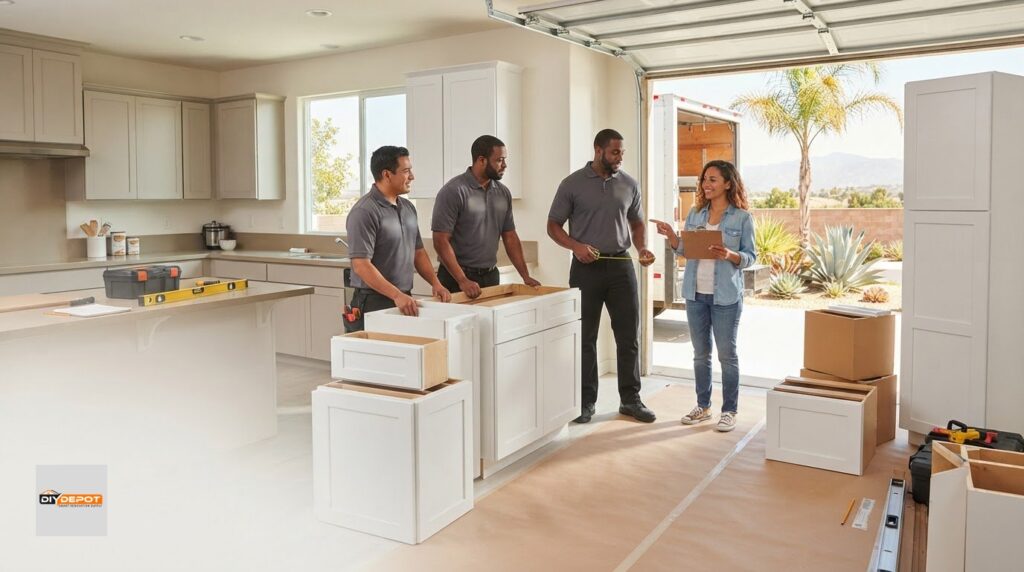
Assembly format is another project decision. Consider whether you prefer ready-to-assemble cabinets or an assembled format, and account for the work involved in your project plan. The ready-to-assemble cabinet guide can help you understand that format as you compare options.
Compare finishes, materials, and support
Once the layout is taking shape, compare cabinet finishes and colors with the surfaces already in the room, including flooring, counters, and wall colors. White Shaker is a straightforward starting point, while Grey Shaker offers a different look. A sample or finish reference can help you judge how each option works with your kitchen’s lighting and existing palette. Color preference is separate from cabinet-box construction.
Before choosing among all plywood shaker cabinets, write down what each product description says about materials and which components it covers. Include assembly needs, finish, and cabinet types in the same comparison. This keeps the decision clear without treating a style or color as evidence of a particular construction.
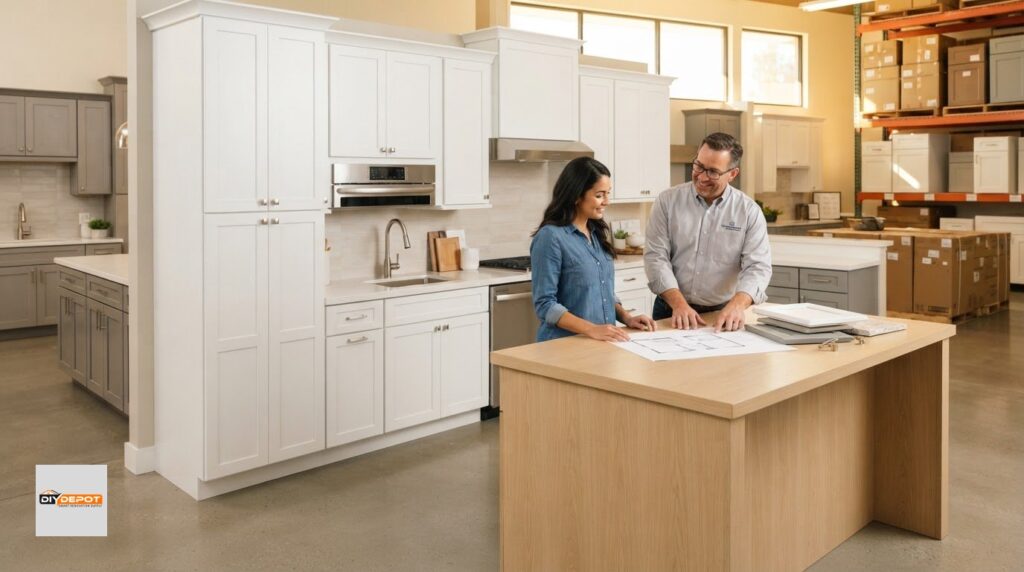
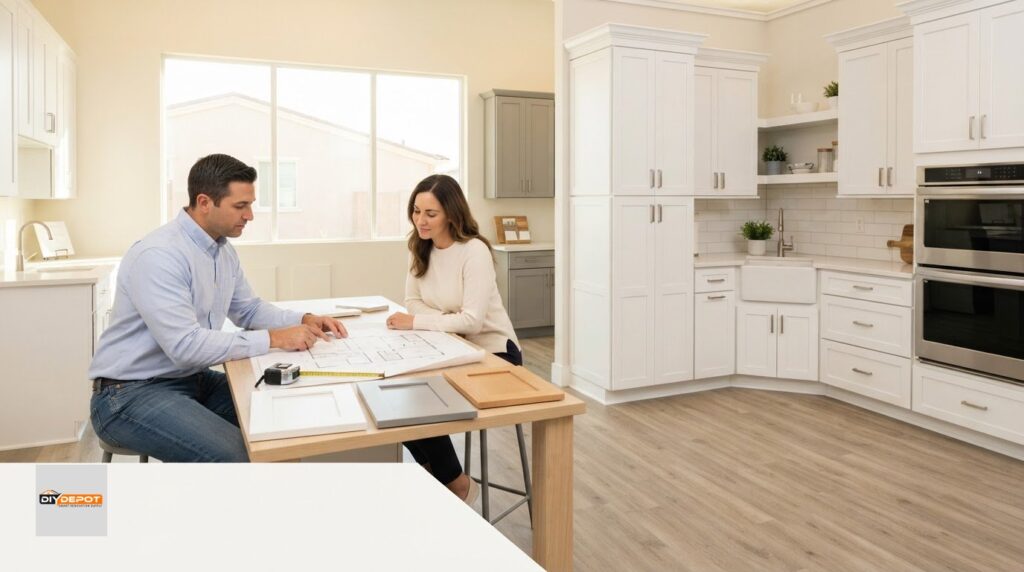
Kitchen design support can bring measurements, cabinet types, and finish choices into one plan. Use kitchen design appointment support to discuss how cabinet selections can work with your layout.
Explore Shaker Cabinet Options and Plan Your Next Step
A confident cabinet decision comes from keeping four things distinct: the look you want, the construction supported by product documentation, the fit with your room, and the support available for planning. Shaker identifies a door style, not a material guarantee. If you’re comparing all plywood shaker cabinets, assess the material claim on its own merits and consider style and layout separately.
DIY Depot USA offers White Shaker cabinets as its primary style option, with Grey Shaker as a secondary color alternative. Its warehouse-direct buying model makes it straightforward to browse cabinet options, and kitchen design support can help connect selections to your room plan. Neither color nor buying model is evidence of a particular cabinet-box material.
When design support can simplify cabinet selection
A room plan brings measurements, appliance locations, cabinet types, and storage priorities into one conversation. That can make it easier to see how base and wall cabinets work together and where the layout needs to account for daily routines. Bring your measurements and a list of what you need to store. DIY Depot USA’s kitchen design support can help you organize those details as you develop the plan.
DIY Depot USA is based in Bakersfield. Bringing your room details into the discussion gives the selection process a practical starting point, whether you’re beginning to plan or narrowing down cabinet choices.
A clear path from browsing to a kitchen plan
Start by browsing the cabinet shop for Shaker options. Note the cabinet types and finish choices that suit your room, and keep each material description with the components it refers to. Once you have a working layout and storage priorities, use design support to discuss how the choices fit together. A clear list of cabinet types and project needs can also help organize a request for a project quote.
Explore the DIY Depot USA cabinet shop to review options, then book a kitchen design appointment when you’re ready to work through your plan with support.
Turn Your Cabinet Research Into a Confident Plan
Your next step doesn’t need to be a final decision. Create a short project brief with the style you’re drawn to, the construction details you want to compare, and the questions your kitchen plan still needs to answer. That gives you a practical basis for weighing all plywood shaker cabinets against other options without letting a broad label decide for you.
DIY Depot USA offers White Shaker and Grey Shaker cabinets, kitchen design support, and a warehouse-direct buying model. Based in Bakersfield, the business serves customers in California, including Fresno, Santa Maria, San Luis Obispo, Santa Barbara, Ventura, Visalia, Oxnard, Kern County, and Kings County, as well as Las Vegas and northwest Phoenix. Use your priorities to guide your browsing and planning.
Explore Shaker cabinet options for your kitchen project and take the next step toward a kitchen plan that feels like yours.
Frequently Asked Questions
What does all-plywood mean in kitchen cabinets?
It describes plywood construction, but the phrase alone doesn’t specify which cabinet components use plywood. Make a checklist of the parts named in the product details: sides, back, shelves, doors, and drawer components. Mark each as specified or unclear. This helps you compare listings without treating a broad label as a complete description of the cabinet.
Are Shaker cabinets always made with plywood?
No. Shaker describes the cabinet-front design, not the construction material. The same simple framed-panel look can be paired with different box and door materials, as well as different assembly formats. Two Shaker cabinets may look similar in a room while having different material descriptions. Compare the front and box specifications separately, then consider which cabinet types suit your storage plan.
Is plywood the same as formaldehyde-free?
No. Plywood is a material description, while “formaldehyde-free” is a separate emissions claim. If a listing uses that wording, look for product-specific documentation that explains what was evaluated and which components are covered. A plywood label by itself doesn’t demonstrate an emissions result or certification. Keep the two claims separate so you can judge each on its own supporting information.
How can I compare plywood and particleboard cabinet boxes?
Compare the listed materials for the same components instead of weighing one broad label against another. Note what each description says about the sides, back, shelves, and drawer parts, along with any documented thickness or finish. Then consider where the cabinets will be used and what the project prioritizes. This gives you a clearer basis for comparison without assuming one material is right for every kitchen.
Can cabinet doors and cabinet boxes use different materials?
Yes. A cabinet can use one material for the box and another for the doors or drawer fronts. Visible fronts and structural components serve different roles, so record the material stated for each part rather than assuming the appearance reveals the construction. This is especially useful when a product description highlights only one component.
What should I measure before choosing Shaker cabinets?
Measure each wall and note openings, appliance locations, and anything that could affect cabinet placement, such as a doorway or window. Add appliance door swings and the paths you use to move through the kitchen to your sketch. Label measurements clearly, and note where you need everyday storage versus occasional-use storage. These details give a kitchen plan more context than room dimensions alone.
Are all-plywood Shaker cabinets worth considering for a kitchen renovation?
They may be worth considering if plywood construction is a priority, but decide based on documented components and how the cabinet plan fits your renovation. DIY Depot USA’s kitchen design support can help organize cabinet selections around your layout. The Bakersfield-based business serves customers across California, including Fresno, Santa Maria, San Luis Obispo, Santa Barbara, Ventura, Visalia, Oxnard, Kern County, and Kings County, as well as Las Vegas and northwest Phoenix.