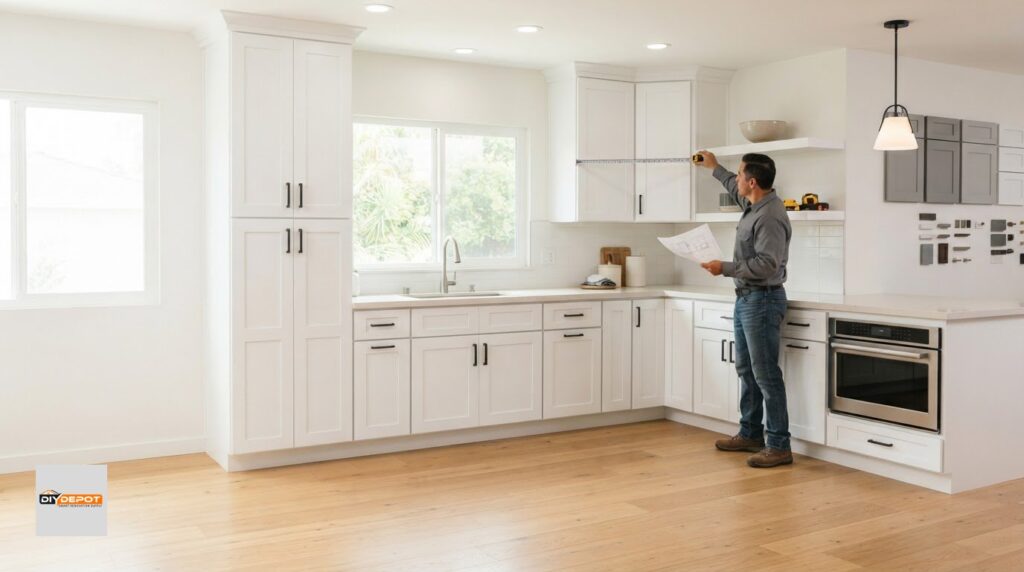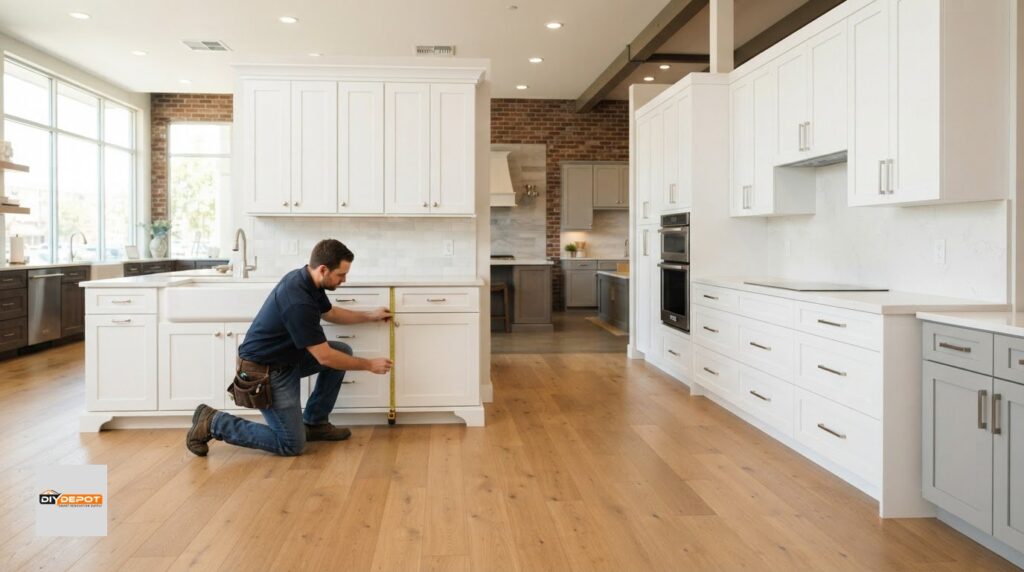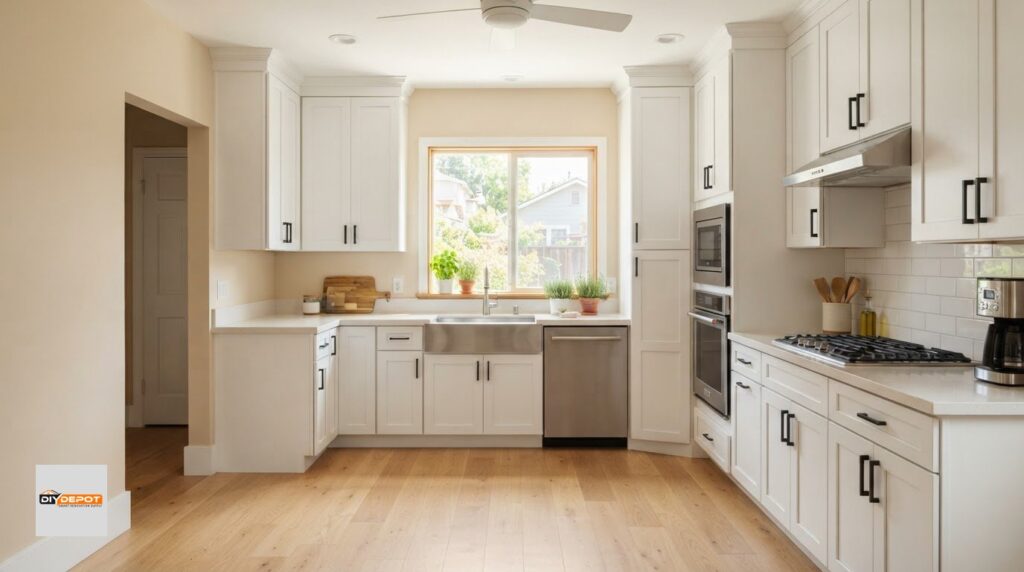

Cleaning gets easier when a kitchen has fewer places for grease, crumbs, and spills to collect. If you’re deciding how to design a kitchen that is easy to clean, focus on backsplash materials, appliances, cabinet fronts and pulls, shelving, and countertops. Smooth, wipeable surfaces with fewer grooves and seams can simplify everyday cleanup.
Think about cleaning before choosing finishes and storage. A backsplash with less grout, simple cabinet fronts, and easy-to-wipe countertops can reduce the effort of tackling everyday messes. Open shelving also collects dust and grime, so it may need more frequent attention than wall cabinets.
Each choice affects cleanup, with trade-offs to consider. Look at backsplash materials and grout, appliance features that make wiping easier, and how cabinet and shelf styles affect upkeep. A countertop with fewer seams can also keep crumbs and spills from catching in gaps. These are practical starting points for planning a kitchen around your routine and style.
Key Takeaways
- Choose backsplash materials and tile layouts that reduce grout lines and make splashes easier to wipe away.
- Look for appliance surfaces and features that simplify routine cleanup, including easier-to-wipe cooktops.
- Smooth cabinet fronts and practical pull designs can limit the spots where cooking residue and crumbs collect.
- Open shelving can add convenient access, but wall cabinets may mean less dusting and upkeep.
- Seamless countertop surfaces and a flush sink connection can help prevent dirt and crumbs from catching in gaps.
1. Backsplash materials and grout
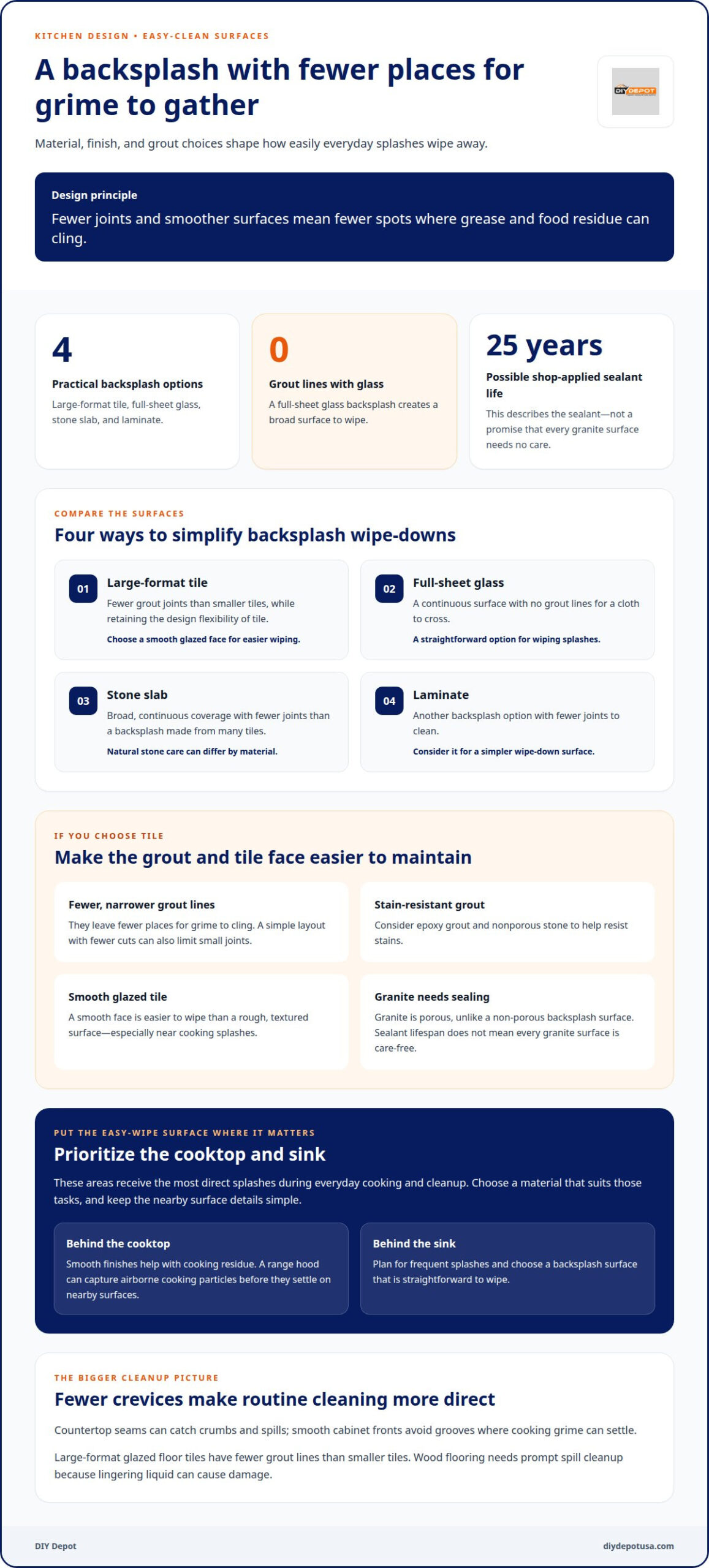
A backsplash catches splashes from sauté pans, boiling pots, and rinsed vegetables. Its material and seams affect how easily grease and food residue come off. For simpler wipe-downs, consider large-format tile, full-sheet glass, a stone slab, or laminate. These options can reduce the number of joints where residue gathers. Glass has no grout lines, while larger tiles need fewer grout joints than smaller ones.
Tile offers plenty of design flexibility, but grout needs attention. For a tiled backsplash, consider nonporous stone and epoxy grout to help resist stains. Fewer, narrower grout lines mean fewer places for grime to cling. Smooth glazed tile is easier to wipe than a rough, textured surface, especially behind a range where cooking splashes land. A simple layout with fewer cuts can also limit small joints.
Glass and slab backsplashes create broad, continuous surfaces, so a cloth can move across them without crossing repeated grout lines. Laminate is another option with fewer joints. With any backsplash, consider the areas behind the cooktop and sink first. These spots receive the most direct splashes during everyday cooking and cleanup. Choosing a material suited to those tasks can make routine wiping more straightforward.
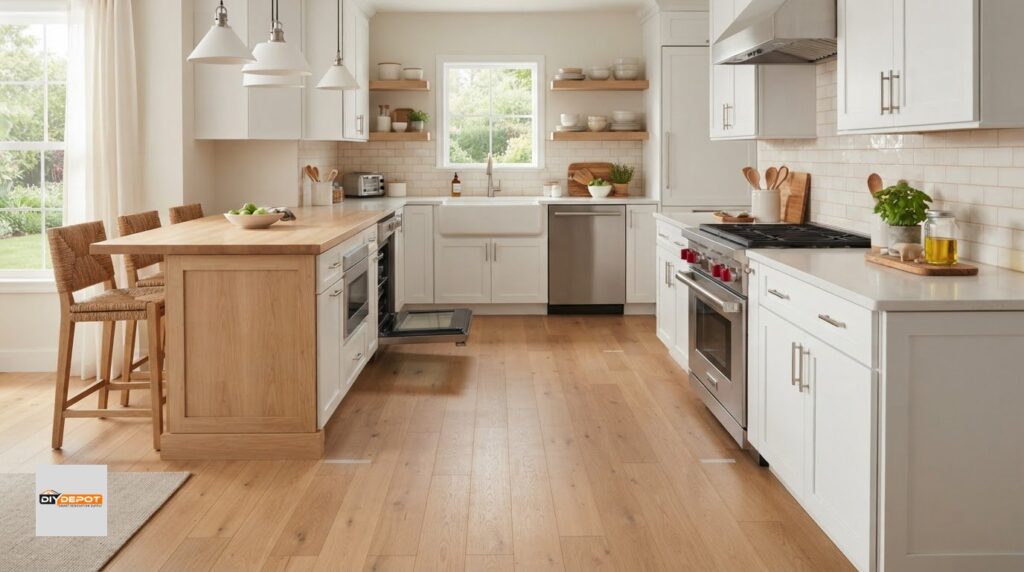
Countertop, backsplash, and cabinet details all affect where dirt and grease collect. Grout joints and countertop seams can catch residue, while smooth cabinet fronts avoid grooves where cooking grime settles. A coordinated design with fewer crevices makes surfaces easier to wipe.
For kitchen flooring, large-format glazed tiles offer a wipeable surface with fewer grout lines than smaller tiles. Wood flooring needs prompt spill cleanup because lingering liquid can cause damage. Choose based on your cleanup routine and preferred materials.
Granite requires sealing because it is porous, unlike a non-porous backsplash surface. Shop-applied sealants can last 25 years, but that figure describes the sealant, not a promise that every granite surface needs no care. Keep the distinction clear when comparing natural stone with glass, laminate, or a slab.
Kitchen ventilation can reduce grease and grime by capturing airborne cooking particles before they settle on nearby surfaces. A range hood over the cooktop helps draw particles away while you cook, which can mean less residue on the backsplash, cabinets, and counters around the range.
Large-format backsplash tile reduces the amount of grout to clean. It still has grout joints, but larger pieces mean fewer than a layout made with smaller tiles. That can simplify routine care while preserving the flexibility of a tiled design. Grout and tile finish still matter: stain-resistant grout and a smooth tile face can make cooking residue easier to wipe away.
Full-sheet glass, stone slab, and laminate are easy-to-clean backsplash options. Compared with a backsplash made from many separate tiles, they have fewer joints to clean. Consider which material suits the areas behind the cooktop and sink, where splashes are most direct. A surface that is easy to wipe can simplify cleanup without requiring the same attention to repeated grout lines.
2. Easy-clean appliance features
Appliance surfaces and controls affect how much effort cleanup takes after cooking. A flat induction cooktop gives spills fewer edges to catch on than burners with separate grates. Glass stovetops are also easier to clean than gas stoves. Smooth surfaces make it easier to wipe away splashes before they dry.
Look closely at the controls, too. Oven knobs positioned close together can leave narrow gaps that are awkward to wipe. A control panel with more space around each knob gives a cloth better access. Some ovens offer pyrolytic cleaning, which heats the oven to burn off residue. Some steam ovens have automatic steam-cleaning and drying programs. Coffee machines may also include automatic cleaning functions, reducing the number of parts that need routine attention.
Sink and faucet details matter during cleanup. An undermount sink, with no raised lip between the basin and countertop, lets crumbs move into the sink instead of collecting at a rim. A pullout-sprayer faucet can help rinse larger pots and pans. Together, these features make it easier to move residue from cookware and counters into the basin.
Easy-clean materials and finishes in the United States do not have one fixed cost. The budget depends on the appliance model, selected surface materials, and whether the project replaces one item or several. Compare the full set of choices as part of the kitchen plan rather than judging a finish or feature on its own.
Professional appliance placement can simplify the path from cooking to cleanup. A designer can position the sink, dishwasher, and everyday storage along a short route, so rinsed dishes move directly to the dishwasher or nearby cabinets. Placing the cooktop where splashes are easy to reach also helps keep cleanup focused. For tailored placement, book a kitchen design appointment with DIY Depot.
Floor access is another layout consideration. A professional can arrange appliances and cabinet runs to keep main walking and cleaning areas clear. Leave room to reach the floor beside the range, sink, and dishwasher, rather than trapping crumbs behind obstructive edges. Appliance doors should open without blocking the route between the sink and dishwasher.
Ventilation also affects surfaces around the cooking zone. A range hood over the cooktop captures airborne grease and cooking particles before they settle on nearby cabinets and counters. That can limit residue around appliances, while a clear path between the sink and dishwasher makes cleanup more direct.
3. Flat-front cabinets and pull designs
Cabinet fronts affect where cooking residue settles. Smooth doors avoid decorative grooves and ridges where grease and crumbs can collect. A simple, flat surface also gives a cleaning cloth a clear path across the door. By contrast, a raised-panel front requires the cloth to follow recessed edges and corners. The difference matters most on cabinets near the range, where airborne cooking residue can land.
Pulls add small areas to clean, and their shape affects access. Cutout pulls can harbor crumbs in their recessed openings. A simple handle with open space around it may be easier to wipe than a deep inset. Consider drawer fronts used for utensils and food storage, since they are handled often during cooking. Consistent pull placement can make hardware familiar and accessible for routine wiping.
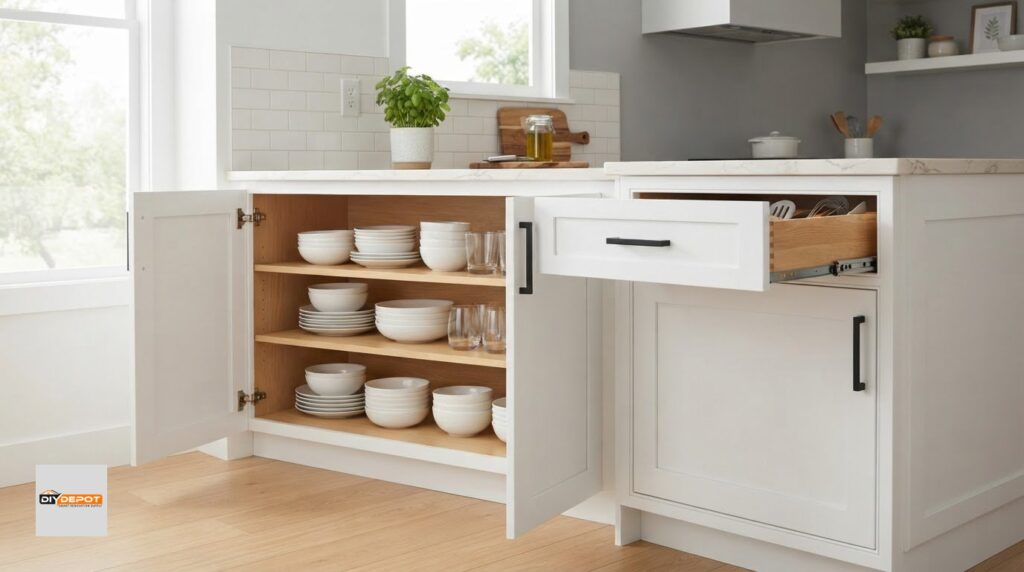
Cabinet interiors matter when spills happen. Melamine interiors do not absorb spills like oak or walnut interiors, making them a practical consideration for shelves under the sink or beside food preparation areas. A sealed, wipeable surface helps prevent a drip from becoming a stain on the cabinet base. Clean up spills promptly, especially around bottles, jars, and cleaning supplies that can tip or leak.
Plan door style and hardware together rather than choosing each detail in isolation. A smooth front paired with a pull that has open edges, for example, leaves fewer tight spots than a grooved door and recessed cutout. Cabinet location matters too: doors beside the cooktop can collect more residue than pantry doors farther away. Practical fronts and pulls in high-use areas make daily wiping more consistent.
Interior storage can make cleaning easier, too. A clear shelf surface is easier to wipe when containers sit in an orderly row instead of crowding the corners. Melamine shelves offer a nonabsorbent surface compared with oak or walnut, and removable items can be moved aside to reach spills. Focus on accessible shelf areas, particularly under the sink, where drips might otherwise hide behind stored items.
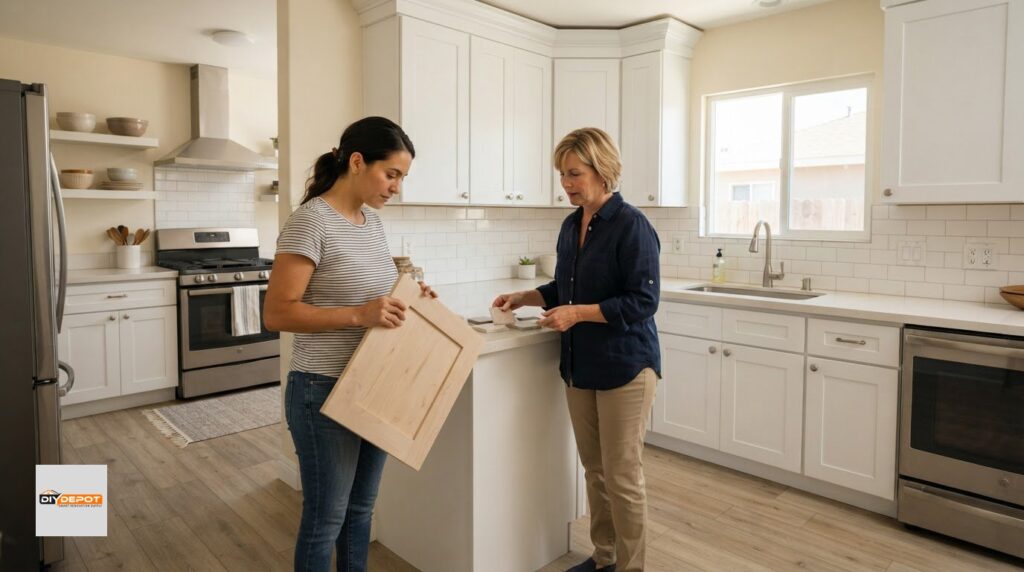
During kitchen planning, review a cabinet sample at eye level and at a lower drawer height. Check for grooves in the front, a crumb-catching recess around the pull, and an interior surface you can reach easily. These details connect appearance with everyday upkeep. A well-considered cabinet design makes routine cleaning more direct without requiring every door or drawer to look identical.
4. Open shelving and dust
When deciding how to design a kitchen that is easy to clean, consider what you want to keep visible. Open shelves keep dishes within reach, but exposed surfaces collect dust and kitchen grime. Cleaning may involve both the shelf and its contents. A row of everyday mugs is easier to move and wipe around than a crowded display of jars, bowls, and decorations. Consider the upkeep before choosing open storage across an entire wall.
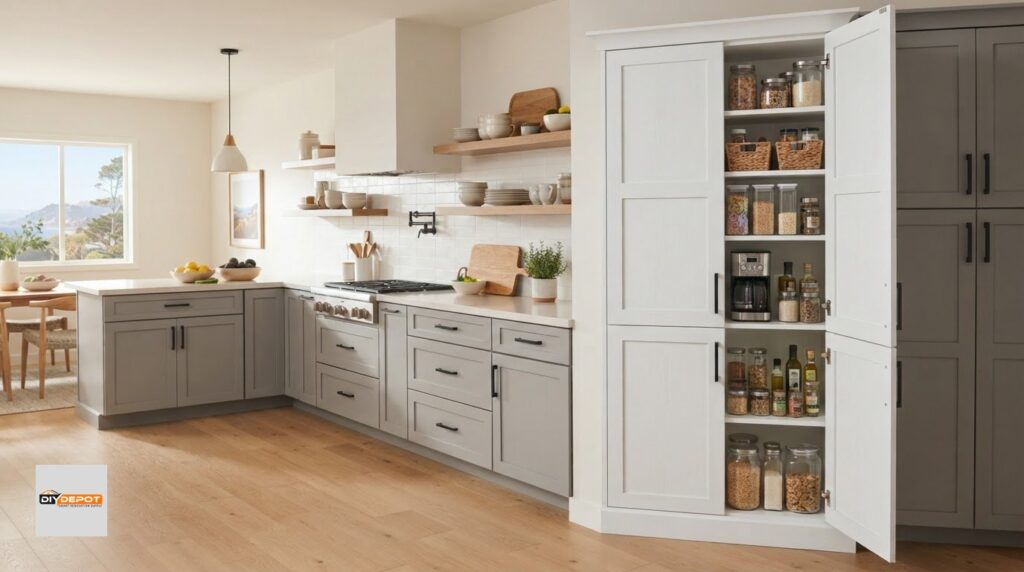
Open shelving needs more frequent attention than wall cabinets because dust and grime gather on exposed surfaces. Reserve shelves for a few frequently used items, then store less-used dishes and pantry goods behind cabinet doors. This keeps select items accessible without making every stored object part of the cleaning routine.
Shelf placement affects how quickly items get dirty. Shelves near a cooktop can collect airborne cooking residue, while shelves near a sink may get water splashes. Keeping open storage away from these active zones can reduce direct exposure. A short shelf for cups near a breakfast area, for example, may be easier to maintain than shelves beside the range.
Small details can create hard-to-clean crevices or maintenance problems. Decorative brackets, uneven shelf edges, crowded corners, and deeply grooved trim can collect dust or crumbs. Open shelves add exposed surfaces, while recessed pulls and cabinet ridges create extra places for debris. Simple shelf supports and smooth edges give cleaning cloths clearer access.
Plan shelf contents as part of the design. A consistent row of plates leaves more visible shelf space than mixed stacks, small containers, and display objects. Grouping frequently used bowls also makes it easier to lift items aside and wipe underneath. Limit display pieces to items you can move without rearranging the entire shelf.
Wall cabinets are useful for items that do not need to stay on show. Store rarely used serving dishes behind doors, while reserving a small open section for everyday cups or bowls. This reduces the exposed area that needs dusting and keeps frequently used items within reach. The right balance depends on your routine.
When considering how to design a kitchen that is easy to clean, assess each shelf by its location, contents, and surrounding details. A shelf beside a cooktop has different cleaning demands from one in a breakfast nook. Keep displays simple and use closed storage where exposed items would add unnecessary upkeep.
Before committing to more open storage, consider the cleaning routine you are willing to maintain. Treat each visible shelf as a surface that needs attention, rather than storage that disappears from view. If dusting and moving items aside would feel burdensome, favor wall cabinets for more of the kitchen’s contents. Keep open shelves for frequently used items, with enough room to remove them easily while cleaning. This will not eliminate upkeep, but it can limit how much exposed storage adds to it.
5. Seamless solid-surface countertops
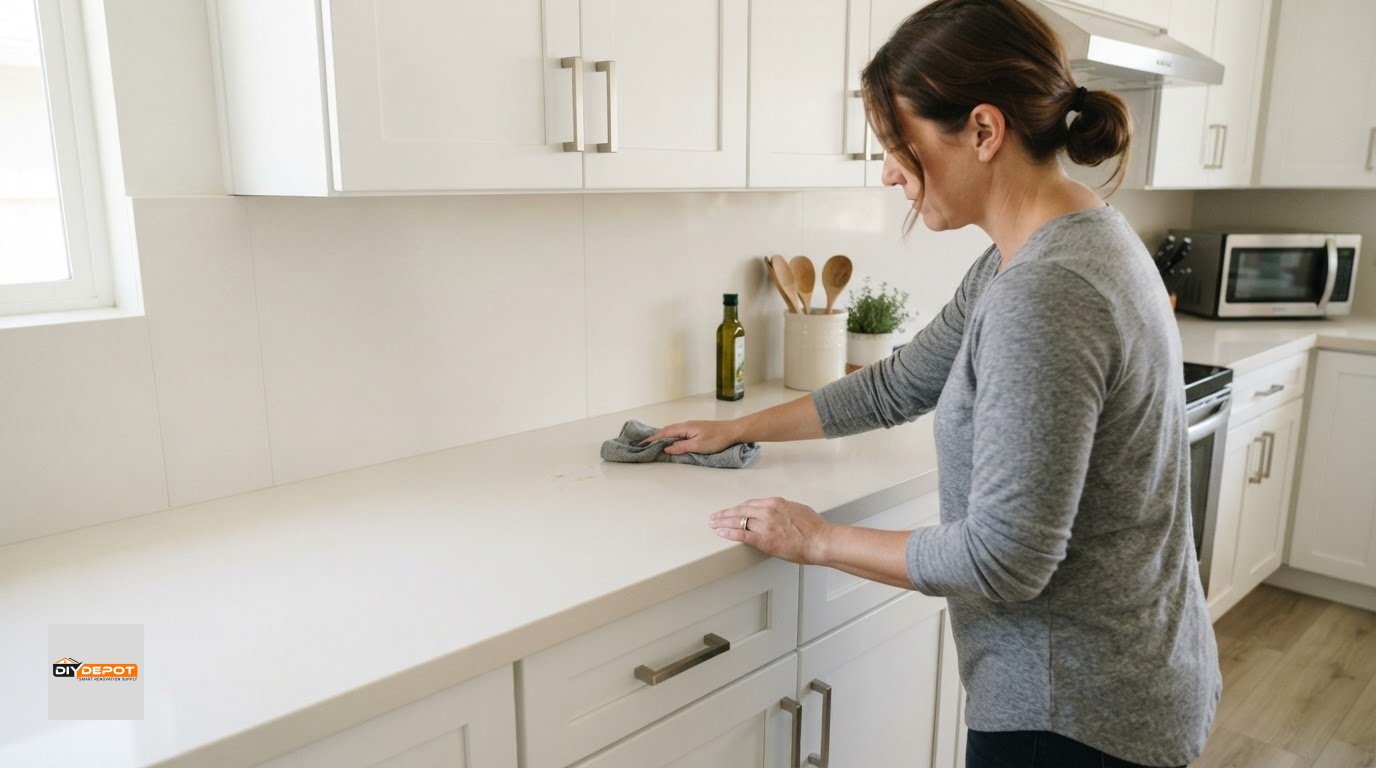
Countertop seams and surface texture affect how easily crumbs and spills come away. A seamless solid-surface counter has no grooves for dirt to lodge in, making it more direct to wipe across the work area. This can be especially useful around food preparation zones, where crumbs collect near cutting boards and small appliances. A smooth surface also makes residue easier to spot.
Several nonporous materials resist stains and are easy to wipe clean, including Corian, quartz, steel, and sintered stone. Their surface properties make them useful in busy kitchens, where spills may include sauce, coffee, or cooking oil. Choose based on the look and upkeep you prefer, then consider how the countertop joins the sink and backsplash.
Not every countertop has the same cleaning needs. Natural stone and laminates are also common choices, but materials vary in how they handle spills and routine care. Granite, for example, is porous and needs sealing. A nonporous option may suit a household that prefers straightforward wiping, but the right fit depends on the material’s care needs and the kitchen’s daily use. For commercial facilities or workplace kitchens that require scheduled contract sanitation alongside durable finishes, resources like showpieceservices.com.au provide insight into professional cleaning pricing and service standards.
The sink connection can interrupt the counter or create a cleaner transition. An undermount sink without a lip between basin and countertop lets crumbs move directly into the sink. With a raised rim, debris can catch along the edge and need extra wiping. Pairing a seamless counter with an undermount sink makes this high-use area easier to clear after meal preparation.
Countertop layout matters as much as material. A broad work surface with fewer joints gives crumbs fewer edges to collect around. Placing the main preparation area close to the sink, for example, makes it easier to sweep scraps into the basin. A professional design can coordinate the counter, sink, and nearby storage so everyday cleanup follows a simple path.
Consider how seams meet at corners, around the sink, and beside the wall. These transitions can create narrow channels where spills linger if the surfaces do not align cleanly. A well-planned installation keeps edges practical and accessible, rather than placing joints in the busiest preparation area. For help planning a counter and sink layout, book a kitchen design appointment.
Compare samples under your kitchen lighting and alongside cabinet finishes before choosing a surface. A light, uniform counter may make crumbs easier to spot, while a patterned finish can disguise small marks between cleanups. Either way, choose a surface with suitable care needs and a layout that limits seams and hard-to-reach edges.
DIY Depot: Professional Kitchen Design
DIY Depot USA offers professional kitchen design support to help plan around your cleanup priorities and daily routine. This is a useful next step when choosing cabinet layouts and considering practical details, such as storage near the sink or fewer hard-to-reach corners. Base and wall shaker cabinets can be part of a kitchen plan, while vanity shaker cabinets suit bathroom projects.
Share the features that matter most, such as accessible storage, simple cabinet fronts, and a clear path between cooking and cleanup. Professional design support can help bring those choices into one coordinated plan. If you’re ready to discuss your kitchen plans, contact DIY Depot.
Plan a kitchen that works for your routine
A kitchen that is easy to clean should fit the way you cook, store everyday items, and move through cleanup. Before choosing finishes, consider which tasks feel inconvenient now and what you want your renovated space to make easier. That gives a design conversation a clear starting point. Thinking through how to design a kitchen that is easy to clean can help you prioritize features that support your routine, rather than choosing details only for appearance.
DIY Depot USA offers professional kitchen design support, along with base, wall, and vanity shaker cabinets. For a kitchen project, design support and cabinet options can help bring practical storage and a cohesive layout into focus.
Share your kitchen goals and explore a design that feels manageable from the first plan to everyday use. Contact DIY Depot for kitchen advice, and take the next step toward a space that feels easier to care for.
Frequently Asked Questions
What kitchen countertop materials are easiest to clean and maintain?
For straightforward everyday wiping, nonporous options such as quartz, steel, sintered stone, and Corian are practical choices. Compare samples in the colors and patterns you are considering, since crumbs and smudges may be more visible on some finishes. Look at edge profiles and where countertop sections join, too. Follow the care guidance for your selected material, especially if the counter will see frequent spills or heavy food preparation.
Which kitchen cabinet door styles and finishes are easiest to clean?
Simple, smooth cabinet fronts with minimal decorative detail are generally easier to wipe than ornate doors. Before choosing a finish, view a sample under your kitchen lighting and consider how visible fingerprints or cooking marks might be. Check the edges and corners, too, since trim can add surfaces to clean. For a coordinated design, consider door style, finish, and hardware together rather than selecting each separately.