
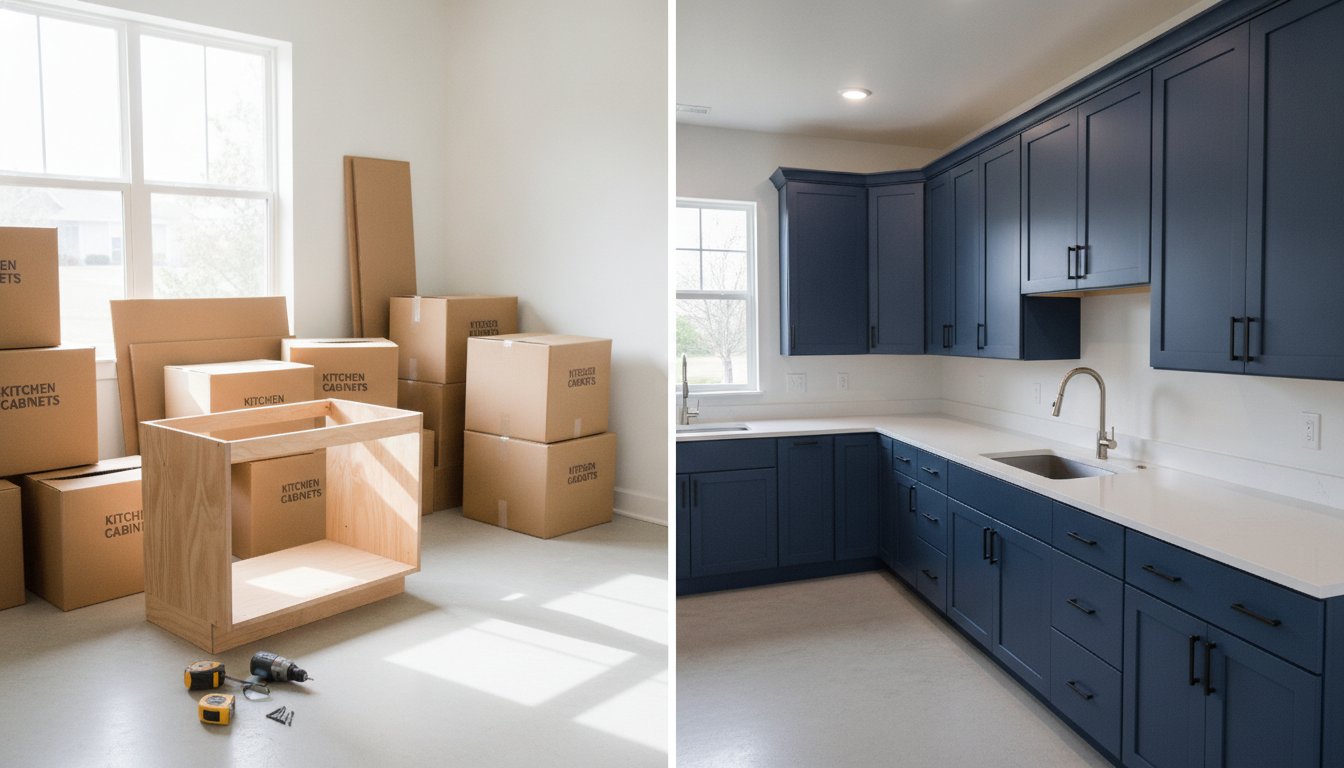
What if the most important decision for your 2026 kitchen remodel isn’t the paint color, but how the boxes actually arrive at your front door? When you’re weighing rta vs pre-assembled cabinets, it’s easy to feel stuck between saving money and ensuring your kitchen stays sturdy for the long haul. You likely want the high-end look of solid wood Shaker doors without the massive markup of custom work. It’s completely normal to worry about shipping damage or whether flat-packed parts will actually result in a professional-grade finish.
You deserve a kitchen that feels like a lasting investment, not a compromise. This guide helps you choose the right path by breaking down the structural, financial, and logistical differences between these two popular options. We’ll explore how warehouse-direct sourcing can save you 15 to 20 percent on costs while still delivering the durable plywood construction your home requires. From comparing lead times to solving the layout puzzle for unique spaces, you’ll gain the clarity needed to build a beautiful, functional kitchen with total confidence.
Key Takeaways
- Learn why high-grade plywood box construction and solid wood frames are more important for your kitchen’s longevity than the method of assembly.
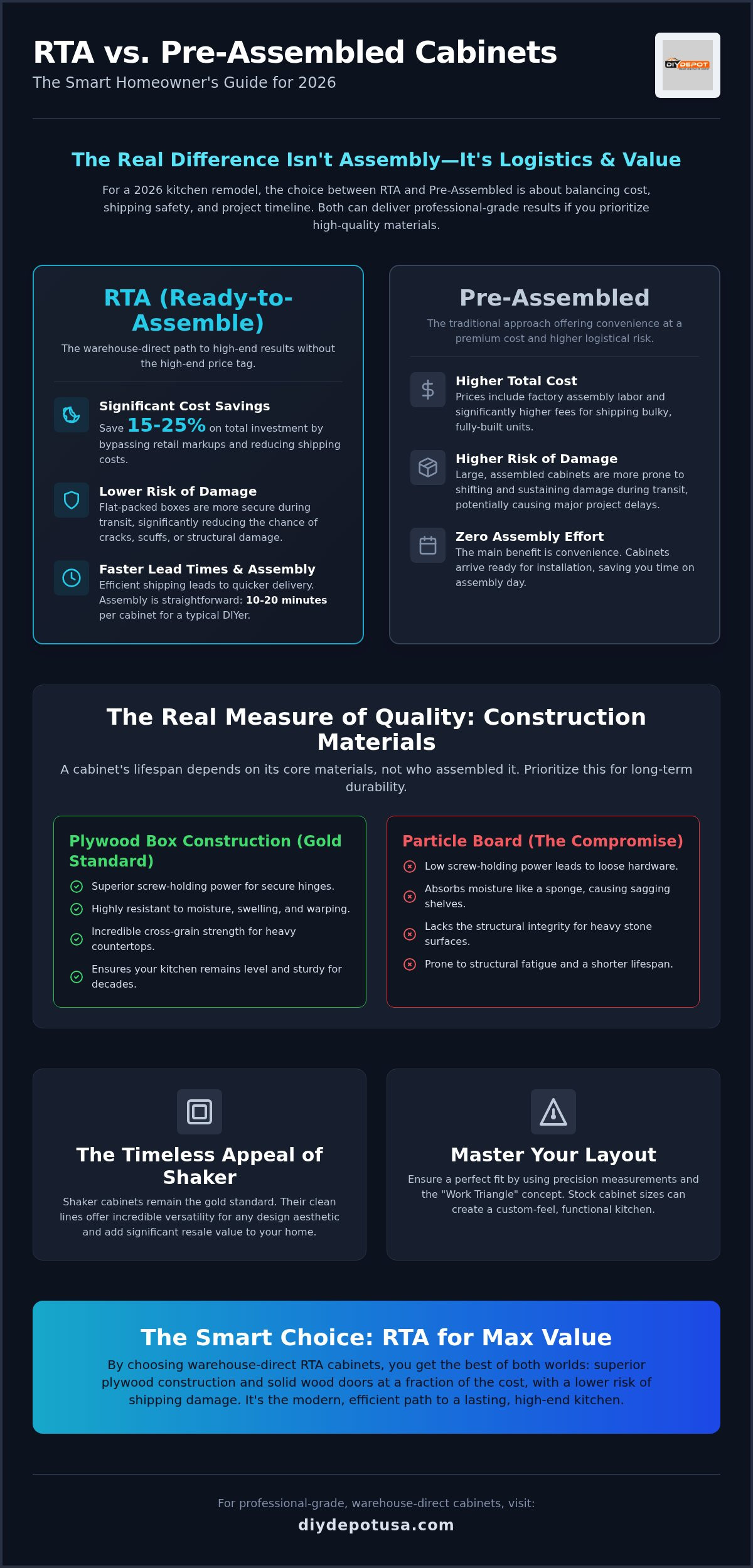
- Understand the financial impact of choosing rta vs pre-assembled cabinets, including how flat-packed shipping can save you up to 25 percent on your total investment.
- Discover how to master precision measurements and the “Work Triangle” concept to ensure stock shaker sizes fit your unique kitchen layout perfectly.
- Find out how to bridge the gap between cost savings and convenience by utilizing professional assembly services for your warehouse-direct RTA order.
- Identify why flat-packed RTA units are often less prone to transit damage compared to their bulkier pre-assembled counterparts.
RTA vs. Pre-Assembled Cabinets: The 2026 Comparison for Smart Homeowners
Buying new cabinets in 2026 looks much different than it did a decade ago. The gap between “custom” and “stock” has closed significantly. Modern manufacturing now allows for precision-cut plywood boxes and solid wood frames that were once reserved for high-end custom shops. When you’re deciding between rta vs pre-assembled cabinets, you’re making a choice about logistics and timing, not necessarily quality. Both options can offer the professional-grade durability your kitchen requires if you source them correctly.
Ready-to-assemble, or Ready-to-assemble (RTA) furniture, arrives at your home in flat-packed boxes. Pre-assembled cabinets are put together at a warehouse or factory and shipped as completed units. By choosing a warehouse-direct model, you bypass retail showrooms and their associated markups. This ensures you get professional-grade materials like solid wood doors and soft-close hardware at a fraction of the traditional cost. It’s a strategic way to get a custom look without the custom price tag.
What is the Real Difference in 2026?
The primary differences involve shipping safety and your own project timeline. Because RTA units ship flat, they’re much less likely to suffer structural damage during transit. They take up less space on a truck, which often translates to lower shipping fees and faster lead times. In contrast, pre-assembled units are bulkier and more prone to shifting or cracking during long hauls across the country. Shipping damage can stall a project for weeks, so the compact nature of RTA is a major advantage.
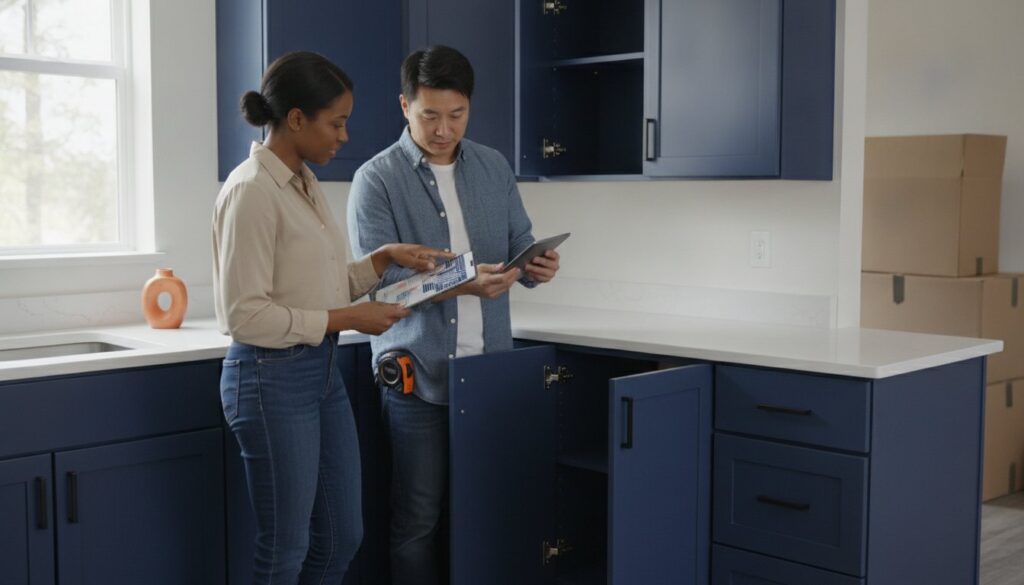
If you’re worried about the clock, keep in mind that assembling RTA cabinets is a straightforward process. Most homeowners spend about 10 to 20 minutes per cabinet after they get the hang of the first one. For a standard 10×10 kitchen, you can expect the total assembly time to land between 3 and 4 hours. RTA cabinets represent the perfect intersection of high-end value, long-term durability, and logistical efficiency for the modern home.
The Evolution of Shaker Style in Stock Inventory
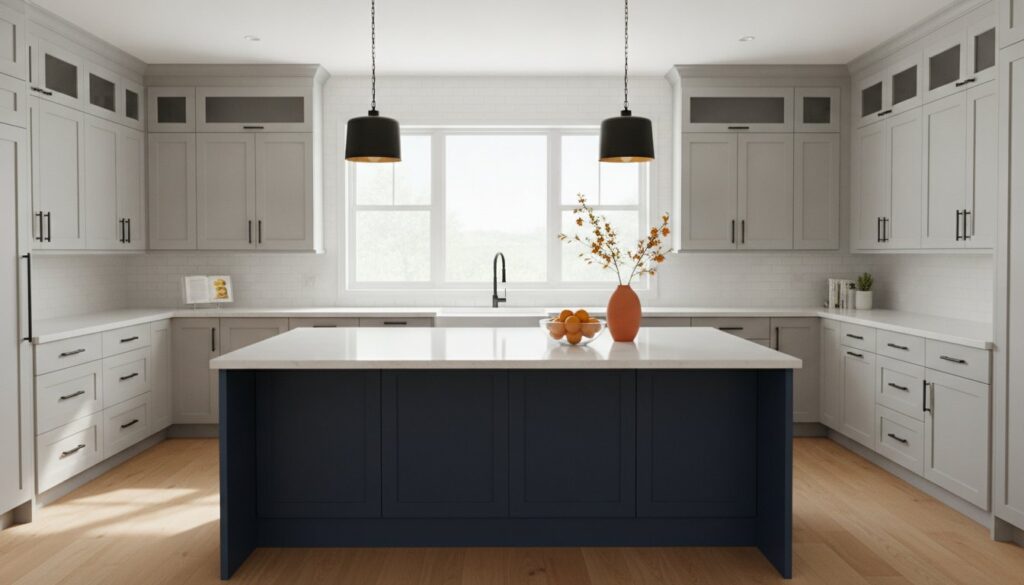
Shaker cabinets remain the gold standard for stock inventory because their clean lines work with almost any design theme. They offer incredible resale value because they don’t go out of style. Whether you’re aiming for a cozy farmhouse look or a minimalist modern aesthetic, the recessed center panel provides a timeless backdrop that appeals to almost every homebuyer.
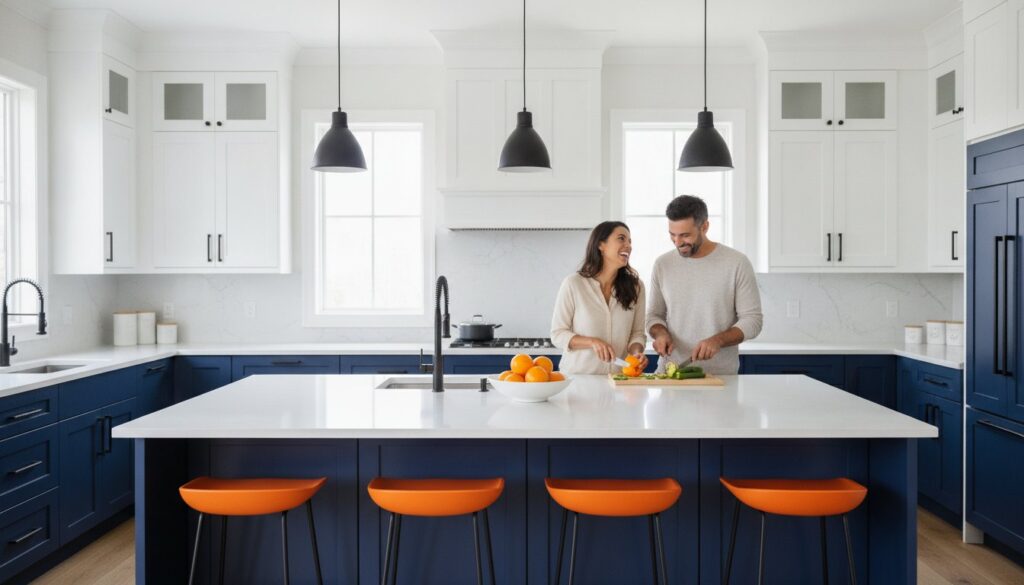
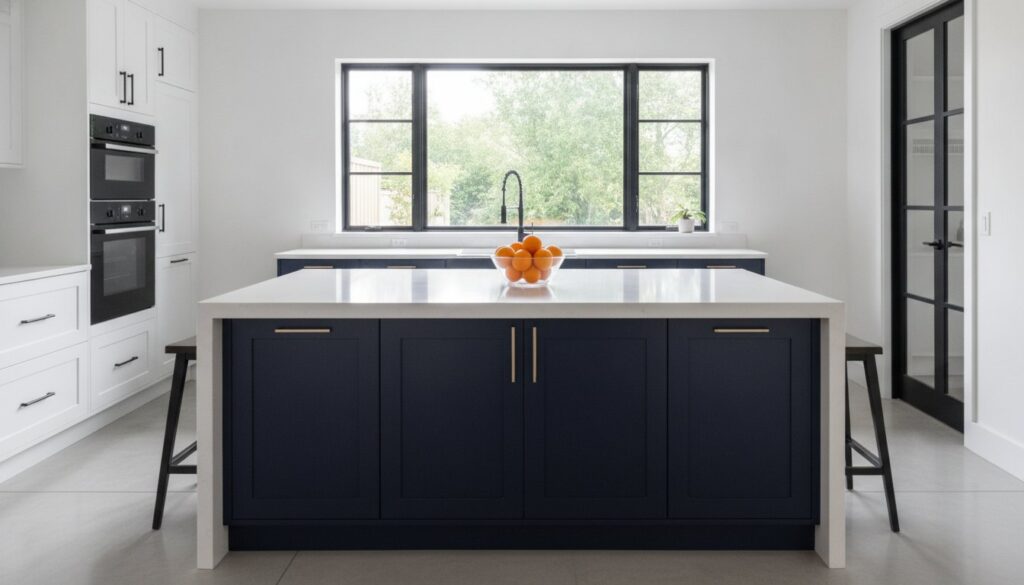
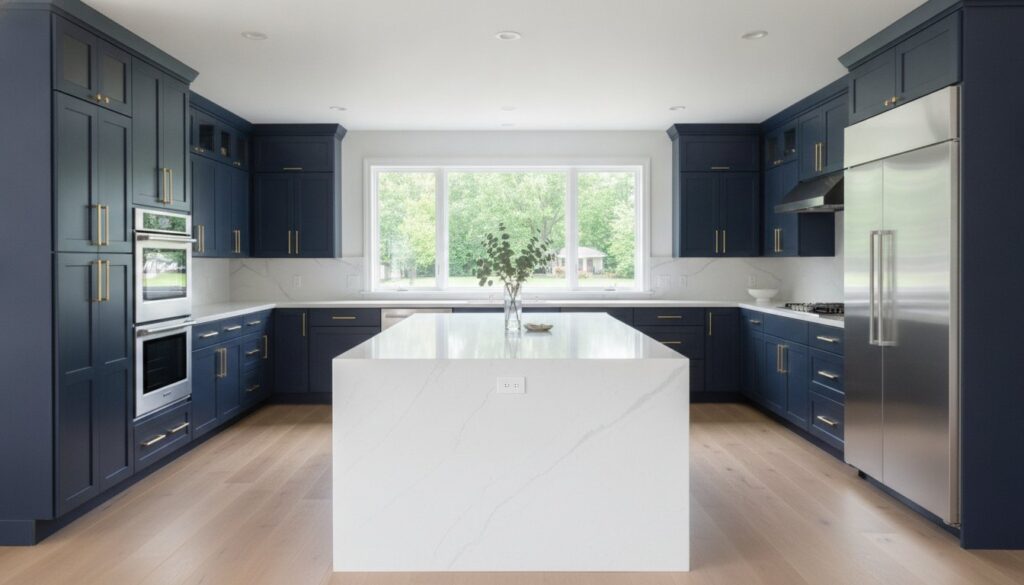
Today’s shaker options aren’t limited to basic white or gray. You’ll find warm wood tones like walnut and oak, along with earthy greens and blues that feel current yet classic. These styles are designed to be versatile, allowing you to change your kitchen’s personality with just a hardware swap. For a deeper look at how to pick the right finish for your home, check out our Shaker Cabinets Online: The Complete 2026 Buying Guide for style inspiration.
Construction Standards: Why Material Matters More Than Assembly
The biggest misconception in the rta vs pre-assembled cabinets debate is that assembly method dictates quality. In reality, a poorly built pre-assembled cabinet will fail much faster than a high-quality RTA unit. The true measure of a cabinet’s life span lies in its “bones.” If the core materials are weak, it won’t matter who put the pieces together. You should focus your attention on the box construction, the species of wood used for the face frames, and the grade of the hardware.
Professional-grade stock cabinetry in 2026 relies on structural integrity that can support heavy stone surfaces. Whether you’re installing granite, quartz, or marble, your base units must handle hundreds of pounds without bowing. Look for cabinets that feature 1/2-inch or 3/4-inch plywood boxes rather than particle board. Plywood provides superior screw-holding power and resists the structural fatigue that often plagues cheaper alternatives.
Plywood vs. Particle Board: The Durability Debate
Plywood is the gold standard for a reason. It’s made of layered wood veneers glued together in alternating directions, which creates incredible cross-grain strength. This construction makes it highly resistant to moisture and swelling. In a high-humidity environment like a kitchen, particle board often acts like a sponge. Once compressed sawdust absorbs water, it expands and loses its shape, leading to sagging shelves and loose hinges. High-quality stock base cabinets built with plywood ensure your kitchen remains level and sturdy for decades.
Hardware and Mechanics That Last
The way your kitchen feels during daily use depends almost entirely on the hardware. Soft-close hinges and under-mount glides are no longer luxury upgrades; they’re essential for preventing wear and tear. Standard hinges allow doors to slam, which can eventually loosen the face frame or damage the finish. Soft-close mechanics absorb that impact, preserving the cabinet’s structural health.
- Under-mount glides: These support the drawer from the bottom, allowing for higher weight capacities and a cleaner look.
- Adjustable hinges: These are vital for maintaining perfect door alignment. As your house settles over time, a simple turn of a screw can keep your Shaker doors looking perfectly symmetrical.
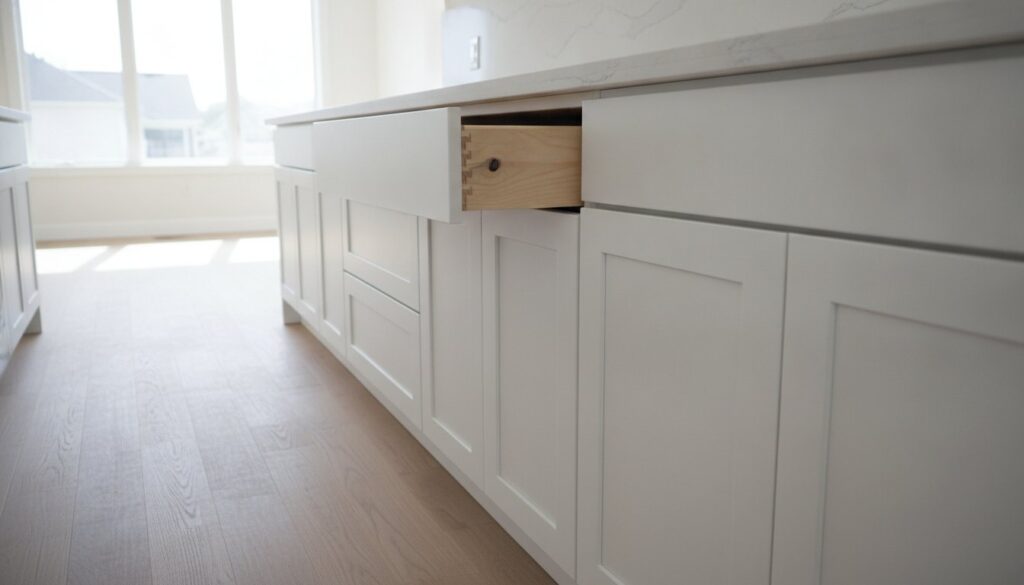
- Dovetail joints: Look for drawer boxes with dovetail construction, which provides the strongest mechanical bond between wood pieces.
Finish durability is the final piece of the puzzle. Modern stock lines often use UV-cured coatings that are far tougher than traditional air-dried paints. these finishes resist staining from oils and acids while standing up to the occasional bumps from pots and pans. If you’re ready to see these materials in action, you can explore our range of base shaker cabinets designed for lifelong durability.
The Cost-Value Analysis: Shipping, Labor, and Long-Term ROI
Choosing between rta vs pre-assembled cabinets often comes down to a simple calculation of time versus money. On average, RTA cabinets cost 15% to 25% less than their pre-assembled counterparts. This price gap exists because you aren’t paying for factory labor or the extra storage space required for bulky, air-filled boxes. For a standard kitchen remodel, these savings can amount to thousands of dollars. This extra room in your budget allows you to invest more in high-end appliances or premium stone countertops.
Shipping logistics also play a massive role in your final price tag. RTA units are shipped flat-packed, which means they take up significantly less room on a delivery truck. This efficiency often reduces shipping costs by 30% to 50% compared to pre-assembled units. More importantly, flat-packed boxes are less prone to transit damage. Because they don’t have empty internal space, they’re structurally more resistant to the vibrations and bumps of the road. A damaged cabinet can stall your project for weeks, so the compact nature of RTA is a major logistical advantage.
Lead times are another critical factor for your 2026 renovation. Warehouse-direct models often deliver RTA or stock pre-assembled units in just a few weeks. In contrast, semi-custom or custom cabinets can take months to arrive. When you consider the return on investment (ROI), high-quality stock Shaker cabinets are hard to beat. They provide the professional-grade look buyers want without the diminishing returns associated with overly expensive custom builds. They build real home equity by offering a high-end aesthetic at a manageable price point.
When to Choose RTA Cabinets
RTA cabinets are the ideal solution if you’re comfortable using a drill and following straightforward instructions. They’re also the best choice for remote projects where shipping a full truck of pre-assembled units would be too expensive. If you want to maximize every dollar of your budget, assembling them yourself is a high-impact way to save on labor. You can learn more about this process in our 2026 Guide to Ready to Assemble Kitchen Cabinets.
When Pre-Assembled is the Smarter Move
Sometimes, your time is your most valuable asset. If you’re on a tight renovation schedule, pre-assembled cabinets can shave days off your project timeline. They’re particularly useful for complex corner units or tall pantry cabinets that can be cumbersome to build on-site. While the upfront cost is higher, you’ll save money on professional labor fees if you’re hiring a contractor to do the installation. Balancing the rta vs pre-assembled cabinets decision requires looking at both your bank account and your calendar to see which resource you can afford to spend.
Planning and Designing Your Layout with Stock Cabinetry
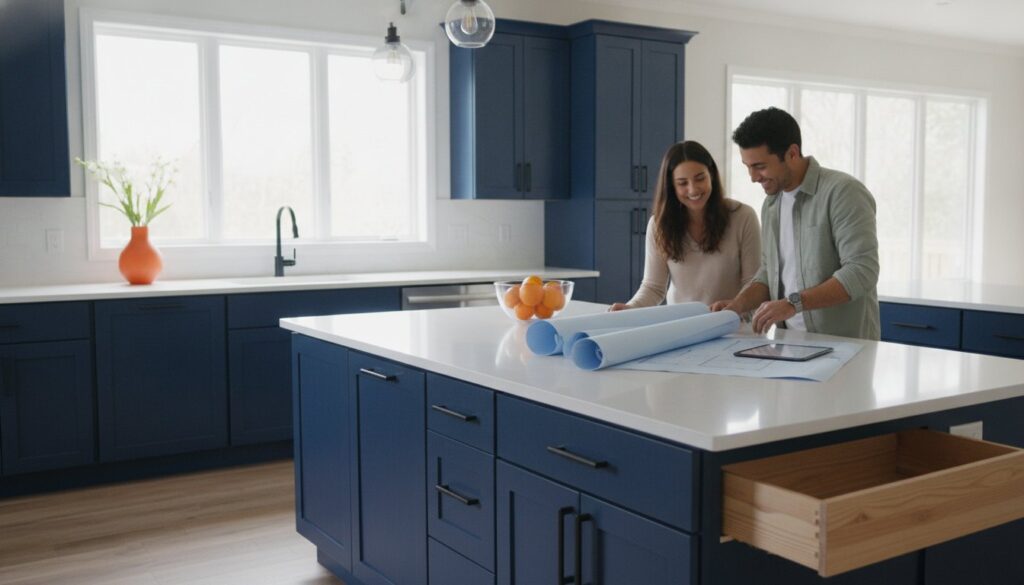
Once you’ve decided between rta vs pre-assembled cabinets, the real work of transformation begins on paper. Many homeowners fear that choosing stock sizes means settling for a “cookie-cutter” kitchen that doesn’t quite fit their walls. In reality, the difference between a DIY-looking project and a high-end professional installation lies entirely in the planning phase. By using a combination of standard widths and strategic filler pieces, you can create a seamless, built-in look that rivals expensive custom work.
The “Work Triangle” remains the foundation of a functional kitchen. This design principle focuses on the flow between your sink, stove, and refrigerator. If these three points are too far apart, you’ll find cooking to be a chore; if they’re too close, the space feels cramped. When you’re working with stock inventory, you have the flexibility to shift cabinet positions to optimize this flow. Integrating Professional Kitchen Design early in the process ensures your layout is both beautiful and efficient.
Measuring Your Kitchen Like a Professional
Success starts with a tape measure and a steady hand. You must measure your space to the nearest 1/8th inch to ensure your cabinet run fits perfectly between your walls. Don’t just measure the floor; check the width at the countertop height and the top of the wall cabinets, as walls are rarely perfectly plumb. You also need to identify the centerlines for your plumbing and the exact placement of every electrical outlet.
A 1/4-inch measurement error can ruin an entire cabinet run. Beyond the walls themselves, you have to account for window casings, the swing of every doorway, and the specific clearance requirements for your appliances. For example, a refrigerator often needs extra space for the doors to open fully without hitting an adjacent wall. Taking these small details into account prevents expensive mistakes during the installation phase.
Maximizing Storage and Flow
Stock cabinetry offers a surprising variety of specialized solutions for awkward spaces. If you’re dealing with a corner, you don’t have to settle for a “dead” spot. Lazy Susans or blind base cabinet solutions can turn a hard-to-reach corner into one of the most useful storage areas in your kitchen. Designers often use these tools to bridge the gap between standard cabinet widths, ensuring every inch of your footprint is utilized.
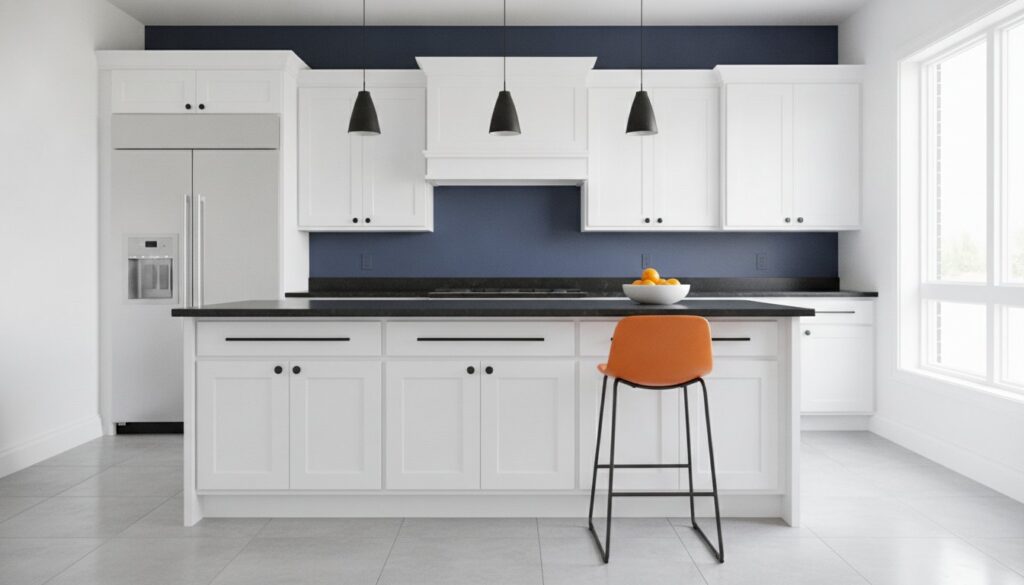
To achieve that sought-after custom appearance, you can mix and match wall shaker cabinets of different heights. Using a taller cabinet over a microwave or refrigerator creates visual interest and breaks up a flat line of boxes. Base fillers are the secret weapon for closing small gaps at the end of a run, making the cabinets look like they were handcrafted specifically for your home. If you’re feeling overwhelmed by the options, explore our Professional Kitchen Design Services for expert layout help that simplifies the entire process.
The DIY Depot Advantage: Warehouse-Direct Quality and Support
DIY Depot USA simplifies the rta vs pre-assembled cabinets choice by focusing on a warehouse-direct approach that doesn’t leave you stranded. We believe that high-quality Shaker cabinetry should be accessible without the retail markup, but we also know that professional support is what makes a renovation successful. Whether you choose flat-packed units or factory-built ones, you’re backed by a partnership that values reliability and quality. We provide the tools and expertise to ensure your kitchen looks like it was designed by a custom shop.
One of the unique ways we support homeowners is by offering professional assembly for RTA orders. This service allows you to lock in the lower warehouse pricing of RTA cabinets while enjoying the convenience of pre-assembled units. You get the peace of mind that comes with factory-level precision without the traditional retail price tag. It’s the ultimate middle ground for those who want to save money but aren’t quite ready to spend their weekend with a screwdriver. We handle the technical part, so you can focus on the design.
Once your cabinets arrive, the installation phase is where the professional finish is truly earned. Proper installation is about more than just hanging boxes on a wall. To maintain your warranty and ensure long-term stability, you must focus on leveling, shimming, and securing the units directly to the wall studs. Walls are rarely straight, and floors are rarely level. Using shims to create a perfectly flat plane for your countertops prevents cracking in stone surfaces and ensures your doors hang straight for years to come.
DIY vs. Professional Cabinet Installation
Deciding whether to install the cabinets yourself or hire a crew depends on your comfort level with structural quirks. DIY installation is rewarding, but handling non-plumb walls or uneven floors requires patience and specific tools. If your kitchen has significant layout challenges, calling in the experts can prevent a lot of frustration during the process. For a deeper look at this choice, read our DIY vs. Professional Cabinet Installation: The 2026 Homeowner’s Guide.
Navigating Warehouse-Direct Delivery
Navigating warehouse-direct delivery is the final logistical hurdle of your purchase. Because a full kitchen arrives on large pallets, you need to prepare a staging area in your garage or a dry room before the truck arrives. Performing a quick inspection as you unload the shipment is vital for a smooth project. Look for any signs of crushed corners or punctured boxes immediately. By identifying potential issues early, you ensure fast replacements and keep your renovation timeline on track. Our direct free delivery model is designed to simplify this process, getting your professional-grade cabinetry to your door with minimal stress.
Build Your Professional Kitchen for 2026 and Beyond
Your kitchen renovation is a journey toward creating a space that balances beauty with everyday functionality. When deciding on rta vs pre-assembled cabinets, remember that your choice is a logistical strategy rather than a compromise on quality. By prioritizing premium plywood construction and solid wood frames, you ensure your investment stands up to years of heavy use. You now have the tools to navigate shipping logistics, master your layout measurements, and choose the path that fits your specific timeline and budget.
Whether you want the maximum savings of flat-packed units or the streamlined speed of factory-built boxes, professional results are within your reach. We’re here to act as your trusted local expert throughout the entire process. We provide direct warehouse pricing on premium plywood construction and include professional design support with every order to take the guesswork out of your layout. If you want the RTA price with the pre-assembled convenience, we even offer expert assembly and installation services nationally.
Take the first step toward a durable, high-end kitchen that reflects your style. Browse our warehouse-direct shaker cabinets and start your dream kitchen today. You’ve got this, and we’re ready to help you make it happen.
Frequently Asked Questions
What is the average lifespan of high-quality stock shaker cabinets?
High-quality stock shaker cabinets typically last between 15 and 25 years when built with professional-grade materials. The key to this longevity is the use of plywood boxes and solid wood frames rather than particle board. These materials resist the sagging and moisture damage that often shorten the life of budget alternatives. Regular maintenance of the soft-close hardware and finish will ensure your kitchen remains functional and attractive for decades.
Can I paint RTA shaker cabinets if I want a custom color later?
You can paint RTA shaker cabinets, but the process depends on the initial finish. If they arrive with a UV-cured coating, you’ll need to lightly sand and use a high-quality bonding primer before applying your custom color. For those planning a custom look from the start, buying unfinished or paint-ready units is often a more efficient path. Proper preparation is the only way to ensure the new paint doesn’t peel over time.
How do stock cabinets handle heavy granite or quartz countertops?
Stock cabinets built with 1/2-inch or 3/4-inch plywood boxes easily support the weight of heavy granite or quartz countertops. The structural integrity of plywood provides the necessary load-bearing capacity that prevents bowing or shifting under stone surfaces. When comparing rta vs pre-assembled cabinets, both options handle these materials equally well as long as the box construction is solid. Always ensure your base units are perfectly level during installation to prevent stone cracking.
Are stock cabinets available in non-standard heights for taller ceilings?
Stock cabinets are generally available in standard heights of 30, 36, and 42 inches. If you have taller ceilings and want a floor-to-ceiling look, designers often stack smaller wall cabinets on top of standard units. You can also use oversized crown molding or decorative risers to close the gap between the cabinet tops and the ceiling. This approach creates a high-end, built-in appearance without the extreme cost of custom-height boxes.
What is the typical lead time for warehouse-direct stock cabinetry in 2026?
The typical lead time for warehouse-direct stock cabinetry in 2026 ranges from one to three weeks. RTA units often ship the fastest because they are already flat-packed and ready to move. If you choose professional assembly before shipping, you should expect an additional seven to ten business days for the warehouse team to complete the work. This timeline is significantly faster than custom cabinetry, which can often take several months to arrive.
Do stock cabinets come with a warranty for the finish or hardware?
Most professional-grade stock cabinets come with warranties that cover manufacturing defects in the finish and hardware. While the specific terms vary, many high-quality lines offer limited lifetime coverage on soft-close hinges and drawer glides. The finish warranty usually protects against premature peeling or cracking under normal use. It’s important to follow the manufacturer’s installation guidelines strictly, as improper mounting or exposure to excessive moisture can sometimes void these protections.
Is it actually cheaper to buy RTA cabinets once you factor in labor?
It is almost always cheaper to buy RTA cabinets even after considering your own labor time. Since RTA units typically cost 15% to 25% less than pre-assembled ones, the savings for a full kitchen are substantial. If you’re comfortable spending roughly 15 minutes per cabinet, you can finish a standard kitchen in a single afternoon. The financial trade-off is highly favorable for homeowners who want to maximize their renovation budget for other upgrades.
What tools are required for a standard RTA cabinet assembly?
Assembling RTA cabinets requires only a few basic household tools. You’ll need a power drill or a set of screwdrivers, wood glue for the joints, and a rubber mallet to gently tap pieces into place. A level and a tape measure are also essential to ensure everything is square before you move on to the installation phase. Most modern RTA systems use cam-lock or interlocking bracket designs that make the process straightforward even for beginners.