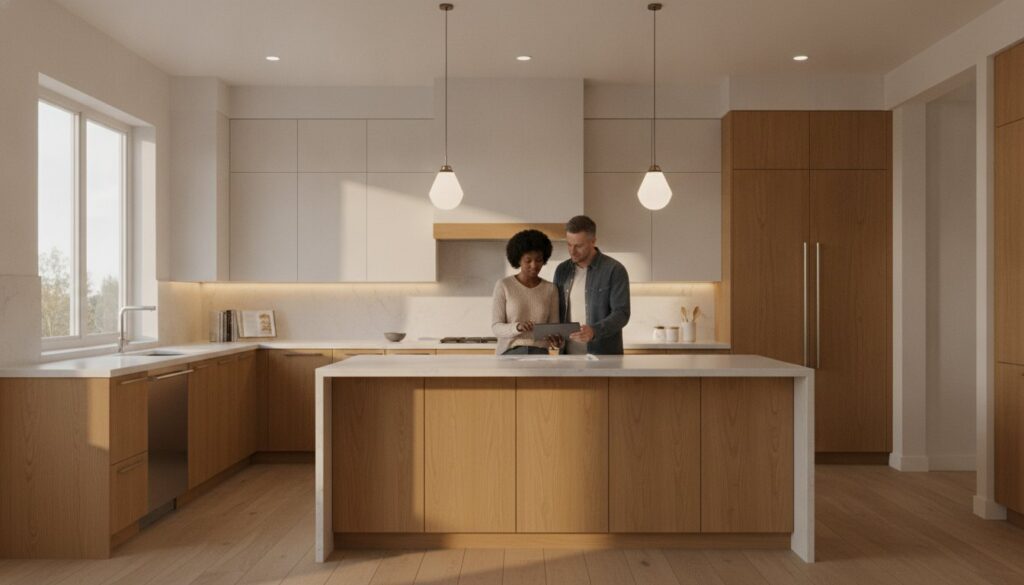

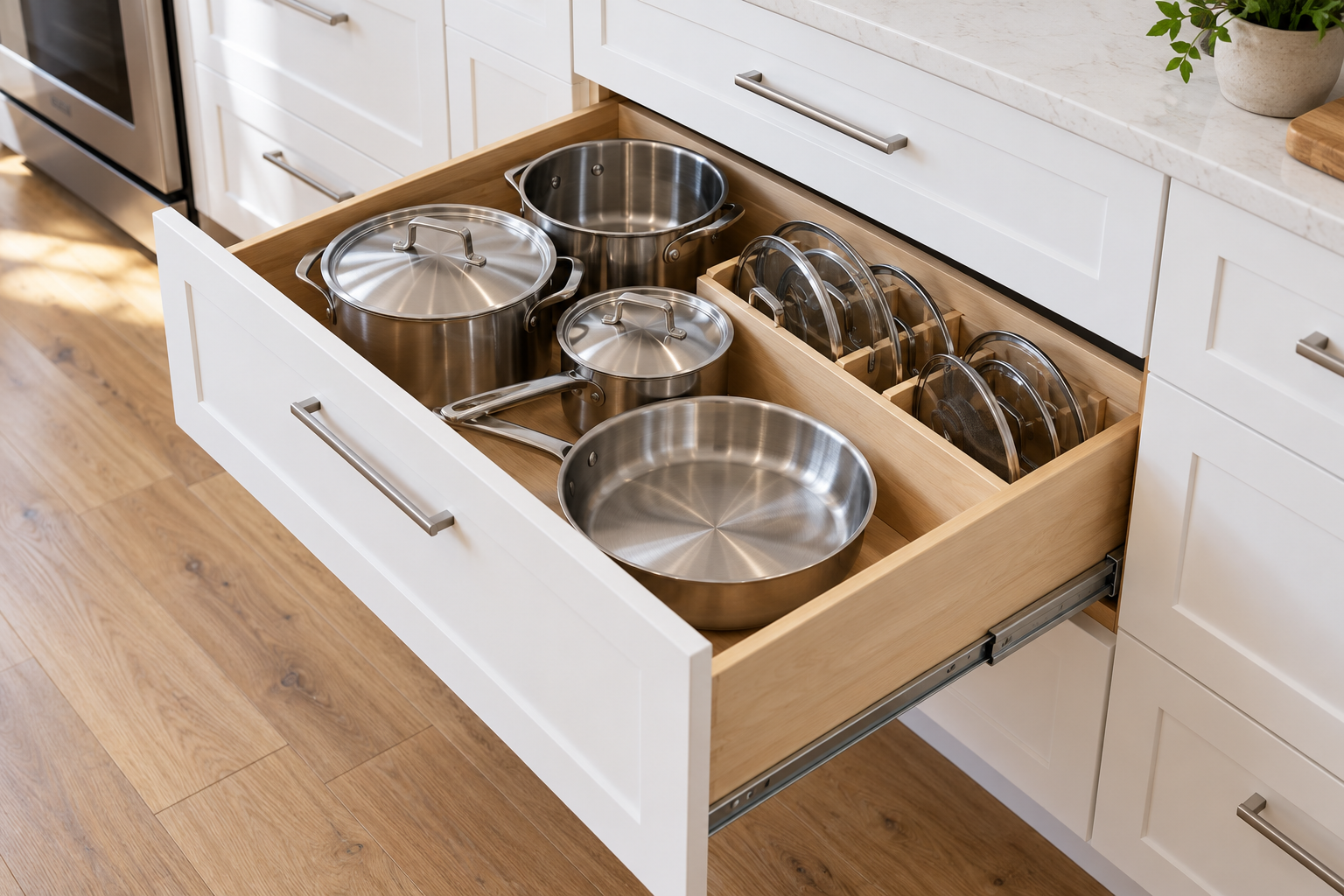
Plan kitchen cabinet storage by listing what you own, measuring items that need space, and deciding where you use them.
Cabinet dimensions matter, but so do drawer configurations, shelf access, and the location of each cabinet.
Use this guide to organize your storage needs before choosing cabinets for your kitchen.
DOWNLOAD OUR FREE RESOURCE:

1. Take Inventory Before Planning Your Cabinets
Go through your kitchen and group the items you intend to keep.
Include:
- Plates, bowls, and glasses
- Pots, pans, and lids
- Baking sheets and cutting boards
- Cooking utensils
- Food containers
- Countertop appliances
- Pantry food
- Cleaning supplies
- Serving dishes
Identify items you use every day and those you use occasionally.
Remove anything you do not plan to keep before estimating how much storage you need.
2. List What Does Not Work in Your Current Kitchen
Write down the storage problems you want to address.
For example:
- Pots are stacked where they are difficult to reach
- Food containers and lids occupy separate areas
- Baking sheets fall over
- Countertop appliances have no storage location
- Pantry items get hidden behind other food
- Cabinet doors interfere with nearby appliances
Bring this list to your cabinet planning appointment. It explains what your next layout needs to solve.
3. Organize Storage Around Kitchen Tasks
Think about where you prepare food, cook, wash dishes, and put groceries away.
Use these activities to guide cabinet placement.
| Kitchen task | Items to plan space for |
|---|---|
| Food preparation | Knives, cutting boards, mixing bowls, measuring tools |
| Cooking | Pots, pans, lids, cooking utensils |
| Baking | Baking sheets, pans, mixing equipment, ingredients |
| Serving | Plates, bowls, glasses, serving dishes |
| Cleanup | Dish supplies, waste bins, food containers |
| Food storage | Pantry goods and countertop appliances |
Review access with the kitchen in use. An open dishwasher or refrigerator door may affect access to a nearby cabinet.
4. Compare Drawers and Shelves
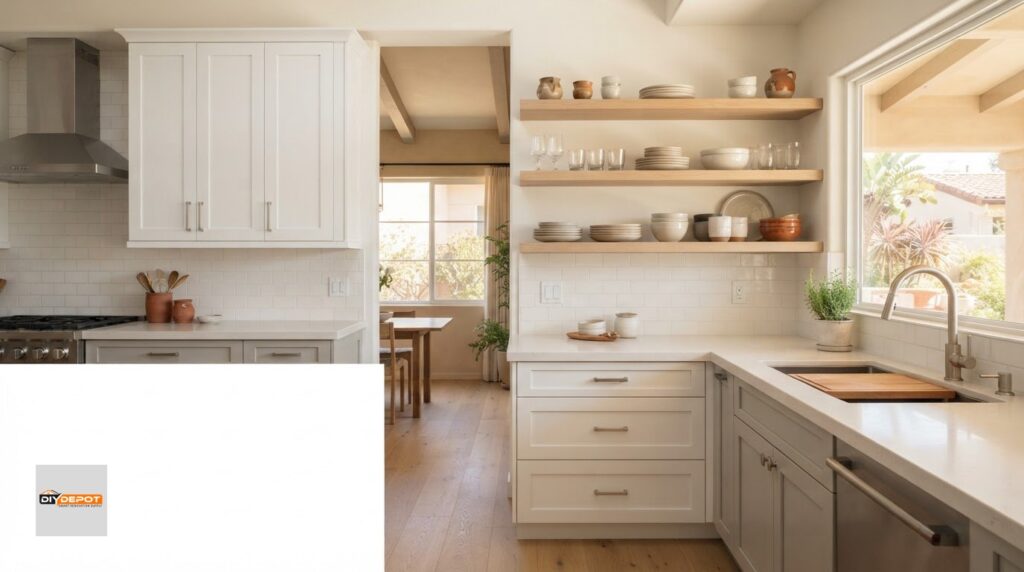
Drawers and shelves serve different storage needs.
Drawers can bring contents forward, reducing the need to reach into the back of a base cabinet. Shelves can accommodate items that suit their spacing and access.
Before choosing, consider:
- Item height and width
- How much stacking is required
- Drawer interior dimensions
- Shelf spacing
- Hardware load limits
- The space needed to open doors and drawers
Do not rely on the cabinet’s outside dimensions alone. Its usable interior space will be smaller.
DOWNLOAD OUR FREE RESOURCE:
5. Measure Cookware and Countertop Appliances
Measure items that need a specific storage location.
Include:
- Your largest pot
- Stacked pans
- Baking sheets
- Cutting boards
- Mixer
- Blender
- Air fryer
- Serving platters
Record width, height, and depth, including handles and attachments.
Compare those measurements with the cabinet opening and usable interior dimensions.
If you want to operate an appliance inside a cabinet, review the appliance manufacturer’s requirements for ventilation, clearance, and electrical access before planning that arrangement.
6. Plan Pantry Storage
List the food and equipment you want to store in your pantry area.
Consider:
- Cans and jars
- Cereal boxes
- Bags of rice or flour
- Snacks
- Bulk purchases
- Countertop appliances
- Serving pieces
Check the depth and spacing of shelves. Think about whether items will remain visible and reachable.
If you are considering pull-outs, confirm compatibility, usable dimensions, and load limits for the cabinet and accessory.
7. Review Corner Cabinet Access
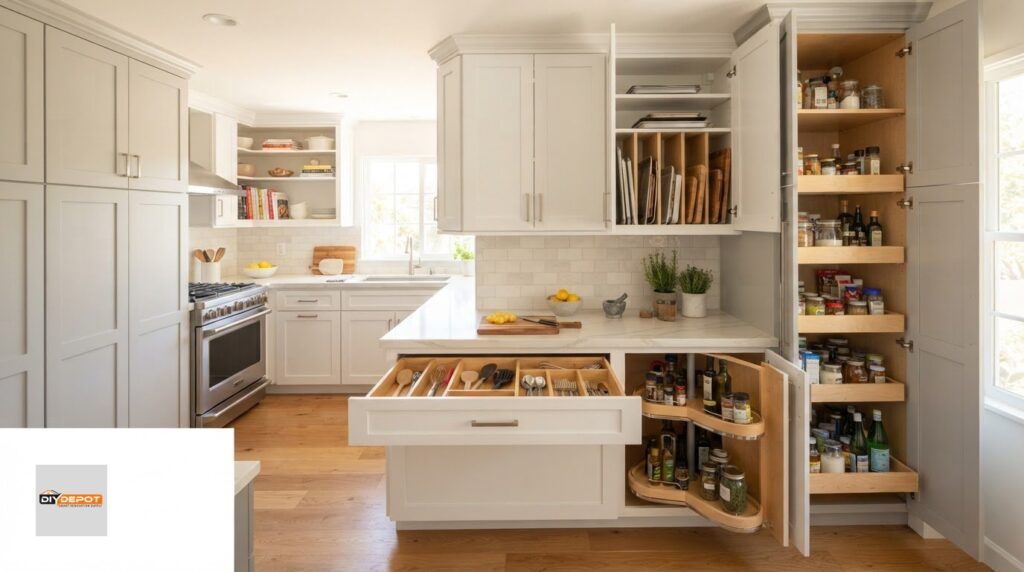
Corner storage depends on the cabinet configuration and the space around it.
Ask how you will reach the contents and how the doors operate.
Confirm:
- Door opening dimensions
- Shelf arrangement
- Access to the back of the cabinet
- Required fillers and clearances
- Compatibility with storage accessories
A corner organizer must fit the specific cabinet. Ask for compatibility confirmation before adding one to your order.
8. Account for Plumbing and Waste Storage
A sink base contains plumbing and may also need room for disposal equipment, filtration components, or other connections.
Review that space before selecting storage accessories.
If you want a waste-bin pull-out, confirm:
- Cabinet compatibility
- Opening dimensions
- Clearance around plumbing
- Bin size and quantity
- Hardware requirements
Keep cleaning products stored according to their labels and away from food.
9. Choose Organizers After Checking Cabinet Specifications
Storage accessories may include:
- Utensil dividers
- Tray dividers
- Pull-out shelves
- Waste-bin pull-outs
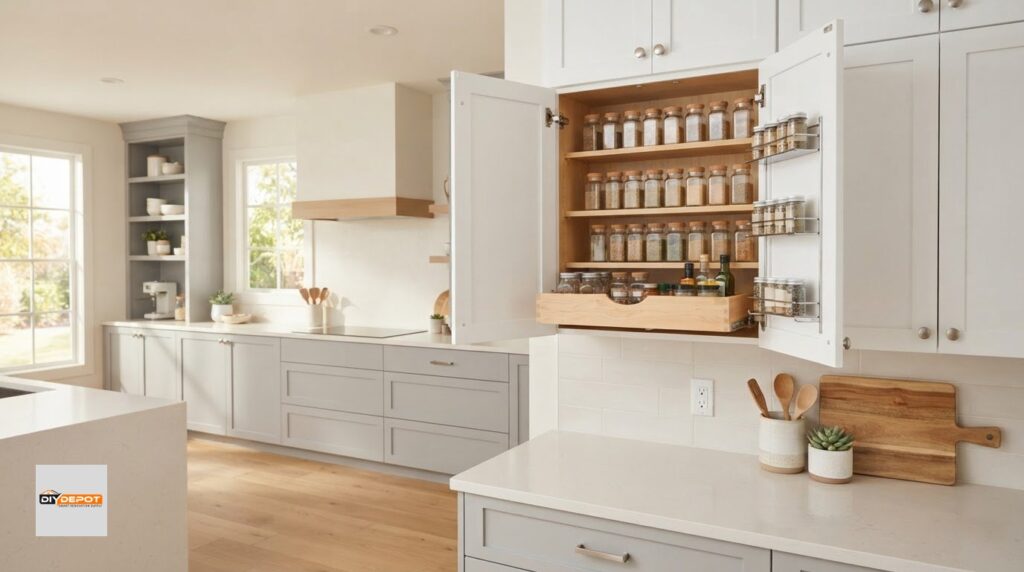
- Spice storage
- Corner organizers
Before purchasing, check the cabinet’s opening, interior dimensions, hinge placement, and hardware.
Ask whether installation requires modifications and whether the accessory affects warranty coverage.
Do not assume an organizer shown in a product photo comes with the cabinet.
10. Plan for Reach and Daily Use
Put frequently used items where the people using the kitchen can reach them.
Discuss:
- Which shelves are accessible
- Whether drawers would improve access
- How heavy items will be lifted
- Where children’s dishes will go
- Whether more than one person cooks
- Which items should remain on the countertop
Your storage plan should reflect the people using the kitchen and their routines.
11. Match the Storage Plan to Your Budget
Identify the changes that matter most to you.
For example, you might prioritize a drawer base for cookware and retain shelves in cabinets used for occasional storage.
Ask for itemized pricing so you can compare cabinet configurations and accessories.
Before approving changes, confirm that the cabinet list still matches the layout and available space.
Kitchen Cabinet Storage Checklist
Before ordering, confirm:
- You have listed the items you intend to keep
- Storage problems are documented
- Cabinets are planned around kitchen tasks
- Cookware and appliances have been measured
- Interior dimensions have been checked
- Doors and drawers have room to open
- Pantry shelves suit the items being stored
- Corner storage is accessible
- Plumbing space is accounted for
- Organizers fit the selected cabinets
- Frequently used items are within reach
- Cabinet and accessory costs fit the budget
Use our Kitchen Cabinet Order Checklist to review your purchase before placing an order.
Plan Your Kitchen Storage With DIY Depot USA
Bring your kitchen measurements, photos, and storage wish list to DIY Depot USA in Bakersfield.
Tell us what you use, what is difficult to reach, and what you want to change. We can discuss cabinet options for your layout.
Book an appointment to start planning your kitchen.
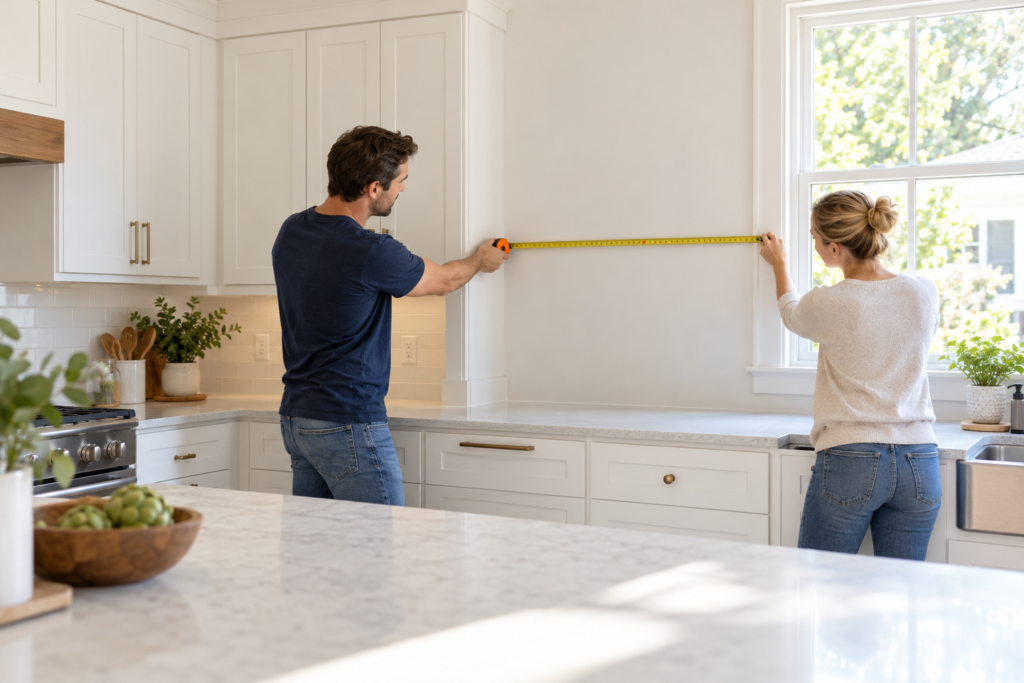
Need help gathering dimensions? Read How to Measure Your Kitchen for Cabinets.
DOWNLOAD OUR FREE RESOURCE:
—