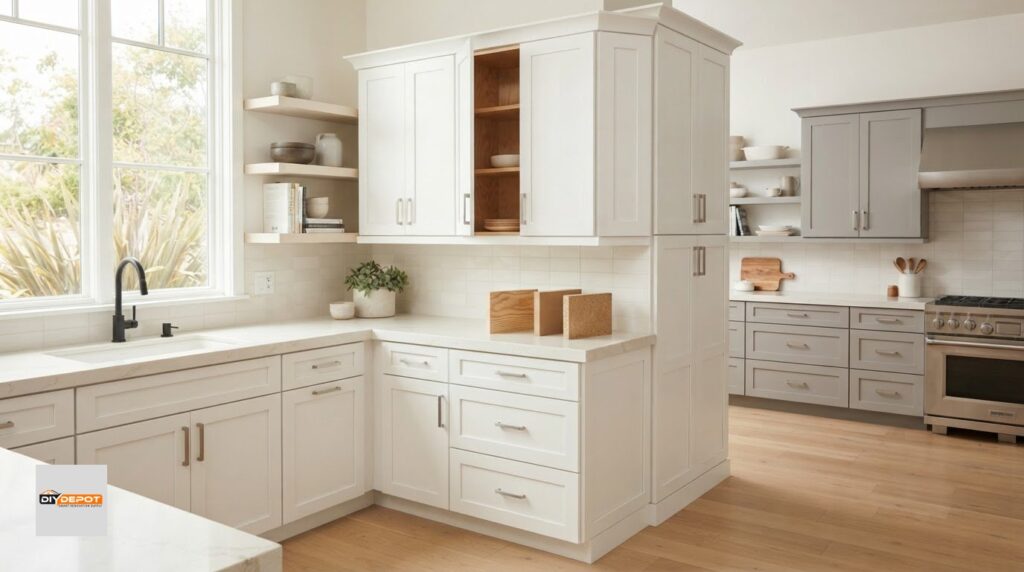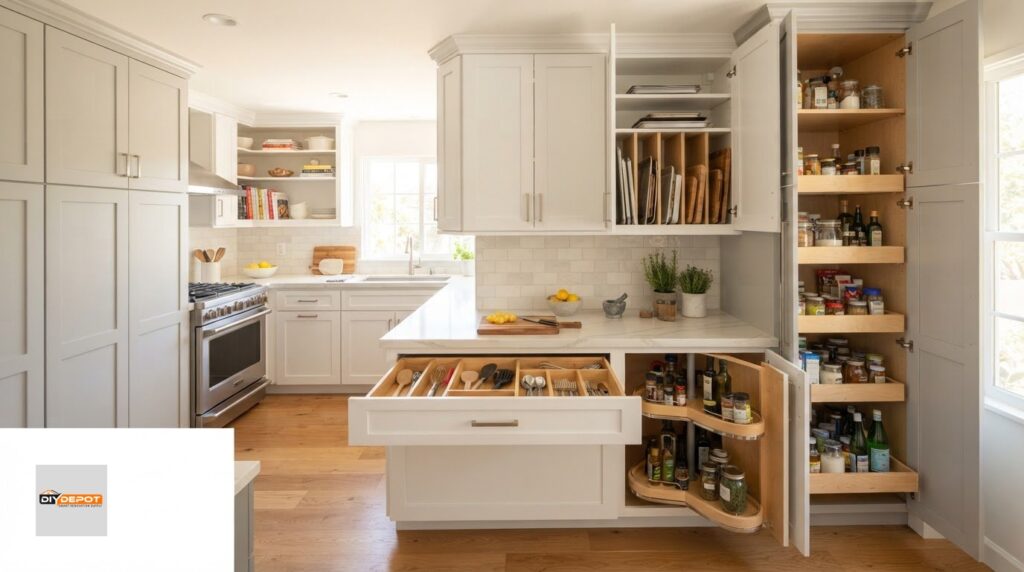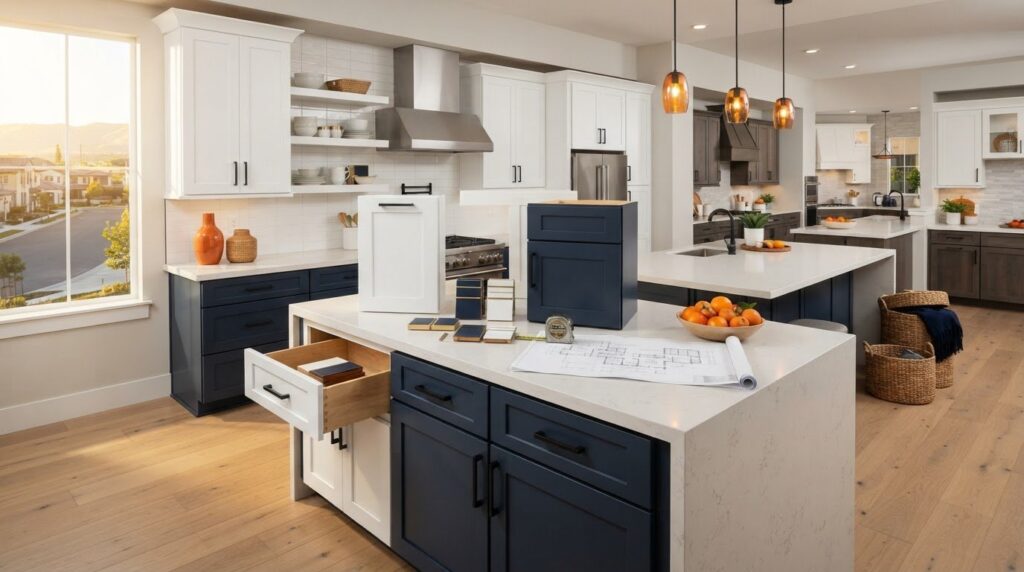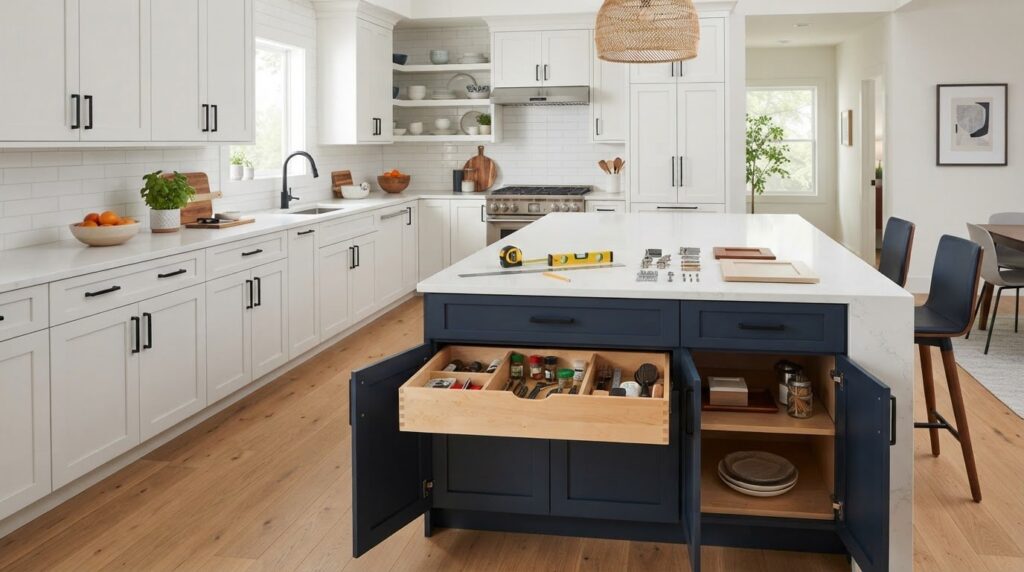

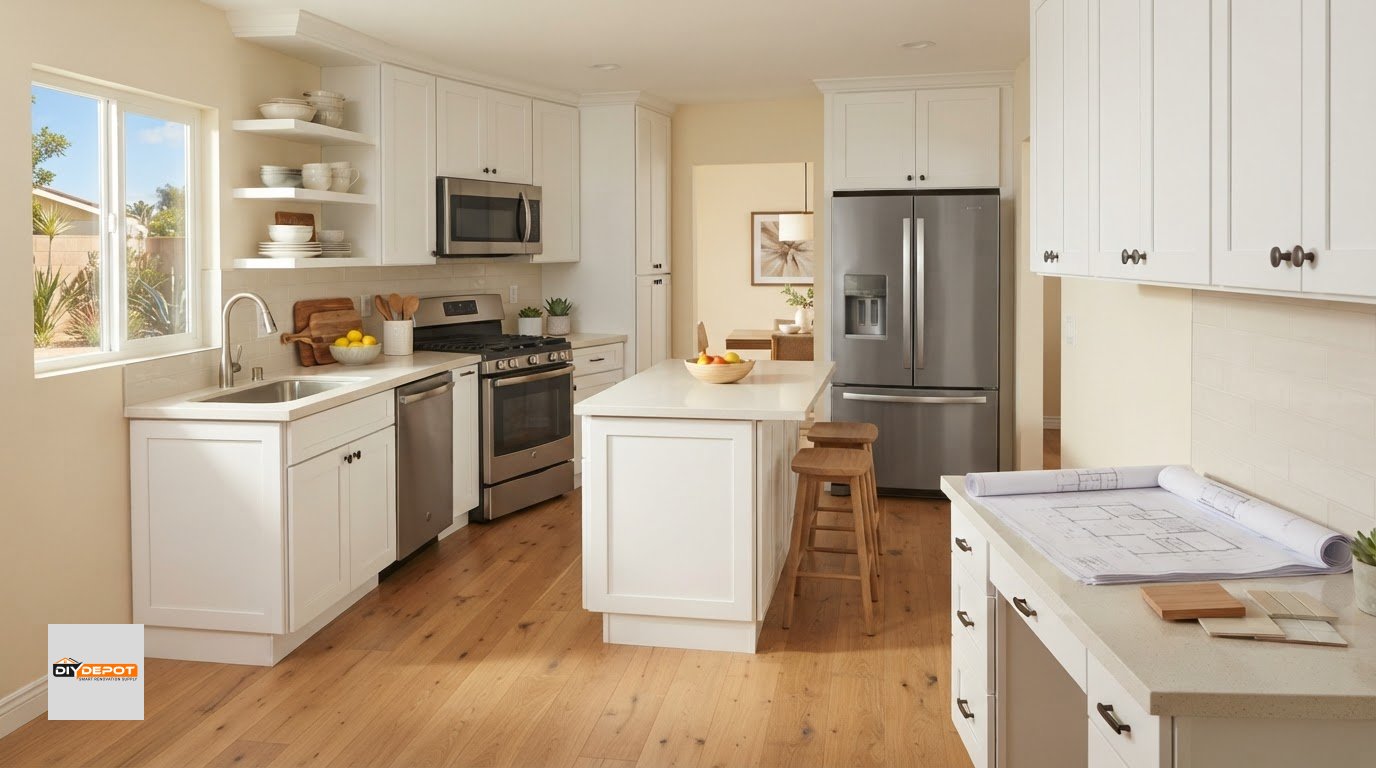
Could a smaller kitchen refresh make more financial sense than a full renovation? The kitchen remodel ROI 2026 conversation can feel contradictory, but project scope helps explain why. Zonda’s 2025 Cost vs. Value Report, published in April 2026, estimates a 112.9% national return for its defined minor kitchen remodel. Treat that as a benchmark for comparison, not a promise about your home.
It’s natural to want a clear resale estimate before committing to a renovation. The challenge is that national averages don’t account for your home’s condition, local market, or the choices that make a kitchen more useful day to day. A project can also grow beyond its original scope if you don’t set priorities early.
This guide explains how remodel ROI is measured, what current research says about different renovation scopes, and why local resale conditions matter. You’ll also learn to separate potential resale value from personal-use value, so you can weigh cabinet updates and other improvements against your budget, plans, and everyday needs.
Key Takeaways
- Use kitchen remodel ROI 2026 research to compare projects, not as a guaranteed forecast for your home.
- Before comparing return estimates, check each study’s project scope, publication year, survey period, and measurement method.
- Compare a targeted refresh, cabinet-focused renovation, and broader remodel by disruption, functional change, and resale uncertainty.
- Set your goals and assess your kitchen’s condition before defining the project scope and total-project budget.
- Plan cabinet choices around your existing layout and priorities, treating them as one part of the overall renovation decision.
What Does Kitchen Remodel ROI Mean in 2026?
A kitchen remodel doesn’t have one predictable return on investment. The result depends on what you change, the home’s condition before the work, and how buyers in the local market value those changes. The phrase kitchen remodel ROI 2026 is useful for comparing estimates, but it can’t predict what a specific homeowner will receive at sale.
It also helps to separate financial return from personal-use value. Better storage, easier meal preparation, and a layout that works for your household can make a renovation worthwhile while you live in the home. Those benefits matter, but they aren’t resale proceeds. General renovations can affect both home value and daily use, as outlined in this overview of home improvement.
How is kitchen remodel ROI calculated?
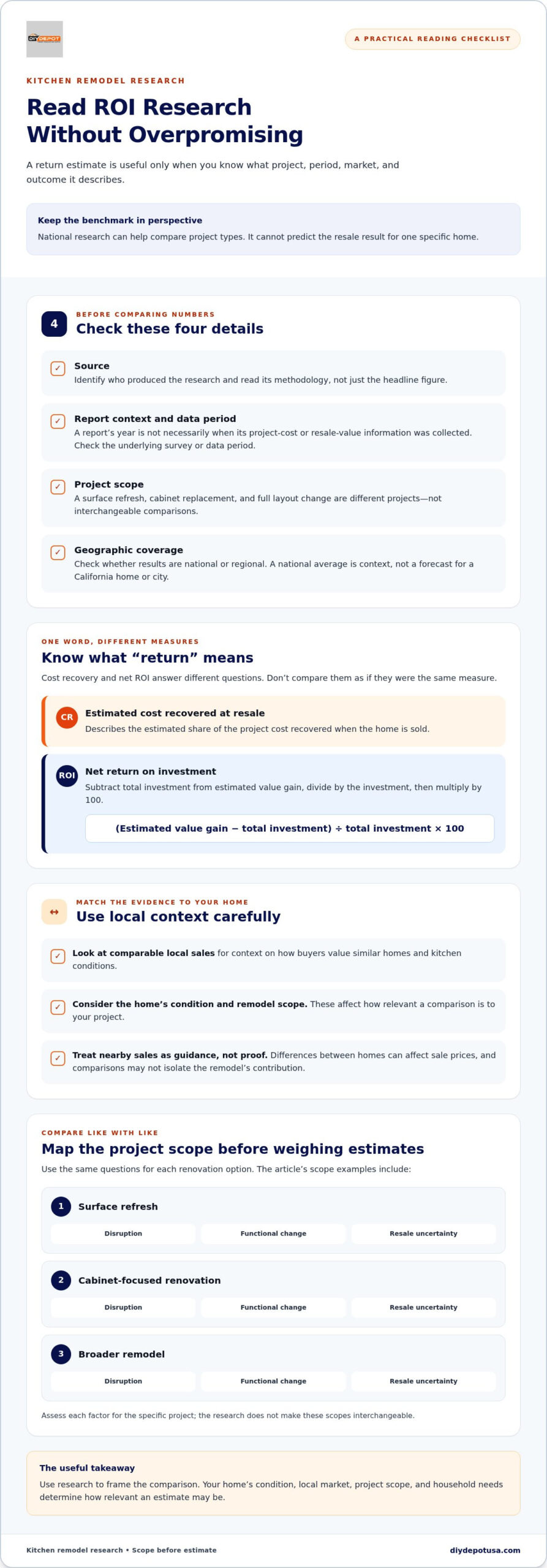
At its simplest, ROI compares a project’s investment with a selected financial outcome. For a resale-focused estimate, first consider the value increase attributed to the remodel compared with what the home might have been worth without it. Subtract the total project investment from that estimated gain, divide the result by the investment, and multiply by 100: (estimated value gain − total investment) ÷ total investment × 100.
The calculation is only as useful as its inputs. Include the costs that belong to the scope being assessed, and estimate the remodel’s contribution rather than attributing every change in the home’s market value to the kitchen. The percentage is an estimate, not a guaranteed amount returned when you sell.
Check what a study means by “return,” too. Some reports describe the estimated share of project cost recovered at resale. That cost-recovery measure isn’t the same as net ROI, which subtracts the original investment to show a gain or loss. Comparing the two as though they’re identical can make estimates seem more contradictory than they are.
Why do 2026 ROI estimates vary?
Before comparing figures, check the publication year and when researchers collected the underlying data. Then look at the project definition: a surface refresh, cabinet replacement, and full layout change aren’t interchangeable scopes. Methods also differ in how studies estimate project costs and resale value, and whether results reflect a national sample or particular geographic areas.
National benchmarks offer context, not a forecast for a California home. Local comparable sales can show how buyers value similar homes and kitchen conditions in an area. The property’s condition and the remodel’s scope determine how relevant those comparisons are. Even nearby homes can differ in ways that affect sale prices, so use local evidence as a guide rather than a guarantee.
No published average predicts one home’s exact resale outcome. Use research to understand broad patterns, then weigh the likely financial outcome against your household’s practical needs. That keeps resale estimates useful without asking them to settle the whole decision.
How to Read Kitchen Remodel ROI Research Without Overpromising
Research is most useful when you know what it measures. A return figure can look precise while describing a project, time period, or market unlike yours. For a sound kitchen remodel ROI 2026 comparison, check the source’s methodology before relying on its headline number.
Which research sources can inform a kitchen remodel decision?
Start with the latest Journal of Light Construction (JLC) Cost vs. Value data and read the report’s methodology. Zonda published the 2025 Cost vs. Value Report on April 15, 2026. Its publication date isn’t necessarily the period when the underlying project-cost or resale-value information was collected, so check the report for its survey or data period and the scope assigned to each project category.
The National Association of REALTORS® Remodeling Impact Report can offer another perspective, but its kitchen category and measures need to fit the question you’re asking. Findings may describe homeowner perceptions or project impact rather than estimate resale cost recovery. The National Association of REALTORS® Remodeling Impact Report is most useful when you identify what it measures and avoid treating unlike measures as interchangeable.
What can national averages tell a California homeowner?
A national figure gives a broad reference point, not a direct prediction for Bakersfield or another California city. Local resale context depends on the homes buyers are comparing, the property’s condition, and whether the studied renovation resembles the proposed work. Comparable sales can add context, but they don’t isolate a remodel’s contribution unless the homes and project details are meaningfully similar.
The 2025 Zonda Cost vs. Value Report, published in 2026, offers national project comparisons, not a resale forecast for an individual California home. This distinction matters whenever an article labels a figure “2026”: the publication year and the underlying data period may differ. Name both when the source provides them, and don’t present older findings as if they were collected in 2026.
Before using an ROI percentage, confirm four details: the source, publication date, underlying survey or data period, and project scope. Check geographic coverage, too. If those details aren’t clear, leave the number out or describe it as broad context. Listing reports and homeowner anecdotes can help explain buyer preferences, but they aren’t substitutes for measured comparisons of project costs and resale values.
Use research to frame questions about scope, then match cabinet choices to the room and your priorities. Professional kitchen design support can help connect those choices to your existing layout without treating a cabinet decision as a guaranteed resale return.
Which Kitchen Remodel Scope Makes the Most Sense for Your Goals?
The right scope depends on what isn’t working and how long you expect to use the kitchen. A resale-focused update may call for different choices than a renovation meant to improve storage or make cooking easier. Use the comparisons below to plan, not to predict a particular return.
Targeted refresh
Disruption: Usually more contained when major components and the layout stay in place. Decision complexity: Lower, since fewer elements change. Functional change: Often modest, with improvements focused on appearance or a specific pain point. Resale uncertainty: Still depends on condition, buyer preferences, and the local market.
Cabinet-focused renovation
Disruption: More involved than a surface refresh, especially if storage areas need to be cleared or installation affects nearby finishes. Decision complexity: Moderate, with choices tied to cabinet arrangement, storage, and appearance. Functional change: Can be meaningful when existing cabinets limit access or organization. Resale uncertainty: Depends on how well the selections and layout fit the home and its market.
Broader kitchen remodel
Disruption: Often the most extensive, as more parts of the room change together. Decision complexity: Higher, with more connected choices to coordinate. Functional change: Potentially greater if the plan addresses several problems at once. Resale uncertainty: A larger project doesn’t automatically reduce uncertainty; the outcome depends on the home, scope, and buyer response.
When might a targeted kitchen update be enough?
If the layout works, storage is adequate, and major elements remain usable, a selective update may solve a specific problem without expanding the project. Focus on what you want to change, such as a worn finish or a hard-to-use area. A tight scope means fewer decisions and fewer dependencies between parts of the work. That can make planning simpler, but it doesn’t guarantee a stronger resale return.
When should cabinets be part of a larger remodel?
Give cabinets closer attention when their condition, storage capacity, or arrangement gets in the way of daily use. If the layout itself is the problem, replacing cabinets alone may not solve it. Consider how cabinet placement connects to the broader plan. White Shaker offers a light, straightforward look, while Grey Shaker gives the room a different visual tone. Neither style promises a resale outcome. For a closer look at how base cabinets shape storage and layout, see The Essential Guide to Kitchen Base Cabinets: Building Your Dream Foundation.
To keep your kitchen remodel ROI 2026 decision grounded, separate changes you need for everyday comfort from those you’re considering mainly for resale. For broader renovations that involve rethinking living spaces or structural changes, working with specialists like Sublime Design & Build Ltd can streamline end-to-end planning. Housing research, including work from the Harvard Joint Center for Housing Studies, can add broad context about remodeling trends, but it won’t determine the right scope for one kitchen. Choose the smallest project that genuinely meets your goals, then weigh any additional work against its practical value to your household.
How to Plan a Kitchen Remodel Around ROI in 2026
A sound plan starts with your household and the room you have, not a resale estimate in isolation. Whether managing the work yourself or partnering with a professional contractor like Lux Renovations, use each step to connect the project scope to a clear purpose. That makes it easier to weigh potential resale value against daily function and keep optional upgrades from quietly expanding the work.
- Write down your goals. Note daily frustrations, storage needs, and layout limits before choosing finishes. Separate must-fix issues, such as hard-to-reach storage, from optional changes that would mainly refresh the kitchen’s appearance.
- Assess the existing kitchen. Consider which cabinets and other major elements still serve you well, and where wear or layout causes problems. Distinguish a cosmetic concern from a functional one. This helps you decide whether to focus on a few updates or address connected parts of the room.
- Set the scope before selecting extras. Decide which work directly supports your priorities, then identify optional additions. A cabinet change, for example, may affect nearby finishes and storage plans. Mapping those connections early can help prevent a string of unplanned decisions from expanding the project.
- Build a total-project budget. Account for the chosen scope and project-specific requirements, not just the most visible materials. Include the elements needed to complete the plan, and revisit the scope if the full budget no longer fits your goals. Don’t treat a national average as a quote for your home.
- Compare research and local context. Use renovation studies only when their project definitions and measures match your planned work. Look at comparable homes in your area for context about condition and buyer expectations, but don’t copy a neighbor’s choices automatically. Similar homes can still have different needs and priorities.
- Review the plan before moving ahead. Check that each major decision serves a stated goal. If a choice adds complexity without improving function or fitting the home, consider whether it belongs in this project or can wait.
How can cabinet decisions support a controlled project scope?
Deciding early whether cabinets are part of the renovation can clarify the layout, storage plan, and work that needs to coordinate with them. DIY Depot offers professional design support, cabinet assembly, and installation of its shaker cabinets. Design support can help align cabinet choices with your existing room and priorities. The Professional Kitchen Design Services resource is relevant to layout planning; the DIY vs. Professional Cabinet Installation article can help frame installation planning.
Choose designs that suit your home and neighborhood instead of chasing a national trend. White Shaker cabinets offer a straightforward visual choice, while Grey Shaker offers a different look; neither guarantees resale results. If you’re planning cabinet changes, book an appointment for kitchen design support to discuss how the layout and cabinet choices fit your project.
Where Cabinet Planning Fits Into a Kitchen Remodel ROI Decision
Cabinets can shape how a kitchen looks and works, but they’re only one part of the project’s overall scope. Their condition, configuration, and fit with the room may affect what else needs attention. Treat cabinet planning as a way to clarify the renovation, not as a standalone promise of resale value. The right choice should make sense for your home and priorities whether you plan to sell soon or enjoy the kitchen for years.
What should homeowners compare when choosing cabinets?
Start with the existing kitchen plan. Consider whether the cabinet configuration fits the room, supports the way you use it, and provides storage where you need it. Then compare the style and finish with the home’s overall character. White Shaker cabinets offer a light, classic look; Grey Shaker cabinets provide a contrasting option. Neither style guarantees a particular financial return.
Keep the full project scope in view. Replacing cabinets may connect to choices about surrounding finishes or how the space is organized, so decide whether the goal is to address cabinet condition, improve storage, or change the room’s broader function. A useful companion is Wholesale Kitchen Cabinets: A Complete Guide to Quality and Savings in 2026, which explores cabinet considerations but doesn’t replace assessing your own layout and priorities.
How can design support make the next step easier?
Design assistance can turn a list of goals into a practical cabinet plan. Reviewing the room layout alongside storage needs and style preferences helps make choices more deliberate before you set the project scope. It can also clarify which decisions support daily function and which are mainly visual.
DIY Depot USA offers professional kitchen design support, assembly, and installation of its shaker cabinets, along with regional delivery in its service areas. Based in Bakersfield, the business serves homeowners across California and selected areas of Nevada and Arizona. Local context matters, but a regional address alone can’t predict how buyers will value a specific renovation.
As you consider kitchen remodel ROI 2026, weigh cabinet decisions alongside the rest of the work and the value the changes bring to your household. If you’re ready to explore how cabinet choices could fit your kitchen, arrange an appointment for kitchen design support. It’s a practical way to discuss the layout and options without assuming a particular resale outcome.
Take Your Next Step With a Clear Plan
Before choosing what to change, put your next decision in writing. Note the improvement that would make the biggest difference to your daily routine, the project scope you’re comfortable taking on, and the budget boundary that would keep the work manageable. This brief gives you a reference as you compare options and helps keep appealing extras from overshadowing your main goal.
Use kitchen remodel ROI 2026 estimates as one input, not the sole measure of a successful renovation. A thoughtful choice should fit your home, your plans, and the way you want to use the space. You don’t need to settle every detail at once. Start with the decision that feels most useful, then build from there.
When you’re ready to consider cabinet choices as part of that plan, explore kitchen cabinet options. A clear first step can make the rest of the project feel more approachable and support a kitchen that works better for you.
Frequently Asked Questions
What is a good ROI for a kitchen remodel in 2026?
There isn’t one ROI percentage that counts as good for every kitchen remodel. For kitchen remodel ROI 2026, judge an estimate by whether it matches your planned scope and whether it describes cost recovered or a net gain. A useful personal benchmark also accounts for how long you expect to enjoy the improvements. Don’t treat a national project average as a target your home is guaranteed to meet.
How much value does a kitchen remodel add to a home?
You can’t determine added value from the project description alone. It depends on the home’s condition, the work completed, and what buyers pay for comparable homes when you sell. A remodeled kitchen may support a stronger overall impression, but its contribution isn’t automatically equal to the renovation’s cost. For a personal estimate, review recent comparable sales and consider how your home differs in condition and features.
Is a kitchen remodel worth it if I plan to sell soon?
It can make sense if the kitchen’s condition could distract buyers or if a focused update helps the home feel cared for. Before starting, consider whether the work can be completed in time and whether its cost fits your sale plans. Extensive changes shortly before listing may be difficult to recover. A smaller, cohesive improvement may better suit a short timeline, but resale results still depend on the market.
Which kitchen upgrades typically matter most to homebuyers?
Buyers may respond to a kitchen that feels clean, functional, and consistent with the rest of the home. Address visible wear, awkward storage, or a layout issue before choosing decorative extras. For example, improving access to frequently used items may have more practical appeal than adding a feature that doesn’t suit the room. Preferences vary, so focus on improvements that make the kitchen easy to understand and use rather than assuming every buyer wants the same finish.
Can new kitchen cabinets improve resale value?
New cabinets can improve a kitchen’s appearance and usefulness, especially if existing cabinets are worn or don’t meet everyday storage needs. Their effect on resale depends on fit, overall project quality, and buyer expectations for the home. Replacing cabinets just for a different look doesn’t ensure a higher sale price. Consider whether the configuration solves a real problem, then compare that benefit with other needs in the kitchen.
What happens if I spend more on a kitchen remodel than my neighborhood supports?
You may not recover the full cost through the sale price, particularly if the renovation is far more extensive than comparable homes support. Compare homes in the relevant market, whether you’re in Bakersfield, Fresno, Santa Maria, San Luis Obispo, Santa Barbara, Ventura, Visalia, Oxnard, Kern County, Kings County, Las Vegas, or Phoenix. These are distinct markets, so use nearby comparable properties rather than assuming one regional expectation applies everywhere.
Should I remodel my kitchen for resale or for my own daily use?
Let your expected time in the home guide the balance. If you’ll use the kitchen for years, improvements that make cooking, storage, or movement through the room easier may be worthwhile even if their resale contribution is uncertain. If selling soon is the priority, keep choices aligned with the home and likely buyers. You can also combine goals: address a daily frustration while choosing a cohesive design that won’t feel overly personal.