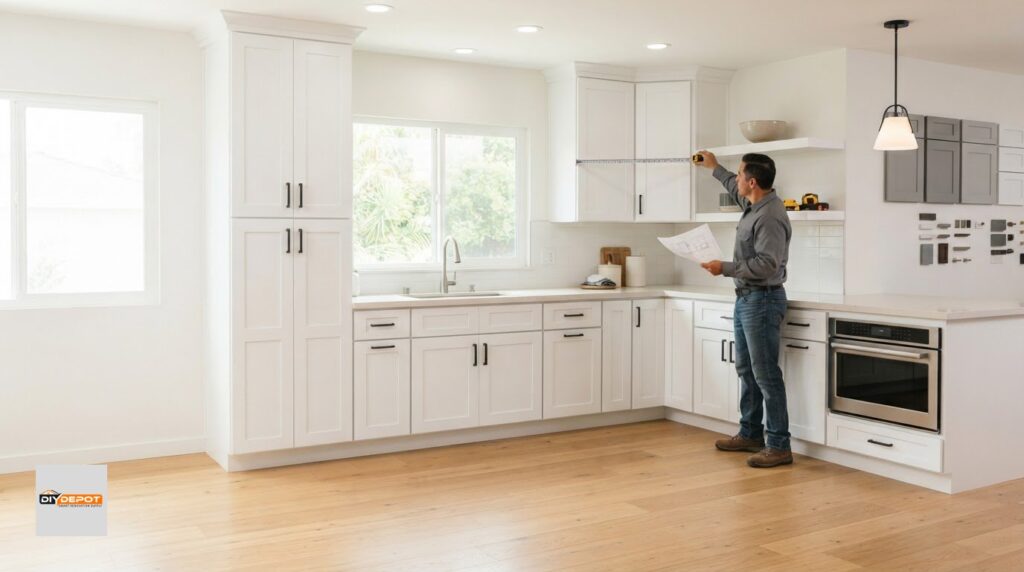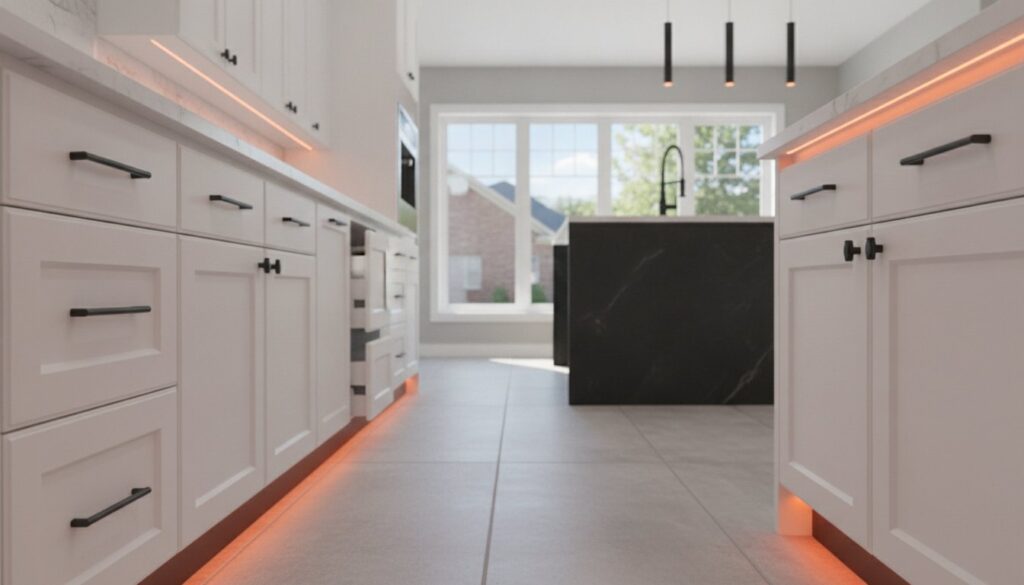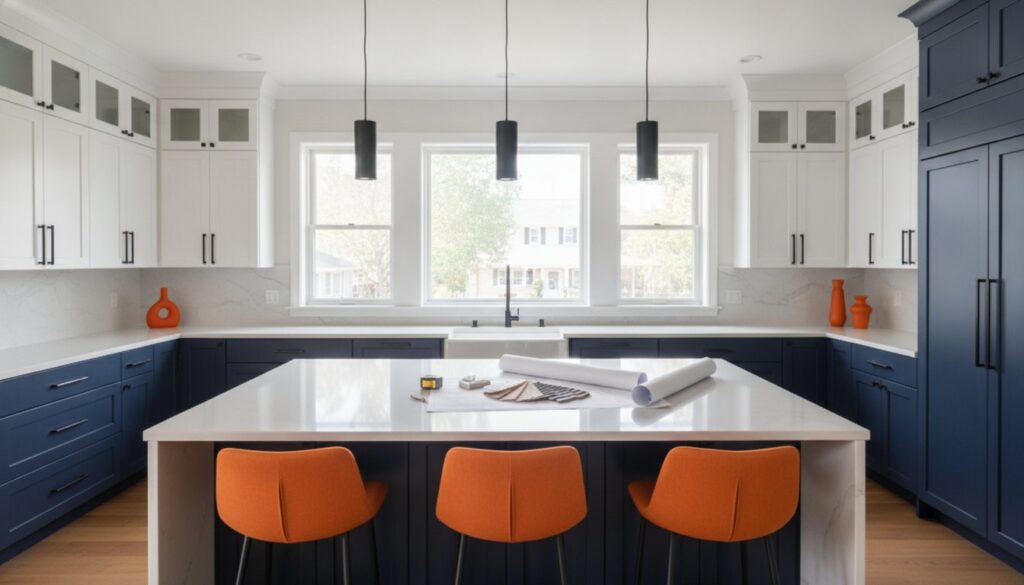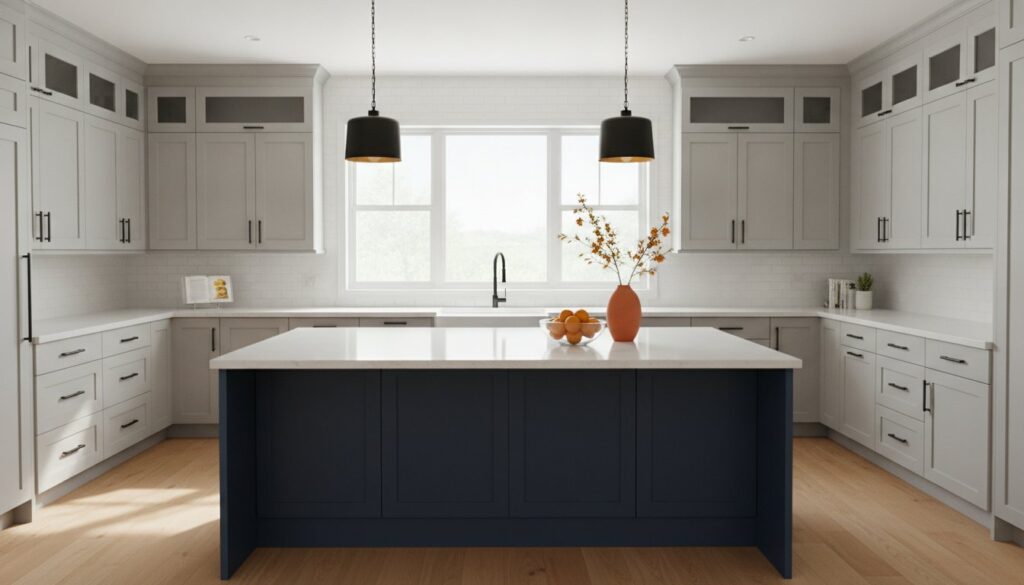

A bathroom vanity can make a strong design statement without ornate details. Shaker style bathroom vanity ideas work across classic and contemporary rooms because recessed-panel doors pair easily with different finishes. The key is coordinating the cabinet, countertop, hardware, and surrounding materials.
If you like Shaker cabinets but aren’t sure how they’ll look in your bathroom, begin with the mood you want the room to have. Natural wood tones add warmth, while a painted finish can create a brighter or more modern feel.
This guide explains what defines Shaker bathroom cabinets and how to choose a vanity configuration for your room and daily routine. You’ll also find ways to adapt this straightforward cabinet style to modern, traditional, rustic, and other bathroom designs, without overcomplicating the choices.
Key Takeaways
- Recognize the recessed-panel door detail that gives Shaker vanities their clean, adaptable look.
- Pair an off-white cabinet with complementary colors and finishes to create a bathroom that feels cohesive.
- Coordinate cabinet hardware, lighting, and plumbing fixtures so their shapes and finishes work together.
- Choose a single- or double-sink layout based on how the bathroom is used and the wall space available.
- Adapt Shaker cabinetry to modern, traditional, rustic, or balanced styles with thoughtful material and detail choices.
1. What Are Shaker Bathroom Cabinets?
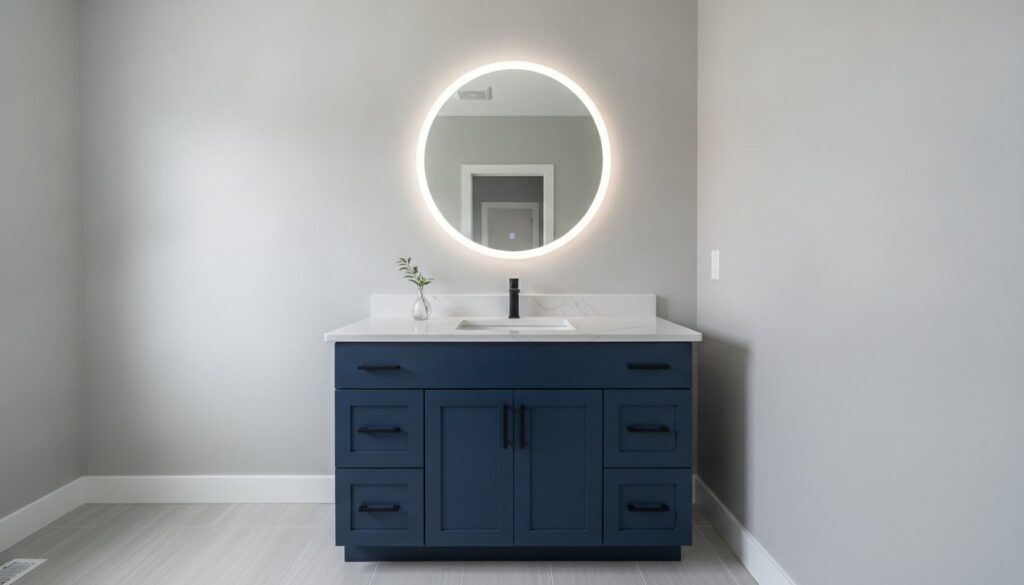
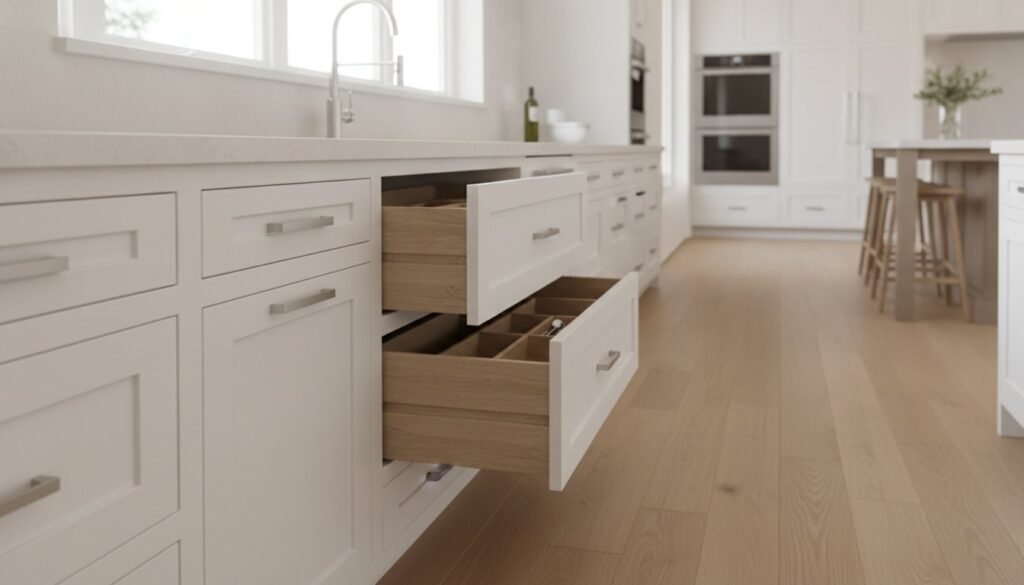
Shaker cabinets have a simple, structured look: a flat center panel sits inside a squared frame. This recessed-panel door adds detail without ornate carving or trim. On a bathroom vanity, it pairs well with straightforward choices such as a white countertop, black pulls, and a plain-framed mirror. The clean outline makes Shaker cabinetry a flexible starting point for different room styles.
The Shaker style originated with communities in the 1700s and 1800s, whose furniture favored practical construction and restrained design. Today, those qualities carry through in the familiar framed door and uncluttered surfaces. In a bathroom, the style can feel traditional beside a furniture-like mirror or more current with simple hardware and crisp tile. The cabinet’s shape stays consistent; the surrounding colors and materials set the mood.
Off-white is a useful choice if bright white feels too stark or wood feels too warm. Pair an off-white vanity with soft gray walls and white tile for a quiet, tonal palette. For contrast, add charcoal floor tile or dark hardware. Natural accents, such as a wood-framed mirror, can soften the combination. Keep undertones in mind: creamy off-white works naturally with warm beige, while a cooler shade suits gray or crisp white.
Natural wood tones, including walnut and oak, are enduring vanity choices. Oak can create a lighter, more open look beside cream tile, while walnut adds deeper contrast against pale walls. Match the wood’s warmth to nearby materials, such as a beige countertop or warm metal mirror frame. If the bathroom already has prominent tile patterns, a quieter wood finish can keep the cabinet from competing for attention.
What countertop materials pair well with Shaker bathroom vanities? Quartz, marble, and solid-surface counters all complement the door’s simple lines. A pale, lightly veined surface keeps an off-white cabinet understated, while a darker counter gives oak or walnut definition. Compare the countertop pattern and color with the cabinet finish together, rather than choosing each in isolation.
To choose a Shaker vanity finish, start with the room’s largest fixed surfaces: floor tile, shower surround, and wall color. Then decide whether the cabinet should blend in or provide contrast. An off-white vanity, for example, can connect white shower tile with gray walls; oak can add warmth beside stone-look flooring. These shaker style bathroom vanity ideas work best when the cabinet, counter, and tile share a clear palette.
2. Coordinating cabinet hardware, lighting, and fixtures
Start with a finish already in the bathroom, such as the faucet or shower trim. Choose cabinet hardware that complements it; the metals do not all need to match exactly. Brushed nickel pulls, for example, can sit comfortably beside chrome fixtures, while matte black knobs create a stronger outline against a pale cabinet. Repeating a finish in a few places helps the details feel connected.
Scale matters as much as finish. A small round knob suits the restrained frame of a classic Shaker door, while a longer bar pull emphasizes its clean lines. Use consistent hardware across vanity drawers and doors. If drawers and doors need different shapes, keep the finish the same so the combination feels deliberate.
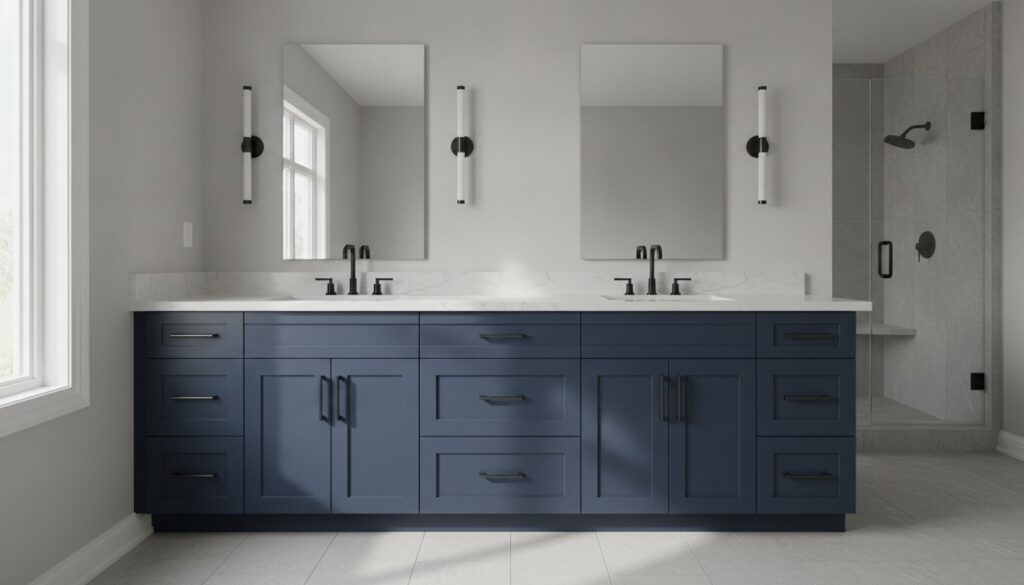
Lighting should complement the vanity and support everyday tasks. Pair a framed Shaker cabinet with simple sconces or a clean-lined fixture that doesn’t compete with the door panels. Repeating a metal finish in the light fixture and cabinet pulls can tie the vanity wall together. Keep the mirror, lights, and faucet visually balanced instead of giving each a separate style.
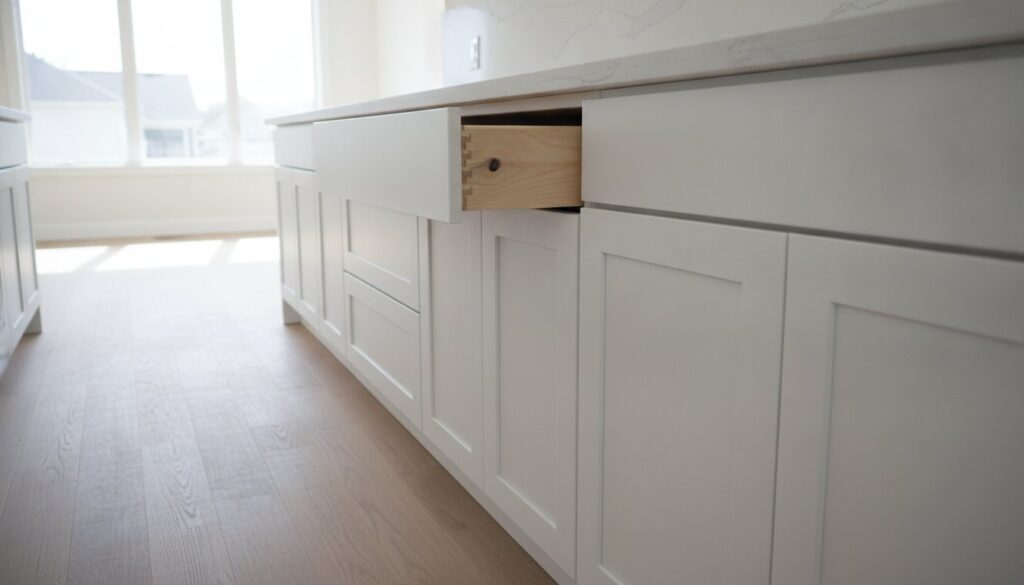
Construction details also affect the finish you see and use. Shaker cabinetry draws on practical furniture traditions, with a framed door and recessed center panel rather than elaborate ornament. Solid wood frames, dovetail drawers, and soft-close hardware are features described for Shaker vanities. For a listed Shaker Off-White cabinet, construction details include a 1/2-inch plywood cabinet box and 5/8-inch solid-wood dovetail drawer boxes.
What are the differences between custom, semi-custom, and stock Shaker bathroom vanities? Stock vanities come in set configurations. Semi-custom options allow some choices within an established range, while custom vanities are designed for a specific space and can be tailored more closely in dimensions and details. When expanding a cohesive cabinetry style into larger living spaces, teams like Delmar Kitchen Pro showcase how custom construction and design bring high-end balance to the entire home.
Vanity width affects both storage and the room’s visual balance. Shaker vanities are described in widths from 24 inches to 72 inches and beyond, giving different bathrooms a range of layout possibilities. A narrow vanity can preserve open floor space, while a wider cabinet can make room for more drawers. Linen storage also depends on the available wall area and how much closed storage the room needs; keep its finish and hardware aligned with the vanity.
Before choosing hardware or lighting, consider the cabinet width, drawer layout, and mirror position together. This helps prevent a large fixture from crowding a compact vanity or a long pull from feeling out of scale. Once you have a sense of the layout, browse cabinet options to find a profile that fits your design direction.
3. Single- and double-sink vanity configurations
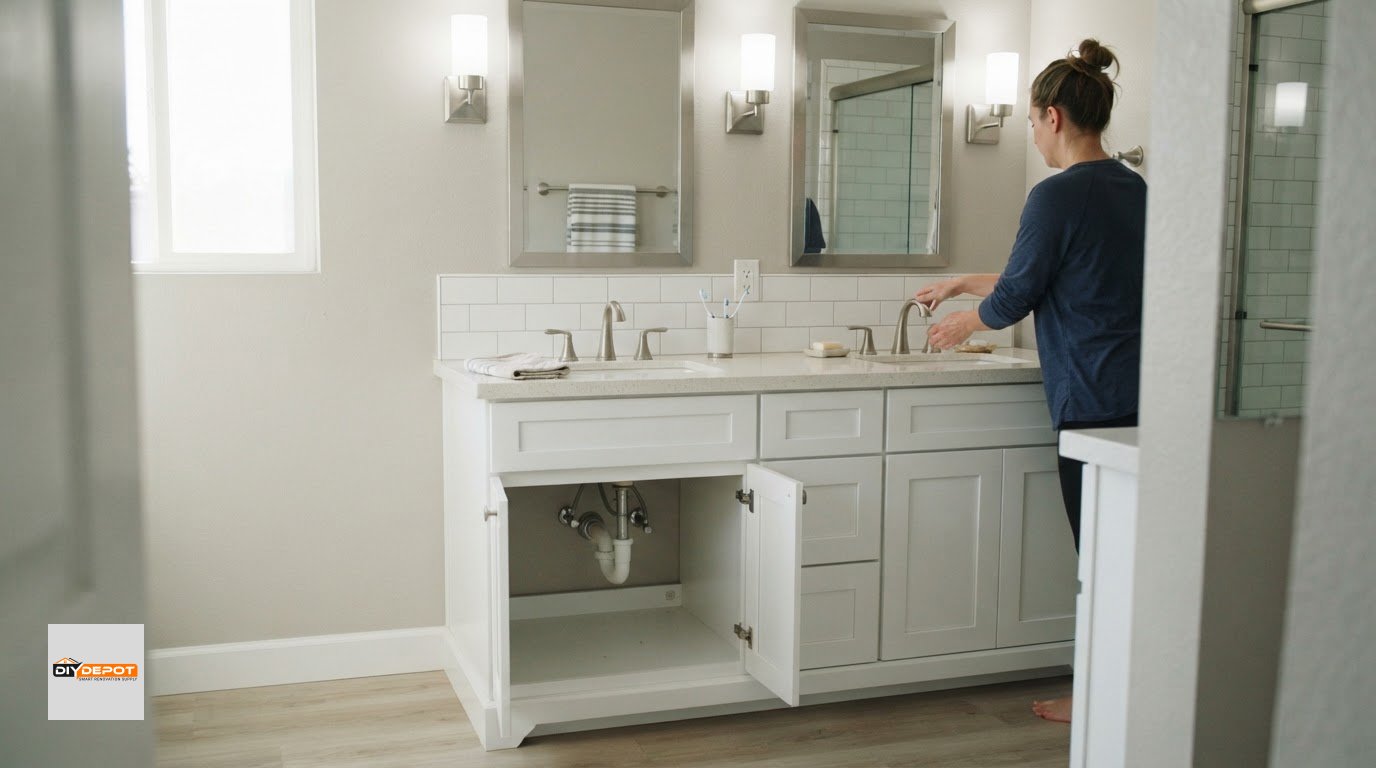
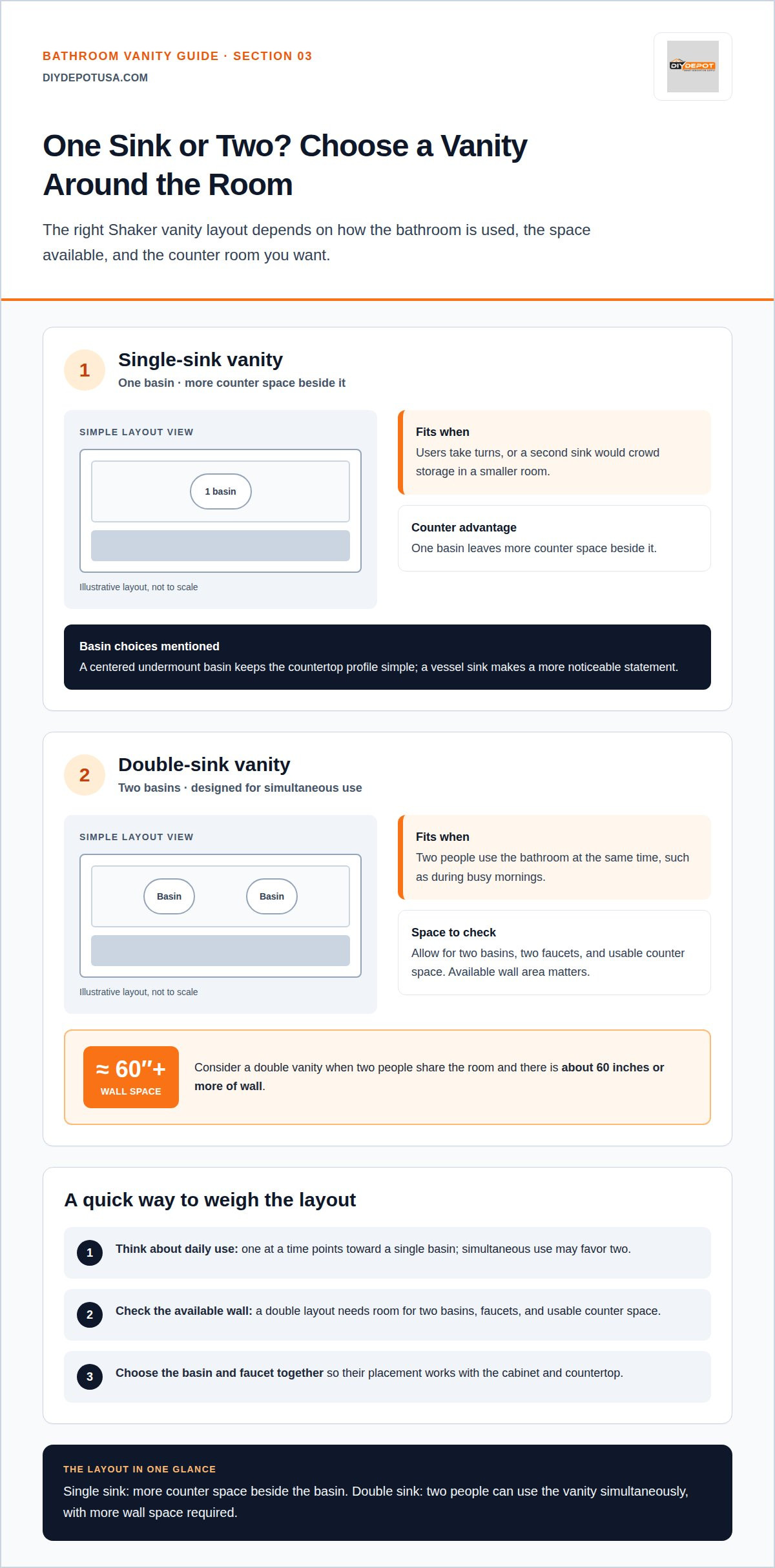
A single-sink vanity centers one basin and leaves more counter space beside it. This can suit a shared bathroom where users take turns, or a smaller room where a second sink would crowd storage. A centered undermount basin keeps the countertop profile simple, while a vessel sink makes a more noticeable statement. Choose the basin and faucet together so their placement works with the cabinet and counter.
A double-sink layout can make busy mornings easier when two people use the bathroom simultaneously. It needs room for two basins, faucets, and usable counter space, so the available wall area matters. Consider a double vanity when two people share the room and there is about 60 inches or more of wall. A symmetrical arrangement also gives each user a defined place for daily items.
Cabinet components can help make either layout fit the wall. Two 30-inch sink bases and a 12-inch drawer base can be combined into a 72-inch double vanity. This arrangement places a drawer section between the sink cabinets, adding storage while preserving a balanced appearance. A 36-inch sink base and a 12-inch drawer base can be combined into a 48-inch single vanity, with the extra drawer section beside the basin.
What bathroom sink styles work best with Shaker vanities? Undermount sinks pair neatly with the cabinet’s straightforward lines, while drop-in sinks have a defined rim at the counter. Vessel sinks can create a focal point, especially with a restrained faucet and simple mirror. Choose a sink that leaves comfortable counter space and suits the vanity’s proportions.
How do you choose the right bathroom vanity size and configuration? Measure the usable wall and note doors, plumbing, and nearby fixtures. Then consider whether one or two people need to use the sink at the same time. Match the available space to the sink bases and drawer sections your layout needs, while leaving room to access cabinet doors and drawers.
Storage needs can change which layout works best. A single sink with drawer storage may suit a bathroom where counter space matters more than a second basin. In a double-sink plan, drawers between sink bases can store shared items without taking over either person’s counter area. Match the cabinet arrangement to the room’s daily routine.
For a farmhouse bathroom, a double Shaker vanity can pair with simple basins and understated faucets. A single sink can preserve open counter space. Either way, match basin placement to the cabinet supports and countertop layout before settling on the arrangement. A well-planned configuration balances shared use and storage with the available wall space.
4. Styling Shaker vanities for different design directions
A Shaker vanity can look classic, modern, rustic, or furniture-inspired depending on the surrounding details. The framed door gives the cabinet a clear shape, while mirrors, tile, lighting, and accessories define the overall look. For a classic bathroom, pair the cabinet with a framed mirror, traditional wall sconces, and restrained stone surfaces. Keep the details balanced so the vanity feels connected to the room.
For a modern look, choose flat-panel or slim Shaker doors with clean lines and minimal detail. A simple mirror, uncluttered countertop, and streamlined faucet reinforce the restrained profile. Use a consistent finish across visible fittings, then let one material, such as patterned floor tile, provide contrast. This keeps the vanity frame from feeling too decorative in a contemporary room.
Rustic styling works best when wood cabinetry has textured surroundings, rather than rustic accents on every surface. Pair a wood-look vanity with textured tile, then use a plain mirror and straightforward lighting to balance the grain. This adds warmth without making the room feel like a cabin. In a farmhouse bathroom, a few natural materials can make the vanity feel at home without excessive distressed details.
A furniture-like vanity can add character while providing storage for grooming items. A freestanding cabinet with visible legs can feel lighter, like a console, while a wall-mounted vanity leaves open space beneath it. In a small powder room, a wide mounted vanity can offer storage without adding visual bulk. Keep the surrounding wall simple so the cabinet remains easy to see.
Use symmetry for a composed look and practical storage. Matching drawer stacks or cabinet doors on both sides of the sink create a balanced front, while a centered mirror reinforces the arrangement. A symmetrical vanity can provide useful storage and keep the focal point orderly. For contrast, choose one distinctive detail, such as a sculptural light fixture, instead of mixing several competing patterns.
Before choosing accessories, decide on the room’s overall style. For a classic look, prioritize traditional shapes; for a modern one, reduce visual detail; for rustic warmth, pair wood texture with simpler surroundings. Carry that direction through the mirror, lighting, and countertop accessories. The Shaker door’s framed outline provides a steady foundation, while surrounding elements make the design feel personal and cohesive.
5. How Shaker vanities fit different bathroom styles
The Shaker frame stays recognizable, but surrounding details change its character. In a traditional bathroom, pair the recessed-panel cabinet with classic stone, a framed mirror, and familiar metal fixtures. For a contemporary room, use simple surfaces, crisp lines, and fewer decorative accents. The same cabinet design supports both styles because it adds structure without demanding one specific decorating approach.
For a transitional bathroom, combine traditional shapes with modern finishes. A Shaker vanity beside clean-lined tile and a restrained mirror bridges the two influences. Choose one as the dominant direction, then add a smaller detail from the other. Contemporary lighting, for example, can refresh a traditional-looking vanity, while a classic mirror can soften a more minimal room.
In a rustic or farmhouse bathroom, wood tones and tactile materials bring warmth. Textured tile can balance rustic-looking cabinetry without making the room feel too much like a cabin. Keep other surfaces quieter, such as a plain backsplash and simple mirror, so the cabinet grain and tile texture don’t compete. For a lighter farmhouse look, pair warm wood with pale walls and understated fixtures.
A Shaker vanity can also suit a compact powder room or a pared-back design. In a small space, a wide mounted vanity can add storage without the visual bulk of a floor-reaching cabinet. A simple mirror and uncluttered countertop help preserve an open feel. For a minimalist bathroom, use a clean cabinet finish and limit accessories to useful pieces, such as a soap dispenser and a small tray.
The cost of a Shaker-style bathroom vanity in the United States depends on its size, construction, finish, and storage configuration. Countertop and sink choices also affect the overall project, as does choosing a single or double vanity. Comparing the components in a planned layout helps show which decisions have the greatest effect on the total.
For a cohesive look, repeat one or two details from the vanity elsewhere in the room. Echo the cabinet finish in shelving, carry a metal accent into the mirror frame, or choose tile that complements the cabinet’s tone. Avoid matching every surface exactly; contrast helps each material stand out. A Shaker vanity works best as part of a considered combination, not as an isolated style statement.
If you’re planning a bathroom around a Shaker cabinet, discuss your vanity project and the design direction you have in mind. For homeowners planning a larger custom renovation, working with a design-build team like timberworxcg.com can help tie custom cabinetry and room layouts together seamlessly.
DIY Depot: Vanity Shaker Cabinets
DIY Depot USA offers Vanity Shaker Cabinets for bathroom refreshes and remodels. Their framed style can bring the ideas in this guide into a practical room plan, whether you prefer a classic, modern, or farmhouse look. Base and Wall Shaker Cabinets can also carry a coordinated cabinet style into other parts of the home.
Consider Vanity Shaker Cabinets when you’ve chosen a Shaker look and are ready to plan a vanity around your bathroom’s layout, storage needs, and preferred finishes. Bringing those choices together helps create a cohesive result.
For help with your cabinet project, contact DIY Depot.
Move from inspiration to a bathroom plan
The next step is to shape a plan around the room and your routine. Choose the cabinet finish and sink layout first, then coordinate the countertop, lighting, and hardware. A simple palette can connect the choices while leaving room for a personal detail, such as a distinctive mirror or tile accent. Let the shaker style bathroom vanity ideas that suit your home guide your decisions, rather than trying to copy every detail from one example.
DIY Depot USA offers Vanity Shaker Cabinets, Base Shaker Cabinets, and Wall Shaker Cabinets to help carry a coordinated cabinet style through your project. Start with the vanity, then consider how other cabinets can support the overall plan.
Plan your bathroom with DIY Depot, and take the next step toward a space that feels considered, practical, and distinctly yours.
Frequently Asked Questions
What Are Shaker Bathroom Cabinets?
Shaker bathroom cabinets have a straightforward door design, with a flat center panel inside a simple frame. The uncluttered face pairs easily with different bathroom details. A plain mirror and streamlined faucet, for example, can give the cabinetry a current look, while decorative sconces can add traditional character. Shaker cabinets balance visible structure with restrained detail.
What are the most popular Shaker-style bathroom vanity designs and finishes?
Popular choices include single- or double-sink layouts, painted cabinets, and natural wood finishes. A white or off-white vanity creates a light backdrop, while gray offers softer contrast; oak and walnut show visible wood grain. The room’s tile, countertop, and lighting can help narrow the options. For a distinctive look, choose one prominent feature, such as a darker cabinet finish, and keep nearby patterns simple.
How do Shaker bathroom vanities look in small bathrooms?
Shaker vanities can suit small bathrooms because their plain door fronts avoid busy visual detail. A compact cabinet with drawers can organize everyday items, while a wall-mounted design leaves more floor visible. Choose a mirror that aligns with the vanity and avoid crowding the countertop with accessories. A consistent wall and cabinet palette can help the room feel visually connected.
What hardware and backsplash styles complement a Shaker vanity?
Simple knobs or bar pulls complement Shaker doors without obscuring their framed shape. Choose hardware that relates to the faucet or lighting, then let the backsplash add texture or color. For example, handmade-look tile can bring variation beside a plain cabinet, while a smooth, neutral backsplash creates a quieter backdrop. Keep grout color and tile pattern in proportion to the vanity so neither surface overwhelms the other.
What materials make a Shaker bathroom vanity durable in humid bathrooms?
Durability depends on cabinet construction and how well surfaces handle routine moisture. Look for sturdy joinery, a protective finish, and materials suited to bathroom use. Wipe standing water from the countertop and cabinet edges, and use ventilation to clear moisture after bathing. Pay particular attention to seams around the sink and faucet, where splashes can collect. Regular care helps protect the cabinet finish over time.