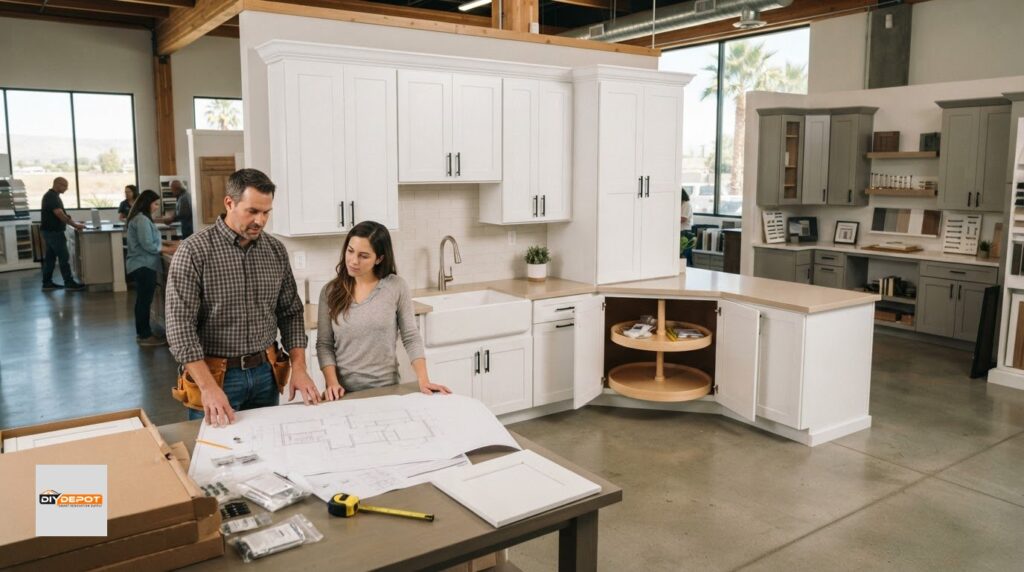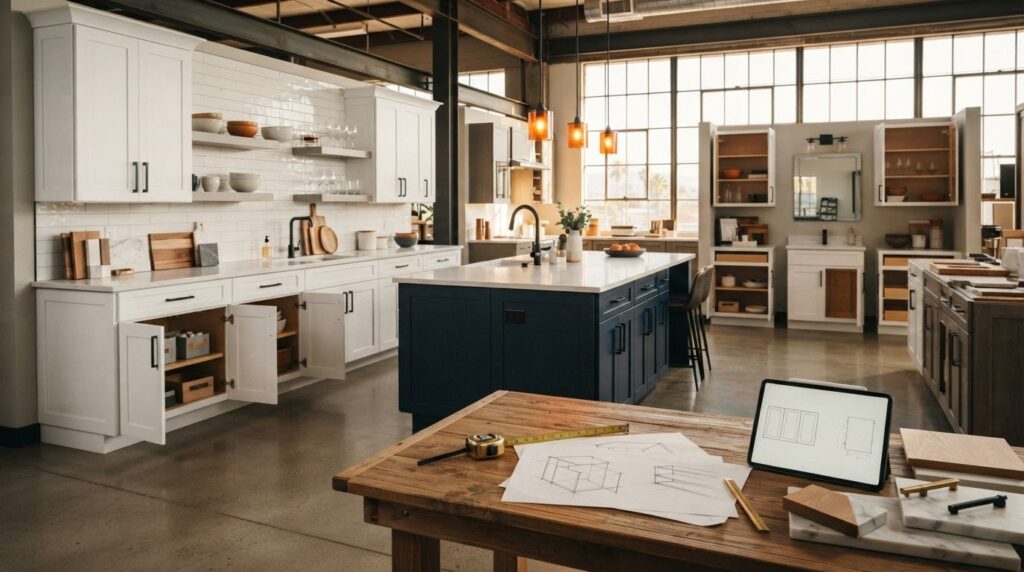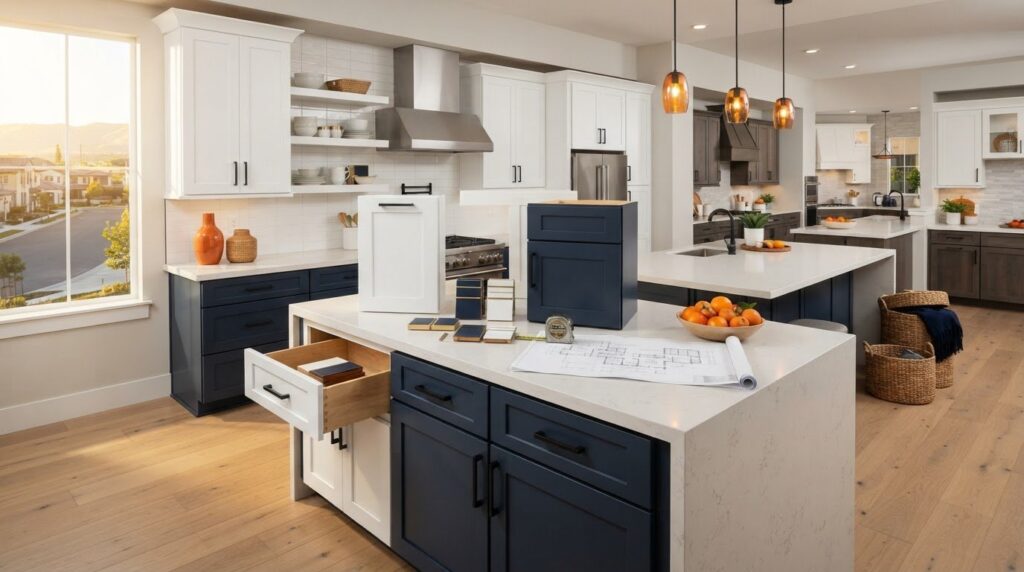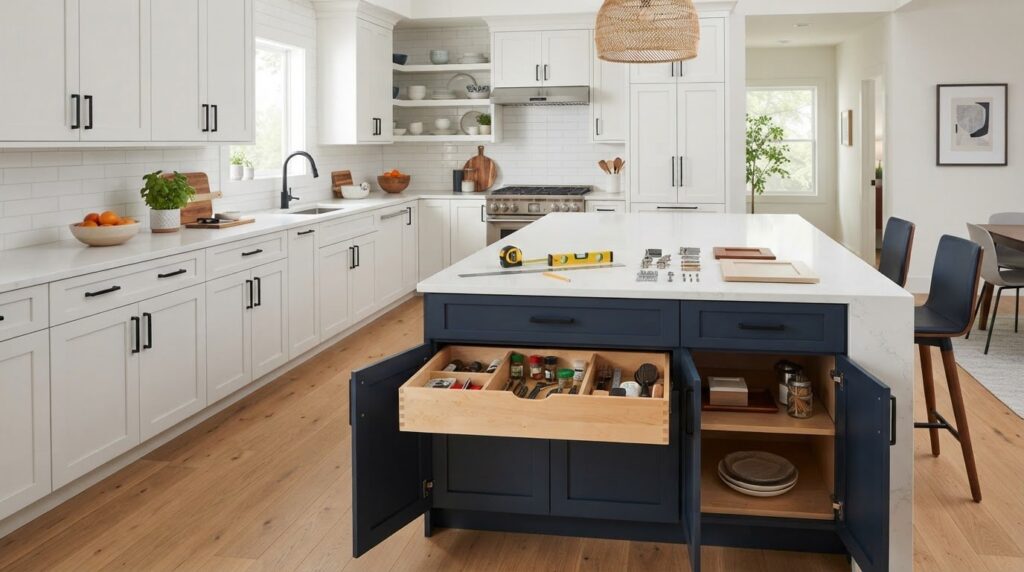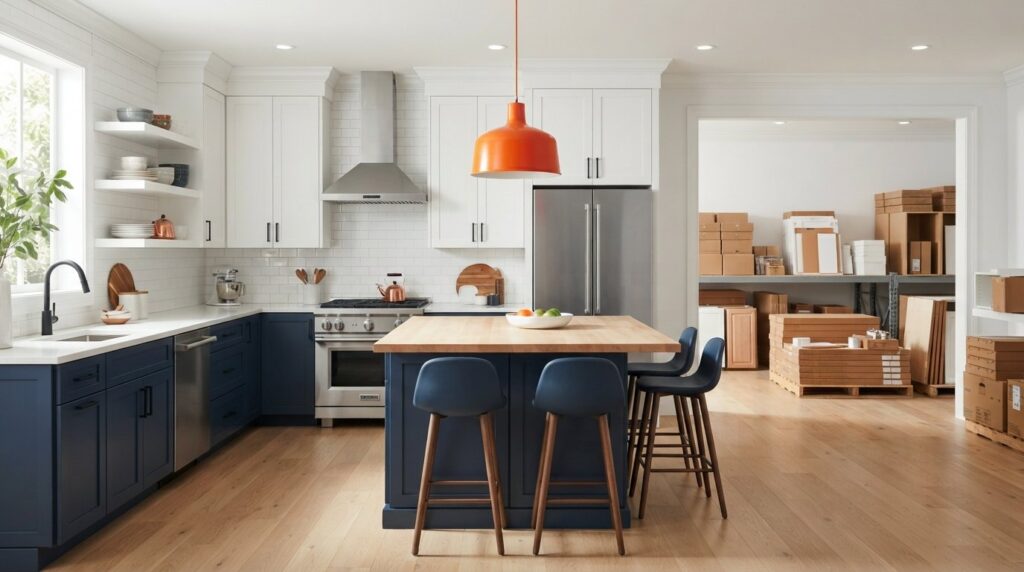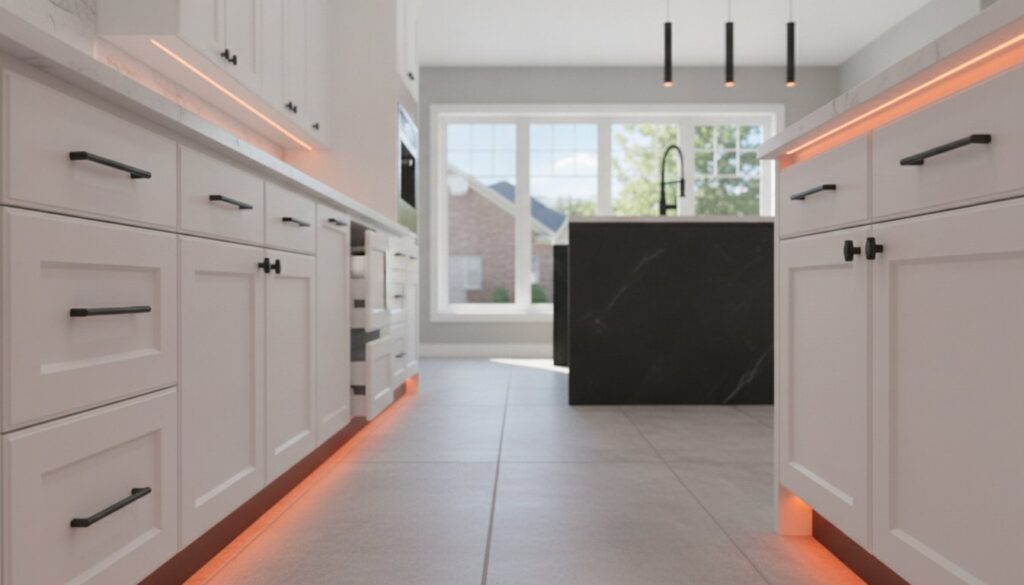

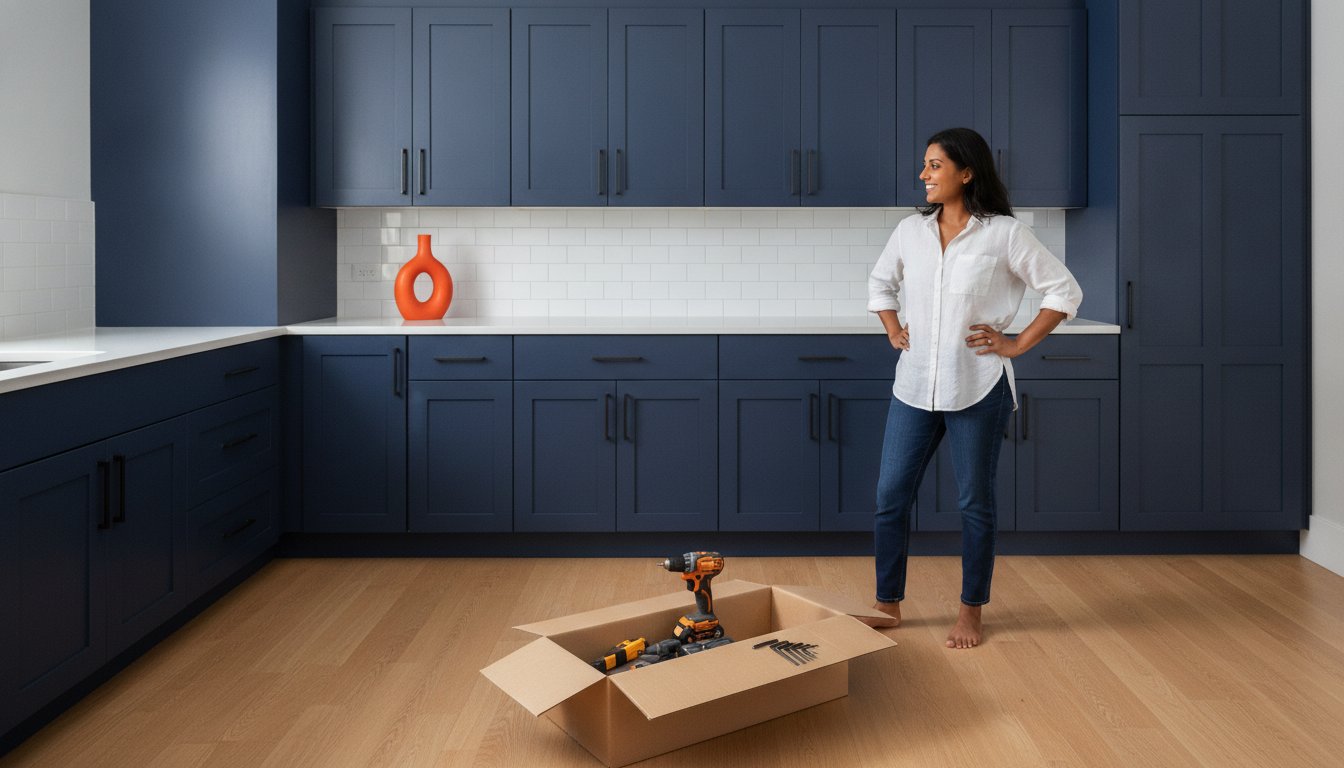
Why are you paying a massive markup on big-box store cabinets just to cover the overhead of a fancy showroom? It’s a common frustration for homeowners who want a high-end look but find themselves stuck between flimsy “stock” options and custom prices that break the bank. You deserve a kitchen that stands up to daily life without draining your entire renovation fund. By adopting a diy warehouse approach, you can bypass the retail middleman and access the same materials the professionals use. We understand the anxiety that comes with measuring your own space and the fear of ordering the wrong parts, which is why we’re here to help you simplify the process.
In this guide, you’ll discover how to master this strategy to secure professional-grade shaker cabinets for a fraction of retail costs. We’ll show you how to use the warehouse-direct model to get durable materials and expert design results on a DIY budget. You’ll learn how to verify cabinet quality, leverage professional design support to avoid costly mistakes, and choose the right assembly options for your skill level. By the end, you’ll have a clear roadmap to a stunning, long-lasting kitchen that looks like it was handled by a pro.
Key Takeaways
- Learn how to bypass expensive retail markups by using a diy warehouse strategy that bridges the gap between manufacturing and your home.
- Understand the essential material standards for shaker cabinets to ensure your kitchen remains durable in high-moisture environments.
- Explore how Ready-to-Assemble (RTA) cabinetry offers significant savings while maintaining the professional look of high-end kitchen remodels.
- See how utilizing professional design support can prevent costly measuring mistakes and provide expert validation for your DIY project.
- Get a clear overview of the tools and steps required for a seamless cabinet assembly and installation process.
The DIY Warehouse Concept: Buying Direct vs. Big-Box Retail
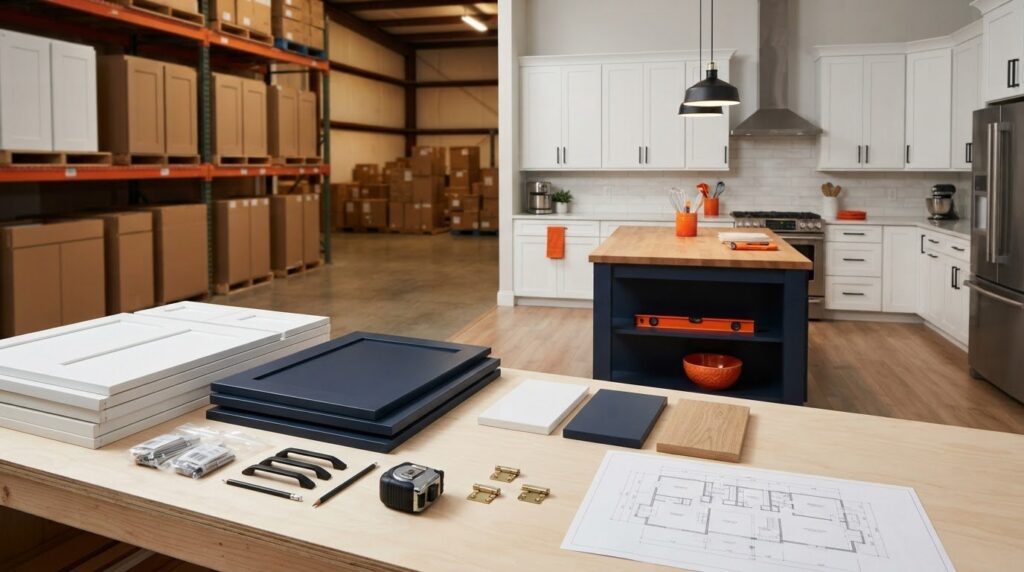
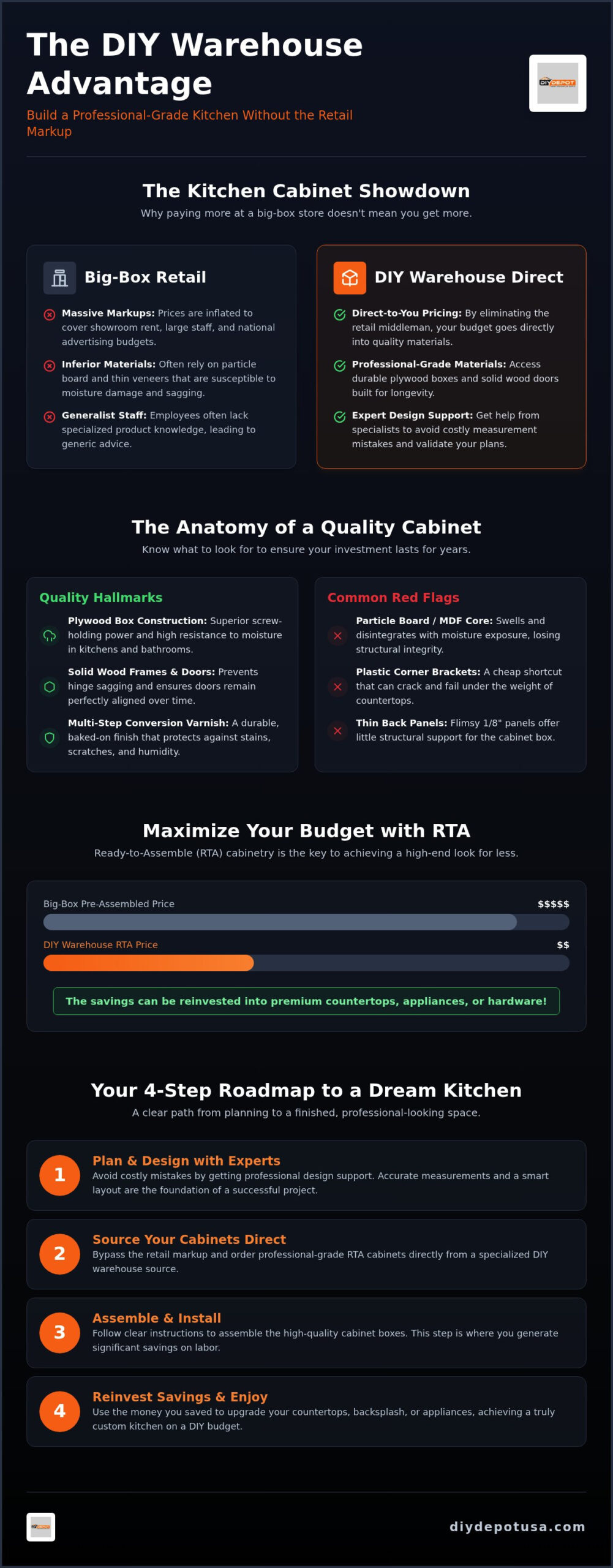
The diy warehouse model isn’t just a physical location; it’s a strategic shift in how you source home improvement materials. Instead of visiting a traditional retailer where products pass through multiple hands before reaching you, this model creates a direct link between manufacturing and the end user. This streamlined approach allows you to secure professional-grade items, like base shaker cabinets, without the added layers of retail profit margins. It’s about efficiency and transparency, ensuring your project budget goes toward the materials themselves rather than the logistics of getting them to a shelf.
Many homeowners assume that “DIY” implies a sacrifice in quality. In reality, sourcing from a specialized partner often provides access to superior construction standards. While big-box stores might rely on particle board or thin veneers to keep prices low, a warehouse-direct approach prioritizes durability. You can trade the retail fluff of glossy marketing for tangible value like solid wood shaker doors and plywood cabinet boxes. This ensures your kitchen doesn’t just look good on day one, but stays functional for years to come.
Why Retail Markups Happen
Traditional big-box stores carry massive overhead costs that are hidden within the price tag of every cabinet. You aren’t just paying for the wood; you’re paying for high-rent showrooms, expansive climate-controlled stores, and massive staffing requirements. Large-scale national advertising budgets also play a significant role in inflating costs. When you choose a specialized Ready-to-assemble furniture warehouse, these middleman expenses disappear. You’re no longer subsidizing a generalist store’s massive footprint, which allows for a much fairer price-to-quality ratio.
The Advantages of Direct Sourcing
Direct sourcing gives you access to professional-grade stock that general retailers often skip to maximize their own shelf space. You’ll find a deeper inventory of specialized wall and vanity shaker cabinets designed for longevity. Communication is also more efficient. Instead of talking to a generalist employee who covers ten different departments, you work with experts who know the specific product line inside and out. This expertise helps you reallocate your budget effectively. The savings found through a diy warehouse can be reinvested into premium countertops or high-end appliances, giving your kitchen a truly custom feel without the custom price tag. You can explore these options further in our online shop to see the difference in material quality firsthand.
Identifying Quality: What to Look for in Warehouse-Direct Cabinets
When you move away from the flashy displays of a retail showroom, you need a reliable set of benchmarks to judge cabinet quality. A diy warehouse often provides much higher material standards, but you must know what to look for to ensure your investment lasts. High-quality base shaker cabinets are the foundation of your kitchen. They must be built to withstand the weight of heavy stone countertops and the constant activity of a busy household. When vetting a supplier, it’s helpful to consult FTC consumer advice to ensure you’re working with a reputable source and avoiding common industry pitfalls.
The difference between “stock” retail options and professional-grade RTA (Ready-to-Assemble) cabinets usually comes down to the hidden details. Retailers often use thin back panels and plastic corner brackets to cut costs. Professional warehouse options prioritize structural integrity and moisture resistance. Because kitchens are high-moisture areas, the materials you choose will determine if your cabinets look new in five years or start to swell and peel. You can see these quality standards in person by exploring our professional-grade shaker cabinet collections.
Material Matters: Solid Wood vs. Particle Board
Structural longevity begins with the cabinet box. Plywood boxes offer superior screw-holding power and resistance to moisture compared to compressed particle board. In a diy warehouse environment, you should look for solid wood shaker frames. These frames are essential for maintaining long-term door alignment. If the frame is made of inferior materials, the hinges will eventually sag, causing the doors to look crooked. A high-quality finish is also vital. Look for multi-step conversion varnishes that protect against daily wear, stains, and cleaning chemicals.
Construction Features of Professional Cabinets
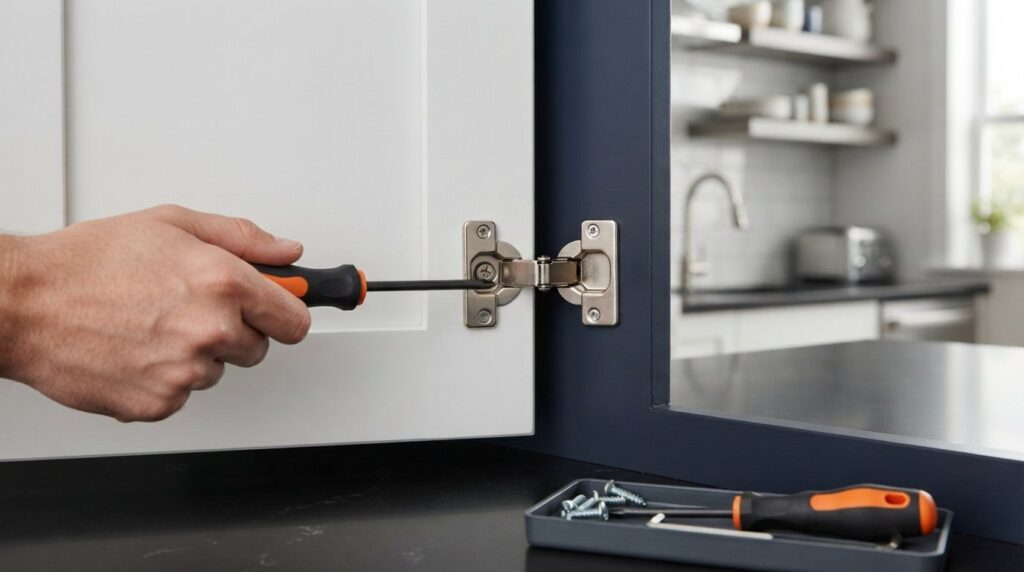
Professional-grade cabinets utilize joinery that stands up to pressure. Dovetail drawer joints are a hallmark of quality because they lock the drawer pieces together mechanically, rather than relying solely on glue or staples. This prevents drawer fronts from pulling off over time. Additionally, look for adjustable shelving held by heavy-duty metal shelf pins rather than thin plastic clips. I-beam construction provides essential lateral stability for base cabinets by using horizontal braces that run the full depth of the cabinet box. Finally, high-end hardware is a requirement. Soft-close hinges and under-mount drawer glides shouldn’t be expensive upgrades; they are standard features that prevent slamming and extend the life of the cabinet doors and drawers.
Maximizing Your Budget with RTA Shaker Cabinetry
The diy warehouse space has been transformed by the Ready-to-Assemble (RTA) revolution. By choosing RTA, you’re essentially trading a small amount of your time for significant wholesale savings. This isn’t about settling for lower quality; it’s about removing the labor and storage costs that retailers add to their price tags. You get the same professional-grade materials, like solid wood frames and plywood boxes, but without the markup associated with factory assembly. This approach allows you to start your project immediately since RTA stock is often more readily available than custom-ordered pre-assembled units; for those seeking high-end inspiration, you can check out Finest Furniture Studio to see examples of premium bespoke craftsmanship.
Flat-pack shipping is a game changer for budget management. Traditional cabinets are expensive to ship because you’re paying to transport empty space inside the boxes. Flat-pack RTA cabinets use significantly less shipping volume, which directly lowers your delivery costs. This compact packaging is a hallmark of the diy warehouse model and offers incredible flexibility for your renovation. You can store an entire kitchen’s worth of cabinets in a small garage or spare room until you’re ready to begin. If you’re dealing with tight hallways or narrow doorways, these boxes are much easier to maneuver than fully assembled units.
Choosing RTA often results in cost savings of 30% to 50% compared to pre-assembled retail options. For many modern DIYers, this is a favorable trade-off of time for money. While it takes about 15 to 20 minutes to assemble a standard base cabinet, the financial reward allows for higher-end finishes or extra features elsewhere in your home. You don’t have to be a master carpenter to achieve professional results. You can learn more about these benefits in our guide to RTA Cabinets: Quality and Value in Every Box.
The Versatility of the Shaker Style
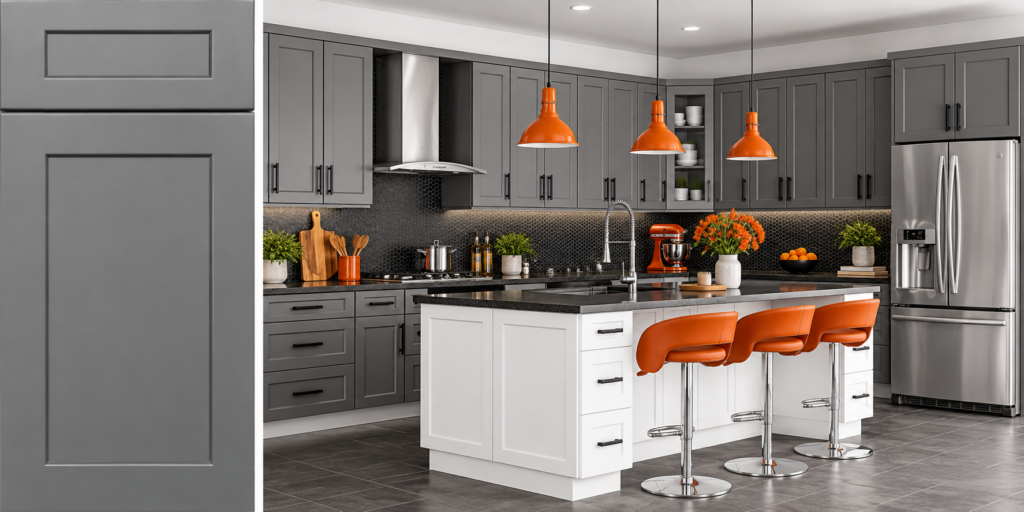
Shaker style cabinets remain the top choice for DIY projects because they bridge the gap between traditional and modern aesthetics. Their minimalist design doesn’t just look clean; it also makes the manufacturing process more efficient. This simplicity allows us to focus on material quality rather than complex ornamentation. When evaluating these products, look for certification from the Kitchen Cabinet Manufacturers Association (KCMA) to ensure the construction meets rigorous industry standards. This validation gives you peace of mind that your budget-friendly choice is built to last. For a deeper look at your kitchen’s foundation, check out The Ultimate Guide to Kitchen Base Shaker Cabinets.
The Professional Edge: Utilizing Design Support for DIY Success
Many homeowners hesitate to use a diy warehouse because they fear a single measurement error will ruin the entire project. It’s a valid concern. Unlike a retail store where a salesperson might catch an obvious mistake, a direct-to-consumer model requires accuracy. However, you don’t have to fly solo. Professional kitchen design services act as the bridge, giving you the confidence that every base and wall cabinet fits exactly where it should. This support removes the guesswork and replaces it with a structured plan.
A 3D rendering is your best insurance policy. It allows you to see the finished result before you spend a dime. This visual validation ensures that the aesthetic you’ve planned actually works in your specific space, especially if you have an awkward layout or a small footprint. Designers can suggest clever storage solutions, such as specific vanity shaker cabinets for tight bathrooms or pull-out trays for deep corners, that maximize every square inch of your home.
The Design Process: From Measurements to Renderings
Success starts with a tape measure. You’ll need to record the distance between walls, the height of your ceilings, and the location of windows. Don’t forget to mark the exact placement of plumbing lines and electrical outlets. Once you have these numbers, you can collaborate with a designer through a warehouse-direct platform. They take your raw data and transform it into a functional blueprint. To ensure your renovation stays on track, we recommend utilizing Professional Kitchen Design Services to refine your vision and finalize your parts list.
Avoiding Common Layout Pitfalls
A beautiful kitchen is useless if it’s frustrating to use. Designers focus on the “Kitchen Triangle,” which is the efficient path between your stove, sink, and refrigerator. They also check for details a beginner might miss, such as ensuring a dishwasher door has enough clearance to open without hitting a corner cabinet handle. By catching these issues during the design phase, you avoid the high cost of re-ordering parts or paying for extra shipping. Expert support ensures your diy warehouse project results in a space that is as functional as it is stylish. Ready to lock in your layout? Contact us today to speak with a design expert about your project goals.
From Warehouse to Kitchen: Seamless Assembly and Installation
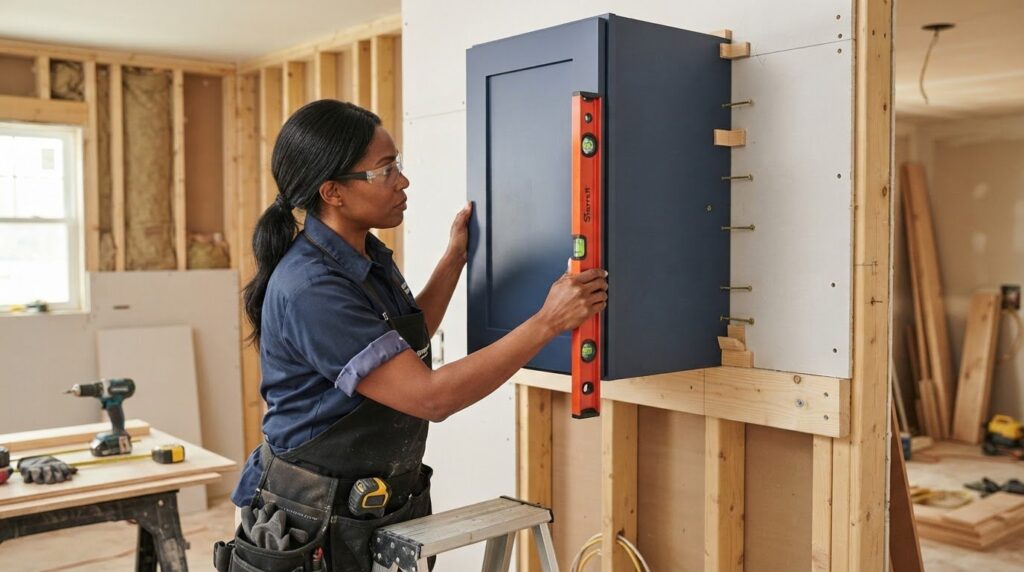
The success of your diy warehouse project relies on the final execution. Once your flat-pack boxes arrive, the transition from a pile of panels to a functional kitchen begins with preparation. You don’t need a professional workshop to get the job done, but you do need a specific set of tools. Ensure you have a reliable power drill, a long carpenter’s level, several bar clamps, and a stud finder. These basics, along with a box of shims for leveling, will handle the majority of the assembly and installation process for your wall and base shaker cabinets.
Many homeowners prefer a “Hybrid DIY” approach to bridge the gap between savings and skill. This strategy involves sourcing your materials through the diy warehouse model to secure wholesale pricing, then hiring professional help for the physical labor. You can choose to assemble the boxes yourself to save on labor costs while hiring an expert to handle the final wall mounting and leveling. This ensures your high-quality materials are installed with precision, protecting your investment for the long term. If the installation phase feels overwhelming, you can book an appointment for expert installation support to ensure a flawless finish.
Mastering Cabinet Assembly
Precision is the key to a professional-looking assembly. Before you reach for the screwdriver, use the “dry fit” technique to verify that every panel and shelf is accounted for and fits correctly. This simple step prevents mid-assembly frustration if a part is missing or misaligned. As you assemble the boxes, use your clamps to hold the pieces tightly together while checking for squareness with a framing square. High-quality wood glue creates a permanent chemical bond between the wood fibers that is often stronger than the wood itself, providing the structural stability needed for a lifetime of heavy use. Once the glue sets and the fasteners are in place, your RTA cabinets will be as sturdy as any pre-assembled retail option.
Professional Installation Tips for DIYers
Installation starts at the ground level. Floors are rarely perfectly flat, so your first task is to find the “high point” of the kitchen floor using your level. You’ll set your base shaker cabinets starting from this point, using shims to bring the other units up to the same height. When it comes to wall cabinets, safety is the priority. You must secure these units directly into the wall studs using heavy-duty cabinet screws. Never rely on drywall anchors alone, as the weight of the cabinetry and your dishes requires a solid connection to the home’s framing. For a deeper look at making the right choice for your skill level, see our guide on DIY vs. Professional Cabinet Installation.
Start Your Professional Kitchen Transformation Today
Adopting a diy warehouse strategy means you no longer have to choose between a high retail price tag and low-quality stock options. You now understand how to identify professional-grade materials, like solid wood frames and plywood boxes, that are built to last for decades. By leveraging RTA efficiencies and professional design support, you can bridge the gap between wholesale sourcing and a stunning, finished result. This approach empowers you to take control of your renovation budget while securing the durable, high-end look your home deserves.
We’re here to support you every step of the way. Our process includes professional design support to validate your layout and ensure every piece fits perfectly. With high-quality solid wood construction and direct FREE delivery available in select regions, the path to your dream kitchen is clearer than ever. You don’t have to handle the complexities of a major remodel alone when you have a trusted partner by your side.
Ready to see the difference for yourself? Shop Warehouse-Direct Shaker Cabinets Now and take the first step toward a kitchen that combines professional quality with incredible value. You’ve got the plan; now let’s get to work on your new space.
Frequently Asked Questions
What is the difference between a DIY warehouse and a big-box home improvement store?
A diy warehouse operates as a direct link between the manufacturer and the homeowner, cutting out the expensive overhead of retail showrooms and national advertising. Big-box stores are generalists with high markups to cover their massive physical footprints. In contrast, the warehouse model focuses on specialized cabinetry, offering professional-grade materials like solid wood shaker doors at wholesale prices that aren’t inflated by middleman logistics or showroom rent.
Are warehouse-direct cabinets lower quality because they are cheaper?
No, the lower price reflects a more efficient business model rather than a sacrifice in material quality. Warehouse-direct cabinets often exceed big-box standards by using plywood boxes and solid wood frames instead of particle board. By removing retail markups and showroom expenses, these suppliers can provide high-end features like soft-close hinges and dovetail joints while remaining affordable for homeowners working on a diy warehouse budget.
How do I know which shaker cabinet sizes I need for my kitchen?
Determining the right sizes starts with a detailed measurement of your kitchen’s dimensions, including wall lengths, ceiling height, and the location of windows. You must also account for the exact placement of plumbing and electrical outlets. Because ordering the wrong parts is a common fear, it’s best to use professional design support. These experts take your measurements and create a specific parts list for your base, wall, and vanity cabinets.
Can I get professional design help if I buy from a cabinetry warehouse?
Yes, professional kitchen design support is a standard part of the warehouse-direct experience. Most reputable suppliers offer 3D renderings to help you visualize the final layout before you purchase. This service bridges the gap between wholesale sourcing and a finished result, ensuring your cabinets fit perfectly and function efficiently. It provides the expert validation needed to avoid expensive measuring mistakes and layout pitfalls during your home renovation.
Do RTA cabinets from a warehouse come with a warranty?
Warranty terms vary by supplier, so you should always verify the specific coverage for your shaker cabinets before ordering. High-quality RTA cabinets made with plywood and solid wood are built to last 20 to 30 years with proper care. While we don’t invent specific claims, professional-grade warehouse options typically offer protections against manufacturing defects. It’s a good practice to check the material specifications and hardware quality to ensure long-term durability.
What tools do I need to assemble and install warehouse-direct cabinets?
You don’t need a full workshop to achieve professional results. A successful installation requires basic tools like:
- A power drill and bits
- A long carpenter’s level
- Bar clamps for holding panels
- A reliable stud finder
- Wood glue and shims
These tools allow you to handle both the assembly of the boxes and the final mounting process with confidence.
How long does it typically take to receive a warehouse-direct cabinet order?
Lead times for warehouse-direct RTA cabinets are typically between one and three weeks, which is significantly faster than custom or semi-custom options. Because these products are kept in stock as flat-pack units, they can be processed and shipped quickly. This shorter timeline allows you to start your project much sooner than if you were waiting months for pre-assembled cabinetry from a traditional retail store or showroom.
Is it better to assemble the cabinets myself or hire a professional service?
The choice depends on your budget and comfort level with home improvement tasks. Assembling the cabinets yourself offers the highest cost savings, as you’re trading a bit of your time for wholesale pricing. However, a “Hybrid DIY” approach is very popular. You can source your cabinets at warehouse prices and then hire professional assembly or installation services to ensure a flawless, level finish without doing the heavy lifting yourself.