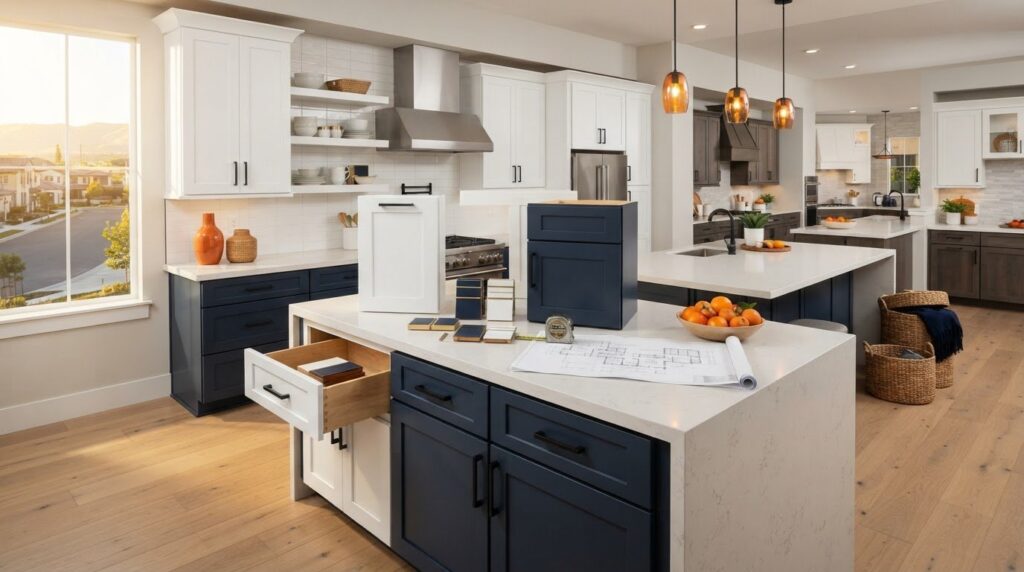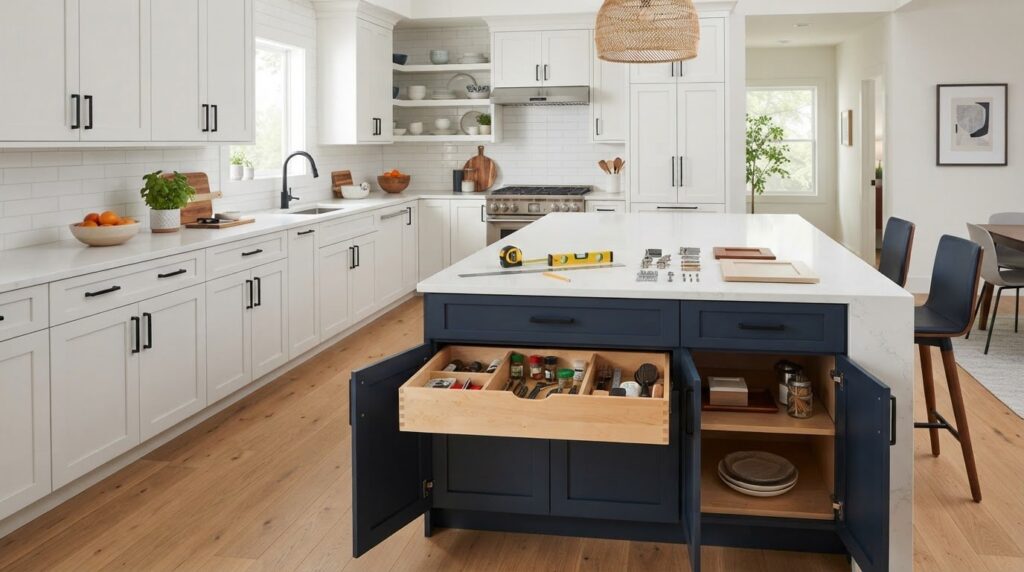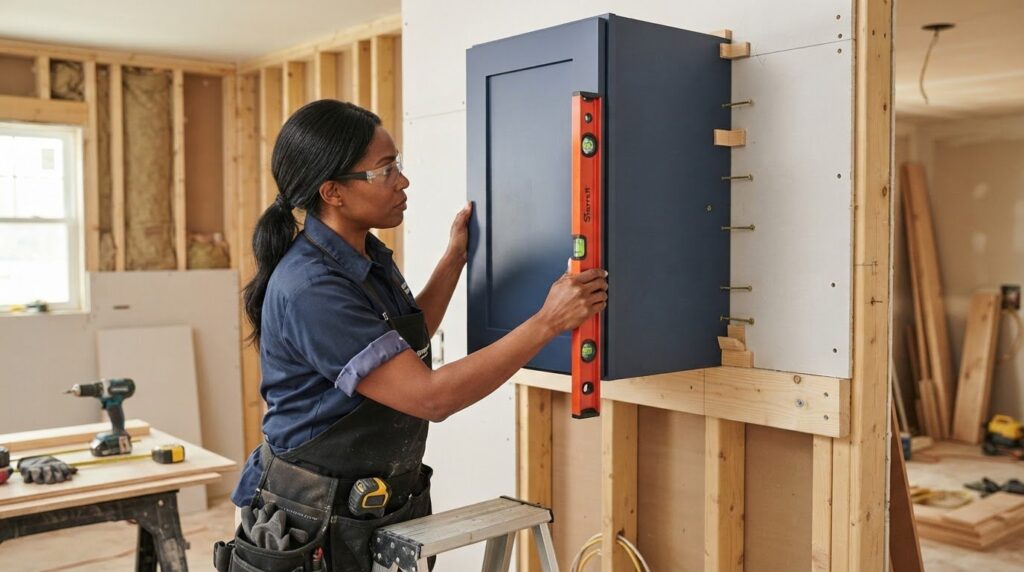


The lowest quote from cabinet wholesalers may not be the easiest fit for your renovation. An order can go off track if cabinet sizes, construction details, included components, or delivery arrangements don’t match your plans. Good value matters, but so does knowing exactly what you’re buying and what support is available.
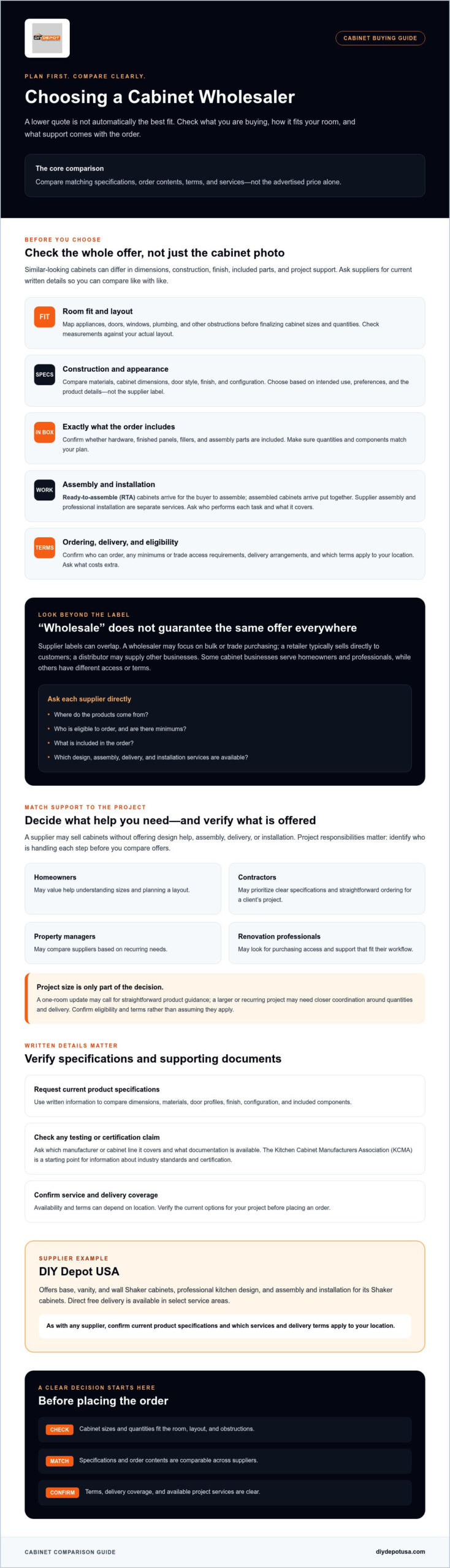
Compare more than product lists. Check cabinet fit, specifications, quantities, ordering terms, and the support available for design, assembly, delivery, and installation. This guide explains what to verify before placing an order so you can choose products and services that suit your layout and project responsibilities.
DIY Depot USA offers base, vanity, and wall Shaker cabinets, as well as professional kitchen design and assembly and installation for its Shaker cabinets. Direct free delivery is available in select service areas. As you compare options, check current product specifications and confirm which services and delivery terms apply to your location.
Key Takeaways
- Understand how wholesalers, retailers, and trade-only suppliers differ before choosing where to buy cabinets.
- Compare cabinet wholesalers using matching specifications and order contents, not advertised price alone.
- Check construction details, dimensions, finishes, and assembly requirements against your project needs.
- Map appliances, doors, windows, plumbing, and other obstructions before finalizing cabinet sizes and quantities.
- Decide how much project support you need, then confirm the available design, assembly, installation, and delivery terms.
What Cabinet Wholesalers Do and Who Benefits from Buying This Way
A cabinet wholesaler sources and sells cabinets, often in larger quantities or through purchasing arrangements intended for trade buyers. However, “wholesale” doesn’t automatically mean a minimum order, trade-only access, or services such as design and installation. Confirm the supplier’s actual terms before comparing options.
Cabinets vary in type, materials, and construction, so focus on what a supplier offers rather than its sales label. The Cabinetry overview provides background on common cabinet forms and construction. Then ask each supplier where its products come from, who can order, what the order includes, and which project services are available.
How cabinet wholesalers differ from retail stores and distributors
A retailer typically sells products directly to customers. A distributor may supply products to other businesses, while a wholesaler may focus on bulk or trade purchasing. These labels can overlap. Some cabinet businesses sell to homeowners and professionals, while others limit access or offer different terms to trade buyers.
Separate product sales from added services. A supplier may sell cabinets without offering design help, assembly, delivery, or installation. Ask what’s included, what costs extra, and whether delivery or installation is available for your location. DIY Depot USA is a cabinet retailer offering base, vanity, and wall Shaker cabinets, professional kitchen design, assembly and installation for its Shaker cabinets, and direct free delivery in select service areas. Confirm which options apply to your project.
Which buyers may benefit from a cabinet wholesaler?
The right source depends on the project and who’s managing it. Homeowners may value help understanding sizes and planning a layout. Contractors may prioritize clear specifications and straightforward ordering for a client’s project. Property managers may compare suppliers based on recurring needs, while renovation professionals may look for purchasing access and support that fit their workflow.
Project size matters, but so do repeat purchasing and decision-making responsibilities. A one-room update may call for straightforward product guidance; a larger or recurring project may need closer coordination around quantities and delivery. Before assuming a trade account or volume terms are available, ask about eligibility and minimums. For broader category education, look for a guide to wholesale kitchen cabinets, then compare suppliers against your project requirements.
What to Check Before Choosing a Cabinet Wholesaler
A cabinet can look right in a photo and still be wrong for your room, layout, or installation plan. Before ordering, compare written product specifications and confirm exactly what arrives with each cabinet. This helps you assess options fairly and spot missing details before they affect the project.
Matching cabinet specifications matters more than matching supplier labels because similar-looking products may differ in dimensions, construction, finish, and included components.
Compare cabinet construction, finish, and configuration
Ask for current written details on materials, cabinet dimensions, door style, finish, and included components. Check that the measurements suit your layout and that the door profiles and finishes work together across the planned cabinets. No single construction material suits every project. The right choice depends on intended use, preferences, and product specifications.
Clarify whether the order includes hardware, finished panels, fillers, and assembly parts. If a supplier references testing or certification, ask which manufacturer or cabinet line it covers and what documentation is available. The Kitchen Cabinet Manufacturers Association (KCMA) is a useful starting point for learning about cabinet industry standards and certification information.
Understand assembly, design, and installation support
Ready-to-assemble (RTA) cabinets arrive for the buyer to assemble, while assembled cabinets arrive put together. The right option depends on who can handle the work and how it fits your project schedule. For more detail on the trade-offs, consult a guide to ready-to-assemble cabinets and compare the preparation and timing involved in the options you’re considering.
Keep the service steps distinct. Self-assembly means you handle the work; supplier assembly and professional installation are separate services that may or may not be available. Ask who performs each task, what it covers, and whether installation is available for your location. DIY Depot USA offers assembly and installation for its Shaker cabinets, along with professional kitchen design. Review its Shaker cabinet options as one point of comparison, then confirm current specifications and applicable services before ordering.
How to Compare Cabinet Wholesalers Beyond the Advertised Price
A headline price tells you only part of the story. To compare cabinet wholesalers fairly, first make sure each quote covers the same cabinet configuration, specifications, and order contents. Then consider the support and responsibilities attached to the purchase. A lower quote may leave you handling design decisions, assembly, or delivery coordination yourself, while another supplier may offer help with some of those steps.
| What to compare | Questions to ask |
|---|---|
| Specifications | Are materials, dimensions, finishes, and cabinet components documented? |
| Order clarity | Does the written quote list quantities, included parts, and exclusions? |
| Design help | Who provides guidance, and what measurements or plans should you prepare? |
| Assembly | Are cabinets ready to assemble or assembled, and who handles the work? |
| Installation | Is installation available, what does it cover, and does it apply to your location? |
| Delivery | What timing, receiving arrangements, and delivery terms should you plan for? |
Ask about the buying process before you commit
Clear answers can help prevent surprises. Ask how the supplier confirms specifications and order contents before purchase, whether substitutions are possible, and how you’ll be notified if an item or schedule changes. Request the current lead time and clarify whether it includes processing, assembly, and transit.
Also ask what to do if a delivery arrives damaged, how soon damage must be reported, and what replacement process applies. Policies vary, so don’t assume they’re the same from one supplier to another. If you need design guidance, ask who provides it. Bring your room measurements, layout, and appliance locations so the discussion can focus on your plan.
Compare the full project picture
Use equivalent cabinet configurations when reviewing quotes. Confirm that each includes the same quantities and components, then account for work you’ll manage yourself, such as assembly or coordinating installation. Request current, itemized quotes rather than relying on general advertised pricing.
- Specifications: Are the products comparable and described in writing?
- Order: Are quantities, included items, exclusions, and substitutions clear?
- Support: Who handles design questions, assembly, and installation?
- Delivery: Are timing, receiving, damage reporting, and delivery eligibility confirmed?
- Communication: Do you know whom to contact with order or schedule questions?
Compare the answers side by side. DIY Depot USA offers professional kitchen design, assembly and installation for its Shaker cabinets, and direct free delivery in select service areas. Confirm which options apply to your location and project before placing an order.
A Cabinet Wholesaler Checklist for Accurate Orders
Accurate cabinet orders start with a clear room plan, not a guess based on wall length. Small oversights, such as a doorway swing or pipe location, can affect which cabinets fit and how the layout works. Use this sequence to prepare before requesting quotes from cabinet wholesalers, then check the written order against your plan.
Prepare measurements and a cabinet layout
Record dimensions carefully and note anything that could affect cabinet placement. Include:
- Room measurements: Wall lengths, ceiling height, and changes in wall depth or shape.
- Openings: Door and window locations, widths, heights, and door swing directions.
- Fixed obstacles: Columns, trim, vents, soffits, and other features that limit available space.
- Appliances: Dimensions and planned locations for the refrigerator, range, dishwasher, and other appliances.
- Connections: Plumbing, electrical, and ventilation locations that may influence the layout.
These details can reveal conflicts before you select cabinet sizes and quantities. For example, a cabinet plan needs to account for a window, nearby plumbing, and the space an appliance requires. If you’re unsure how to measure or turn the room dimensions into a workable configuration, confirm your plan with qualified project support. A guide to kitchen base cabinets can also help explain the role of lower cabinets in the layout.
Review the order before approving it
Once the layout is settled, check the order line by line. Don’t rely on a verbal summary or product label alone. Ask the supplier to clarify unclear details in writing before you approve the purchase.
- Match every cabinet description and quantity to the approved layout.
- Check dimensions, finish, door style, and assembly format against the specifications you reviewed.
- Confirm which hardware, panels, fillers, and assembly components are included or excluded.
- Verify delivery arrangements and stated timing, including details you need to plan for receiving the order.
- Keep the written quote, specifications, and final order together so you can refer to them if questions come up.
A final review can catch mismatched quantities or unclear components before they become project problems. If professional kitchen design support would help you check your layout, book an appointment to discuss kitchen design.
Finding a Cabinet Wholesaler That Supports Your Project
The right supplier depends on how much of the project you want to manage yourself. A buyer comfortable checking specifications, coordinating delivery, and arranging installation may mainly need a clear product catalog and written order details. If you want help with layout decisions or cabinet preparation, look for a retailer that offers relevant design, assembly, or installation services. Compare the actual support available, not just the word “wholesale.”
Match supplier support to your project responsibilities
Before choosing among cabinet wholesalers, list the tasks you’ll handle and where you’d welcome help. If you’re sourcing independently, make sure you can confirm measurements, cabinet quantities, included components, and delivery responsibilities. Design guidance may help you plan a kitchen layout; assembly support can help with putting cabinets together; installation support may help with fitting the supplier’s cabinets. These are separate services, so confirm their scope and eligibility rather than assuming they’re included.
DIY Depot USA is a cabinet retailer offering professional kitchen design and assembly and installation for its Shaker cabinets. To explore whether design guidance fits your planning needs, you can arrange an appointment to discuss kitchen design. Have your measurements, layout ideas, and appliance details ready so you can explain the project clearly.
Explore cabinet options and plan your next step
Start with the cabinet type your layout calls for. DIY Depot USA’s primary offering is Base Shaker Cabinets, and it also offers vanity and wall Shaker cabinets. Review current product information and confirm specifications, available sizes, and which services apply to your project before deciding. Direct free delivery is available in select service areas, so check whether your location qualifies.
You don’t need to settle every project detail at once. Browse the cabinet shop to review available categories, then note questions about product fit, design support, assembly, installation, or delivery. A clear conversation about your layout and responsibilities can help you assess whether the retailer’s offerings match your plans. If you’d like to talk through your project, contact the team about your cabinet needs or use the appointment option to discuss kitchen design.
Choose a Supplier That Fits Your Next Step
A sound cabinet decision starts with clear project needs, not a supplier label or headline quote. Compare matching specifications and order contents, then consider how much design and installation coordination you want to manage yourself. Before approving an order, check that the written details align with your layout, quantities, and delivery plans.
The right fit among cabinet wholesalers and other cabinet sources is the one that suits your project and makes responsibilities clear. DIY Depot USA is a cabinet retailer offering base, vanity, and wall Shaker cabinets, professional kitchen design, and assembly and installation services for its Shaker cabinets.
Ready to explore options or discuss your plans? Explore cabinet options and discuss your project with DIY Depot USA.
Frequently Asked Questions
What is a cabinet wholesaler?
A cabinet wholesaler sources and sells cabinets, sometimes through purchasing arrangements aimed at trade buyers or larger orders. The term alone doesn’t tell you whether homeowners can buy, whether minimums apply, or what services come with an order. Ask directly about purchasing eligibility, product specifications, and order terms. Some businesses called wholesalers also sell retail, so focus on the buying process and support they actually provide.
Can homeowners buy cabinets from wholesalers?
Yes, some cabinet wholesalers sell directly to homeowners, while others restrict purchasing to trade professionals or require specific order terms. Check access before spending time comparing products. Ask whether you can order for a single renovation, whether minimum quantities apply, and whether a trade account is required. Don’t assume “wholesale” means homeowners are excluded or guarantees a particular order size or price.
How do I choose a reliable cabinet wholesaler?
Compare suppliers using written product and service details, not promotional claims alone. Request specifications for materials, dimensions, finish, door style, and included components. Confirm that the quote documents quantities and exclusions, explains delivery and damage procedures, and answers your questions clearly. Also check whether design, assembly, or installation support is available and what each service covers. Clear terms help you judge whether the supplier suits your project.
Are wholesale cabinets lower quality than retail cabinets?
Not necessarily. “Wholesale” describes a selling approach, not a cabinet’s construction quality. Compare the actual materials, finish, dimensions, components, and available product documentation. If two cabinets look similar, check their written specifications rather than relying on labels or photographs. Ask what the order includes, too, since hardware or panels can affect how complete the quoted configuration is.
What should I ask before placing a cabinet order?
Before ordering, confirm cabinet sizes, quantities, finish, door style, assembly format, and included hardware, panels, fillers, and other components. Get the final specifications and order details in writing. Clarify stated timing, delivery arrangements, receiving responsibilities, and the process for reporting damage or addressing substitutions. If you’re using a layout, compare every cabinet against it and resolve unclear descriptions before approving the order.
Do cabinet wholesalers offer kitchen design and installation?
Some suppliers offer design or installation support, but these services aren’t automatic parts of a wholesale cabinet purchase. Ask who provides the help, which tasks are covered, and whether the service applies to your location. DIY Depot USA offers professional kitchen design and assembly and installation services for its Shaker cabinets. Confirm current service details and eligibility directly, and distinguish installation support from broader project work.
Are ready-to-assemble cabinets a good choice for a renovation?
Ready-to-assemble cabinets can suit a renovation if you’re prepared to handle assembly or have confirmed support for that step. Consider your time, comfort with putting cabinets together, available workspace, and project schedule. Compare the included components and assembly instructions, then ask whether supplier assembly or installation is offered. The right choice depends on your project responsibilities, not just whether a cabinet arrives assembled.