

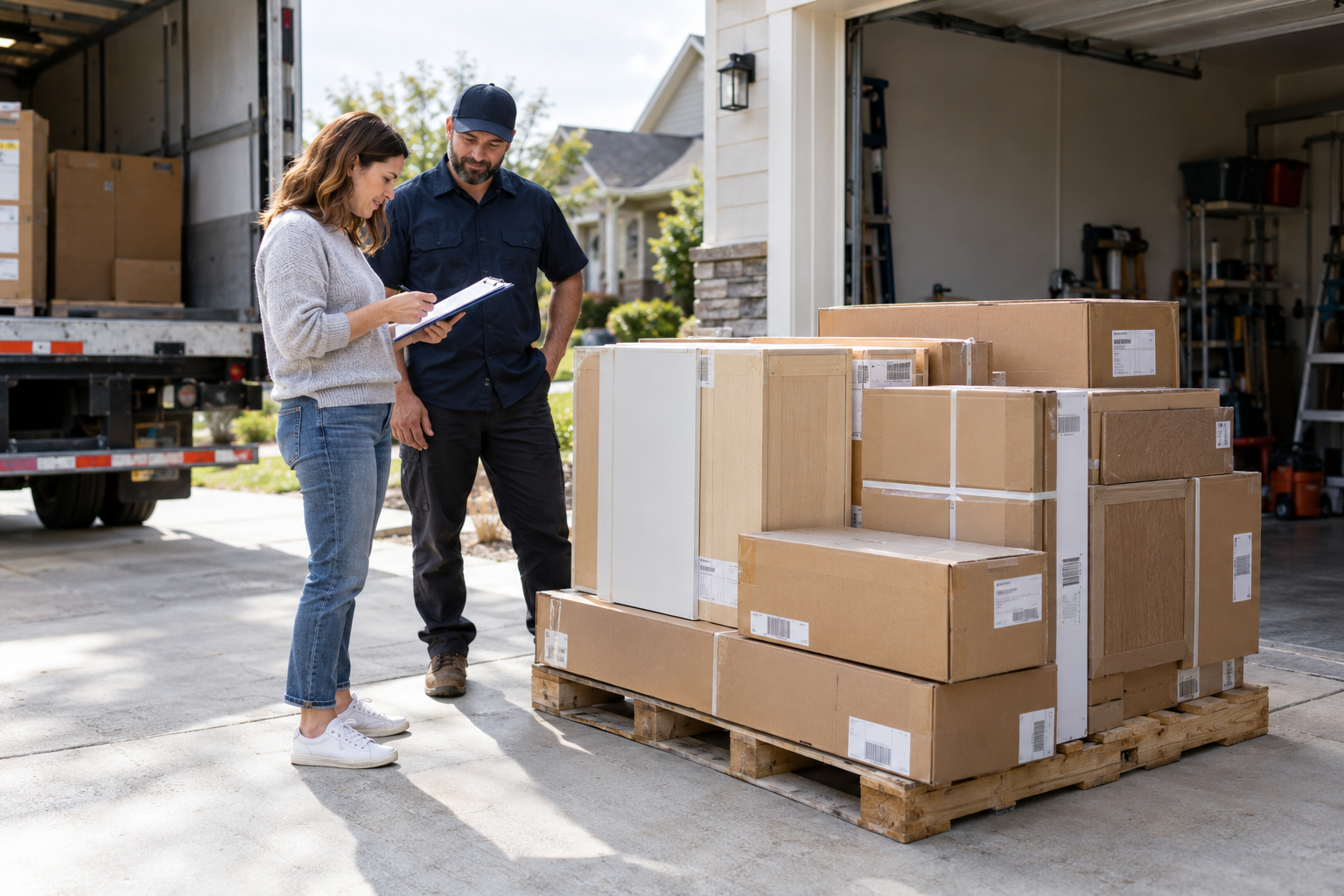
When your kitchen cabinets arrive, compare the shipment with your order, inspect its condition, and follow your supplier’s instructions for reporting problems.
This kitchen cabinet delivery checklist covers what to prepare before arrival, what to check when receiving the shipment, and how to organize cabinets before installation.

1. Confirm Your Delivery Arrangements
Before delivery day, confirm the arrangements with your supplier or carrier.
Ask:
- What is the estimated delivery date or appointment window?
- Who will contact me about arrival?
- Does someone need to be present?
- Where will the shipment be unloaded?
- What unloading equipment or assistance is included?
- Are there access restrictions?
- What documents will I need to sign?
Delivery services vary. Confirm whether your order will be left at the curb, driveway, garage, or another agreed location.
For DIY Depot USA shipping information, review the free shipping page and confirm eligibility and delivery terms for your order.
2. Prepare Access and Storage Space
Clear the agreed unloading area and the route to your storage space.
Discuss stairs, gates, narrow driveways, parking restrictions, or other access concerns before the truck arrives.
Choose a storage area that meets the cabinet manufacturer’s requirements. Protect the cabinets from moisture, weather, impact, and construction activity.
Keep the shipment out of walkways and leave room to inspect labels and organize packages.
3. Keep Your Order Documents Available
Have these documents ready:
- Order confirmation
- Itemized cabinet list
- Approved kitchen layout
- Delivery or shipment details
- Supplier contact information
- Damage and missing-item reporting instructions
The order list identifies what you purchased. The shipment documents identify what the carrier is delivering.
If your order arrives in stages, confirm which items belong in each shipment.
4. Count Packages and Check Labels
Compare the shipment documents with the packages received.
Check:
- Number of pallets or packages
- Cabinet item numbers
- Quantities
- Cabinet sizes shown on labels
- Finish or cabinet line information, where listed
- Boxes containing trim, fillers, panels, or accessories
A package count alone does not confirm that every ordered item is present. Check item labels against the order list.
Record anything you cannot identify and ask the supplier to clarify.
5. Inspect the Shipment’s Condition
Look for signs that require further inspection, including:
- Crushed corners
- Torn packaging
- Punctures
- Water stains
- Broken pallet boards
- Shifted or unstable packages
- Exposed cabinet components
Follow the carrier’s receiving procedure and your supplier’s inspection instructions.
If you see damage or a shortage, ask how to record it on the delivery paperwork before signing. Keep a copy of that paperwork.
Do not assume a notation on a delivery receipt completes the supplier’s reporting process.
6. Photograph Damage and Package Labels
If you find a problem, take photos that show both the issue and the item’s identity.
Photograph:
- The shipment as received
- Packaging damage
- The package label
- The cabinet item number
- The affected component
- A close-up and a wider view of the damage
Keep the photos with your order documents.
Preserve the packaging and affected parts until the supplier tells you how to proceed. They may be needed to assess the issue.
7. Check Contents Within the Reporting Deadline
Review the supplier’s deadline for reporting concealed damage, missing components, or incorrect items.
Open and inspect packages according to its instructions. Avoid cutting into cabinet surfaces when removing packaging.
Check the contents against the product’s parts list, where provided.
Depending on the cabinet, this may include:
- Cabinet panels
- Doors
- Drawer components
- Shelves
- Hinges
- Drawer slides
- Assembly hardware
Package contents vary by cabinet line. Use the specifications and instructions for your order.
8. Report Problems Through the Required Process
Contact the supplier using its stated reporting method.
Provide:
- Order number
- Delivery date
- Cabinet item number
- A description of the problem
- Photos
- A copy of relevant delivery paperwork
Identify whether the issue involves damage, a missing item, an incorrect item, or a missing component.
Ask for the next steps and keep a record of the response. Confirm whether the item should remain unassembled while the issue is reviewed.
9. Organize Cabinets by Their Layout Position
Once you have checked the order, organize items to match your kitchen plan.
Group:
- Base cabinets
- Wall cabinets
- Pantry and tall cabinets
- Island cabinets
- Fillers and panels
- Molding and toe-kick material
- Hardware and accessories
Keep item labels attached or identifiable. Store hardware with its matching cabinet or in labeled containers.
If you mark a cabinet’s position, use a method that will not damage its finish.
10. Follow the Manufacturer’s Storage Instructions
Cabinet storage requirements depend on the product.
Follow the manufacturer’s directions for:
- Temperature and humidity
- Stacking
- Package orientation
- Supporting panels and trim
- Protection from moisture
- Any acclimation period before assembly or installation
Do not place cabinets where plumbing leaks, rain, or wet construction work could damage them.
Keep doors, panels, and molding supported as directed. Avoid leaning or stacking components in ways that could cause distortion or damage.
11. Coordinate With Your Assembler and Installer
Tell your assembler or installer when the shipment has been checked and whether any issues remain unresolved.
Confirm:
- Which items are ready for assembly
- Whether replacement parts are pending
- Where the cabinets are stored
- Who will move them into the work area
- When installation can begin
Review missing or damaged items before deciding whether the installation schedule needs to change.
For the next stage, read How to Prepare for Kitchen Cabinet Installation.
Kitchen Cabinet Delivery Checklist
Before arrival:
- Confirm delivery arrangements
- Review unloading responsibilities
- Clear access
- Prepare storage
- Gather order documents
- Read inspection and reporting instructions
When receiving:
- Count packages
- Check item labels
- Inspect packaging condition
- Record issues using the carrier’s procedure
- Take photos
- Keep delivery paperwork
After arrival:
- Inspect contents within the supplier’s deadline
- Report problems through the required process
- Preserve packaging for unresolved issues
- Organize items by layout position
- Follow storage instructions
- Update your assembler and installer
Plan Your Cabinet Order With DIY Depot USA
Discuss pickup or delivery arrangements when planning your cabinet purchase with DIY Depot USA in Bakersfield.
Confirm the terms for your order, prepare your receiving area, and keep your cabinet list available when the shipment arrives.
Book an appointment to discuss your cabinet project.
Still preparing to buy? Read our Kitchen Cabinet Order Checklist.